
Designing confusion as method
Reflections from playtesting “Living Without Letters”
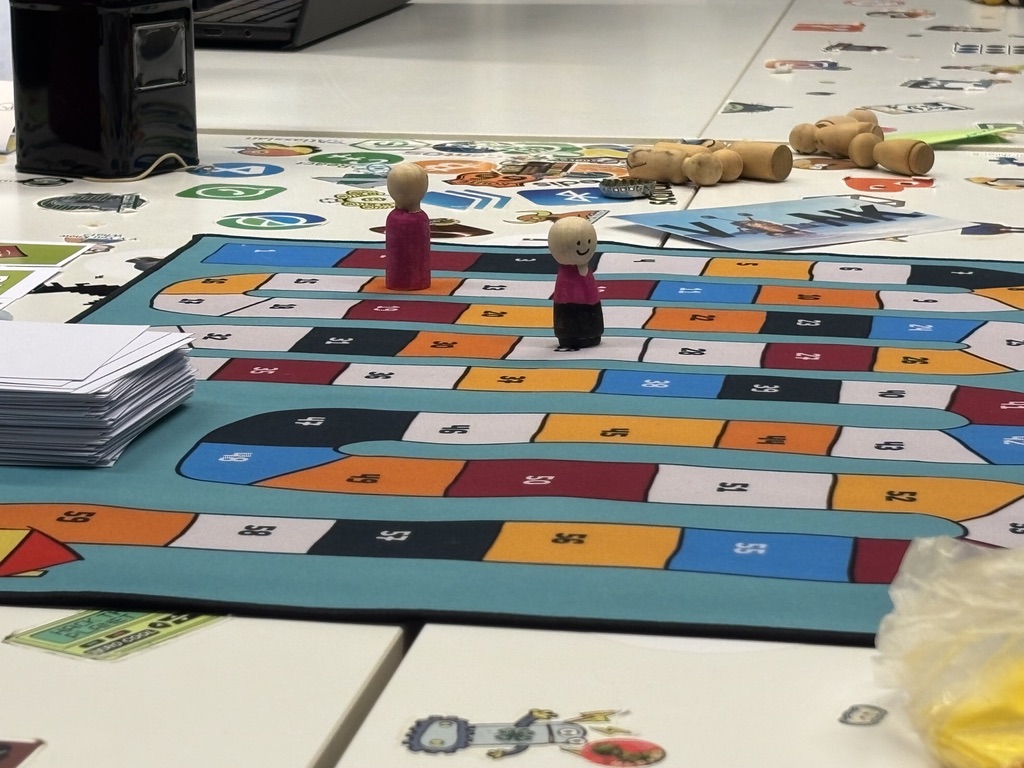
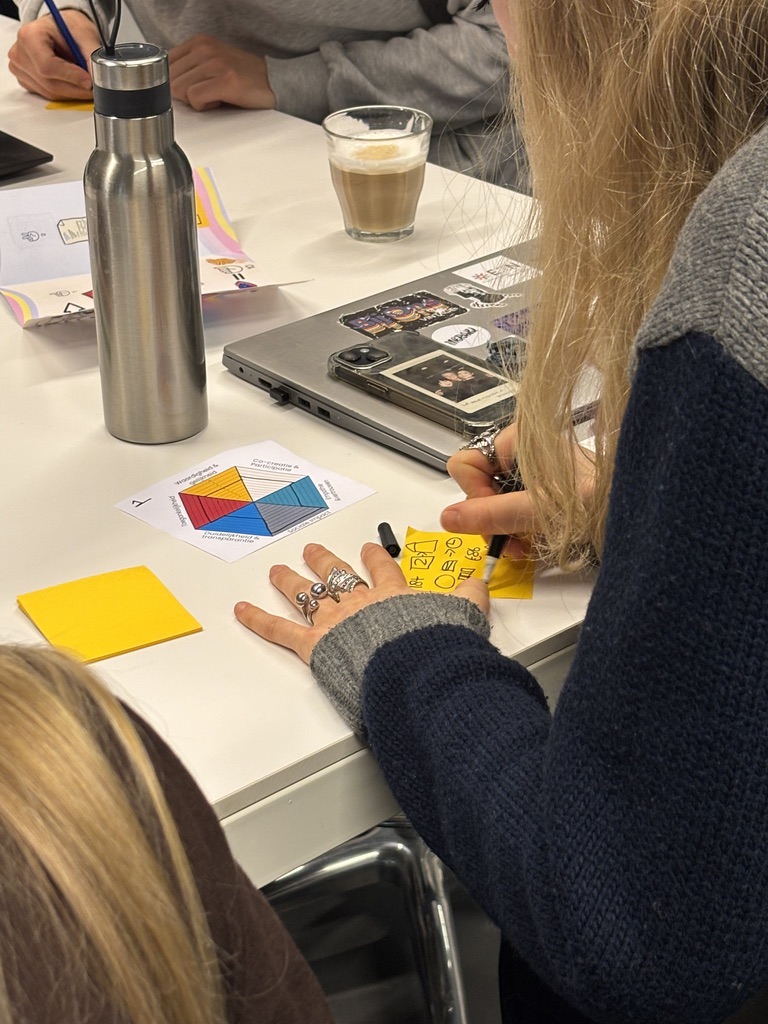
Over the past months, Living Without Letters has been iteratively tested with graduate students, colleagues, partners from the Foundation for Reading and Writing, members of the Hero Guild, and in consultation with board game expert Diewertje Schuur.
These playtests are not evaluative moments in a traditional sense. Rather, they function as research-through-design situations in which the game operates as a boundary object—a shared artefact through which different stakeholders negotiate meaning, experience, and perspective (Binder et al., 2011; Star & Griesemer, 1989).
What emerges in these sessions is not simply feedback on a game, but insight into how systems of literacy—and exclusion—are experienced, interpreted, and reproduced.
Confusion as designed friction
A recurring response across sessions was striking in its consistency:
“I didn’t understand anything… and that’s exactly the point.”
Participants described feelings of disorientation, dependency, and loss of control. These are not unintended side effects, but deliberate design choices.
Drawing from participatory and experiential design traditions (Akama, 2015; Sanders & Stappers, 2008), the game aims to make systemic exclusion feelable, rather than explainable. In this sense, confusion operates as a form of designed friction—a mechanism that interrupts habitual understanding and opens space for reflection.
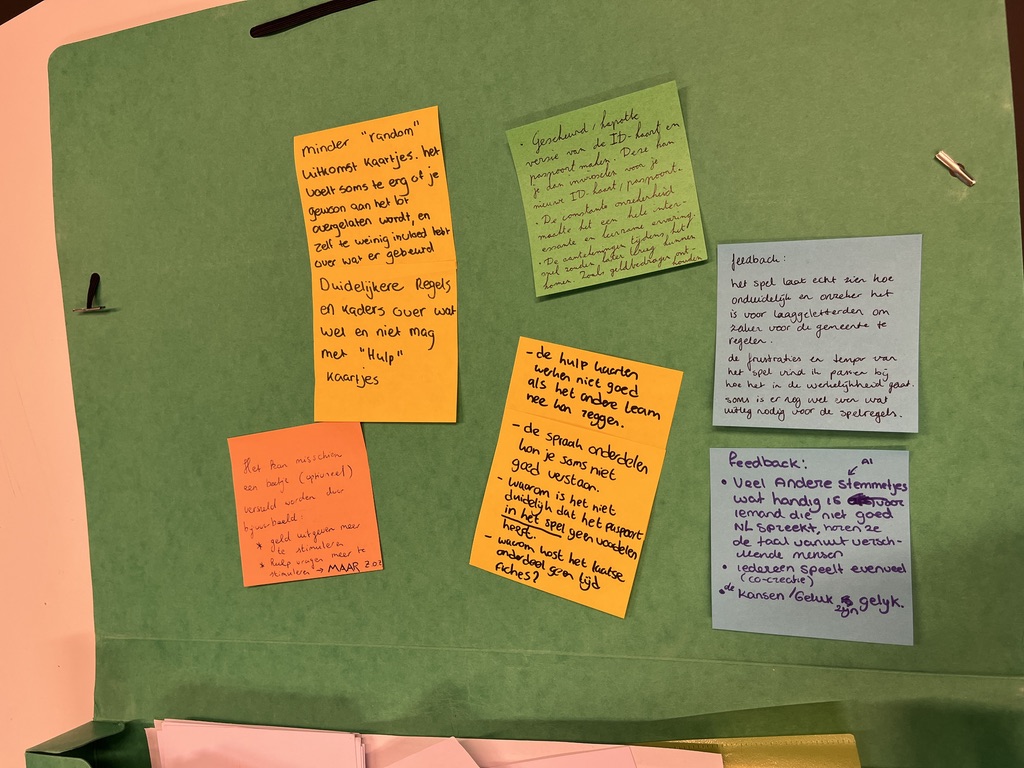
At the same time, the playtests revealed an important boundary condition. When friction is no longer interpretable—through unclear audio, inconsistent rules, or overwhelming visual input—it shifts from meaningful experience to noise.
This positions confusion not as a binary (present/absent), but as something that requires continuous calibration.
Agency within unequal systems
Another recurring tension concerned the balance between control and chance.
Some players experienced the game as overly dependent on randomness:
progress shaped by “lucky” cards
limited influence over outcomes
Others recognised this as a reflection of lived reality:
“Real life isn’t equal… so do the chances have to be?”
This tension aligns with insights from New Literacy Studies, where literacy is understood not as an individual skill, but as a socially situated practice shaped by power, access, and institutional structures (Barton & Hamilton, 1998).
The design question that emerges is not whether the game should be “fair,” but how it can:
make structural inequality visible
create meaningful trade-offs (e.g. time vs. money vs. help)
allow players to experience constrained agency
Audio as an inclusive—but unstable—medium
Audio plays a central role in the game, deliberately replacing written instructions to reduce reliance on text.
This aligns with the broader design intention to explore alternative literacies and modalities, moving beyond text as the dominant carrier of meaning.
Feedback, however, revealed a duality in how audio is experienced:
appreciated for its inclusivity and diversity (multiple voices, accents)
criticised for clarity, pacing, and navigability
Interestingly, what some perceived as a barrier, others recognised as essential:
“The frustration made me realise what this experience is like.”
This reflects a core tension in the project:
Audio is both a bridge away from text-dependency and a site where new forms of exclusion can emerge.
The challenge is therefore not optimisation towards clarity alone, but intentional design of accessibility, variation, and interpretability.
Materiality and the aesthetics of overload
Participants consistently described the game as:
engaging and creative
visually rich and “cheerful”
supported by a strong narrative structure
At the same time, feedback pointed to moments of overload:
dense visual compositions
unclear relationships between board, cards, and website
residual reliance on text in a text-critical system
From a design perspective, this raises an important question:
To what extent should complexity be reduced—and to what extent should it remain as a reflection of bureaucratic reality?
Here, the game resonates with the notion of design things (Binder et al., 2011):
not as finished objects, but as assemblies of materials, interactions, and interpretations that remain open to negotiation.
The game master as relational interface
An important insight from the Hero Guild playtest was the role of the game master.
Rather than functioning purely as facilitator, this role becomes a relational interface:
mediating between system and player
embodying institutional support structures
experiencing the challenges of assisting someone navigating inaccessible systems
This extends the game beyond individual experience toward relational understanding, aligning with participatory design’s emphasis on co-creation and situated interaction (Ehn, 2008).
From empathy to action
Across sessions, one outcome was consistently articulated:
“My empathy for this group has grown exponentially.”
“I now feel what low literacy might be like.”
The game succeeds in shifting understanding from cognitive awareness to embodied experience.
However, this also surfaced a critical question:
“The problem is clear now… but what’s next?”
This marks a transition from experience to implication.
If the game functions as a boundary object, then its value lies not only in the experience it creates, but in how it:
- informs design practices
- influences policy thinking
- reshapes everyday interactions with systems and services
Calibrating friction
These playtests reaffirm a central position in this research:
Living Without Letters is not designed for seamlessness.
It is designed to stage friction. But friction is not inherently meaningful.
It requires careful tuning:
too little → the experience loses depth
too much → the experience becomes inaccessible in unintended ways
The ongoing iterations therefore focus not on removing difficulty, but on aligning it with purpose—so that confusion becomes insight, and frustration becomes a starting point for change.
References
Akama, Y. (2015). Being awake to Ma: Designing in between-ness as a way of becoming with. CoDesign, 11(3–4), 262–274.
Barton, D., & Hamilton, M. (1998). Local literacies: Reading and writing in one community. Routledge.
Binder, T., Brandt, E., Ehn, P., & Halse, J. (2011). Design Things. MIT Press.
Ehn, P. (2008). Participation in design things. Proceedings of the Tenth Anniversary Conference on Participatory Design.
Sanders, E. B.-N., & Stappers, P. J. (2008). Co-creation and the new landscapes of design. CoDesign, 4(1), 5–18.
Star, S. L., & Griesemer, J. R. (1989). Institutional ecology, ‘translations’ and boundary objects. Social Studies of Science, 19(3), 387–420.
When values become unstable
Interpreting the research hexagons
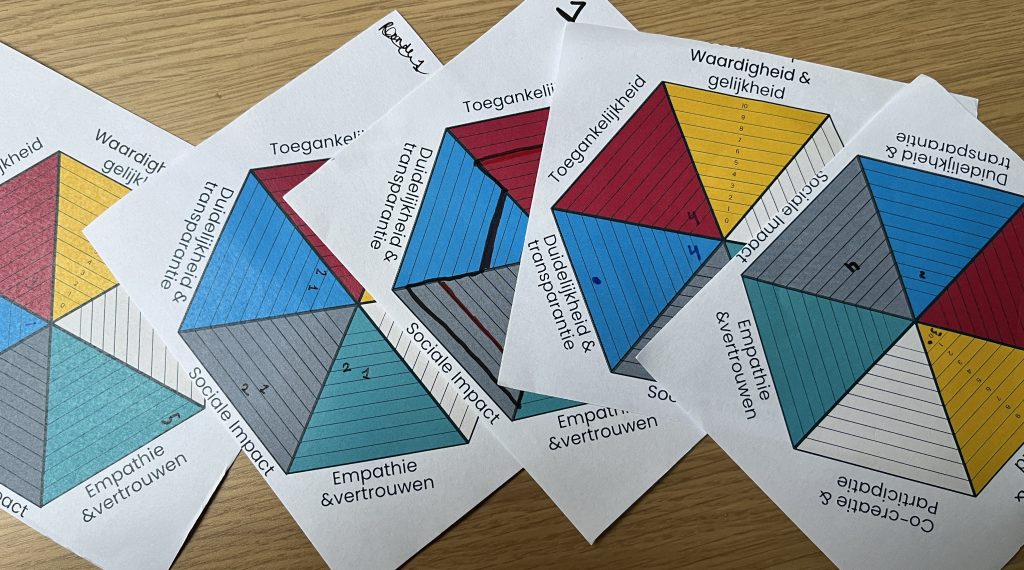
Alongside the playtests, the values hexagon was introduced as a way to reflect on what happens during the game. Players were asked to map their experience across six axes: accessibility, dignity & equality, co-creation & participation, empathy & trust, social impact, and clarity & transparency.
What became immediately visible was not just variation in outcomes—but variation in interpretation.
Without prior explanation, participants consistently assigned different meanings to the same values. What one player considered “accessible,” another experienced as exclusionary. What felt like “co-creation” in one group was interpreted as dependency or even inequality in another.
This is also visible in the spread of the scores across sessions, where the same round could produce radically different value distributions.
Reflecting reality, not measuring it
At first glance, this could be seen as a lack of clarity in the tool.
However, in relation to the playtest feedback, it reveals something more fundamental.
Throughout the sessions, participants expressed tensions such as:
- confusion that was meaningful for some, but overwhelming for others
- randomness that felt unfair, yet recognisable as “real life”
- audio that was inclusive in intent, but exclusionary in execution
These are not contradictions to be resolved—they are co-existing realities.
The values hexagon does not produce a single “truth” about the game.
Instead, it surfaces how values are situated, negotiated, and experienced differently depending on position, expectation, and interpretation.
This resonates with the framing of literacy as a social practice (Barton & Hamilton, 1998):
just as literacy is not neutral or universal, neither are the values through which we assess systems.
Misalignment as insight
The divergence in interpretations becomes particularly meaningful when read alongside the playtest feedback.
For example:
- High scores on clarity in one group contrast with feedback describing unclear rules and overwhelming information
- Experiences of co-creation sit alongside frustrations about unequal power in help cards
- Strong feelings of empathy coexist with moments of disengagement caused by audio or pacing
Rather than invalidating each other, these differences point to value misalignment—a condition that mirrors real-world systems, where policies, services, and experiences are rarely aligned across stakeholders.
In this sense, the hexagon does not function as an evaluative tool, but as a diagnostic lens:
it reveals where values are contested, invisible, or unevenly distributed.
Designing for multiple readings
An unexpected but significant insight is that the lack of explanation of the hexagon may actually be essential.
By leaving the values open to interpretation:
- participants project their own frameworks and assumptions
- hidden norms and expectations become visible
- discussions shift from “what is correct” to “why do we see this differently?”
This aligns with the role of the game as a boundary object:
not to stabilise meaning, but to enable multiple, sometimes conflicting, interpretations to coexist and be discussed (Star & Griesemer, 1989).
From experience to conversation
Where the gameplay creates an embodied experience of exclusion,
the hexagon extends this into collective reflection.
It creates a space where participants can:
- compare interpretations
- articulate tensions
- question taken-for-granted assumptions about clarity, fairness, and accessibility
In doing so, it shifts the outcome of the game from individual empathy to shared inquiry.
Calibrating not just the game, but the lens
The introduction of the values hexagon adds another layer to the earlier insight on calibration.
Not only does the game require tuning—
so does the way we interpret it.
The variability in outcomes is not noise to be reduced,
but a signal to be read:
- and meaning is never singular.
- a reflection of a world in which
- systems are experienced differently,
- values are unevenly distributed,
Leave a Reply