As part of this research, I have been deliberately documenting not only outcomes, but also the actions, decisions, and detours that shaped the work.
How can participatory design be used to create inclusive, empathy-driven experiences that challenge literacy-based exclusion and empower non-literate individuals as co-creators of knowledge and social change?
To answer this question, there is still a long way to go, obstacles to be overcome, contacts made, alliances forged. I’m trying to take you along on my journey here.
Podcast about this research (UK)*
Short Podcast in Dutch about this research (NL)*
*Generated by AI
What is low literacy
Someone is low literate if the person does not understand enough of the language to function in society. In the Netherlands we call this language level F2.
About the research
This research originates from a sustained sense of injustice in how people who struggle with reading and writing are perceived and treated within contemporary society. These attitudes are not incidental; they are rooted in deeper societal values that privilege textual competence as a prerequisite for autonomy, participation, and citizenship. As a result, people who cannot engage confidently through written language are often positioned as deficient, dependent, or invisible within public systems. Read more …
Aproach
This research will consist of a series of experiments, interviews, literature studies. In the experiments and interviews illiterate people will be involved as experts or co-designers.
Research fellow
I am now a research fellow in the Creating010 research center and part of the group that focuses on Digital Inclusion.
This allow me to work with lector Maaike Harbers and to co-create and have reviews with other fellows in this group.

Shift in focus from researcher/ problem solver to researcher/ advocate
In my quest to help illiterate people better, I found I am shifting in my approach. The subject is so fast and complex it is impossible to solve on my own. So where can I make an impact. My experiments, interviews and deskresearch had a few things in common:
- shame
- misunderstanding
- ignorance
- staying in your own bubble
Read more on my position as a researcher here.
Research
All posts with the category research will contain summary transcripts from interviews, findings from desk research etc.
You can select a category by selecting one below.
- Community
- Creating
- Definitions
- Desk research
- Experiments
- Interviews
- Literature and sources
- Reflections
- Reflections with experts
- Reflections with peers
- Research
- Uncategorized
References
All references can be found here.
Low literacy and Dutch as a mother tongue?
Contrary to what many people think, there is a large group of low-literate people for whom Dutch is their mother tongue, but who cannot read and write (and often also do arithmetic) sufficiently. They are mostly referred to as the NT1 group.
Quest
My quest is to find ways to help illiterate people better. I want to make literate people aware of the large group of illiterate people. And I want to explore solutions that will not require literacy or just a very limited literacy to inform and assist people in Rotterdam. During my quest my focus shifted to creating awareness of the challenges for the illiterate, to create empathy and action to lessen literary-based exclusion.
First Experiment – recipe
Is it possible to create a recipe without words together with illiterate people and use it?
Find out more about this experiment here.

Second Experiment – visual language
Is it possible to create a visual language to translate text in to visuals?
How this experiment turned out can be found here.
Third Experiment – A Perspective-Changing Puzzle
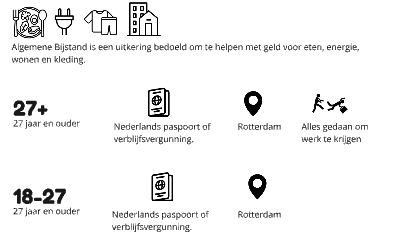
To simulate the experience of functional illiteracy, I designed a series of puzzles containing essential letters, spam, and bureaucratic-looking texts. Participants were asked to decipher whether a given message (in Esperanto) was important or not. After completing the task, they were instructed to describe their experience—first without using any text, then in a group discussion, and finally in writing. Read the experiment outcomes here.

Fourth Experiment – Designing an Inclusive Serious Game to Shift Perspectives on Illiteracy
First iteration
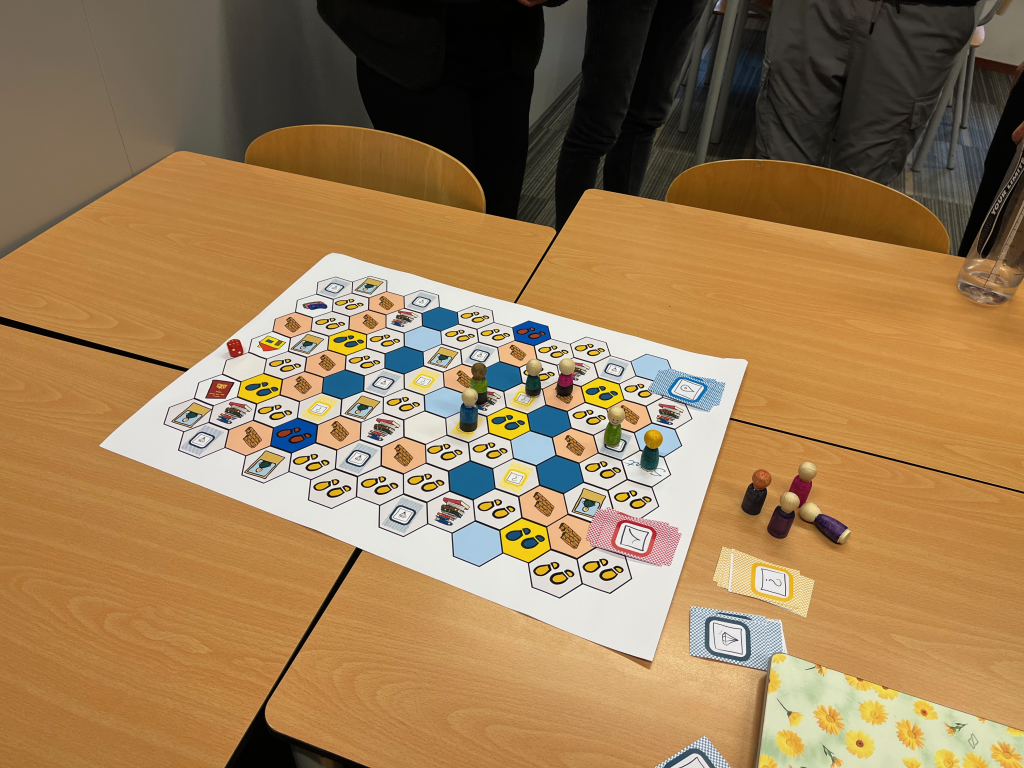
The game’s narrative follows a player attempting to obtain social housing, requiring them to collect documents such as a passport, a compliant passport photo, and a minimum amount of money—tasks that, in reality, involve complex literacy-based interactions.
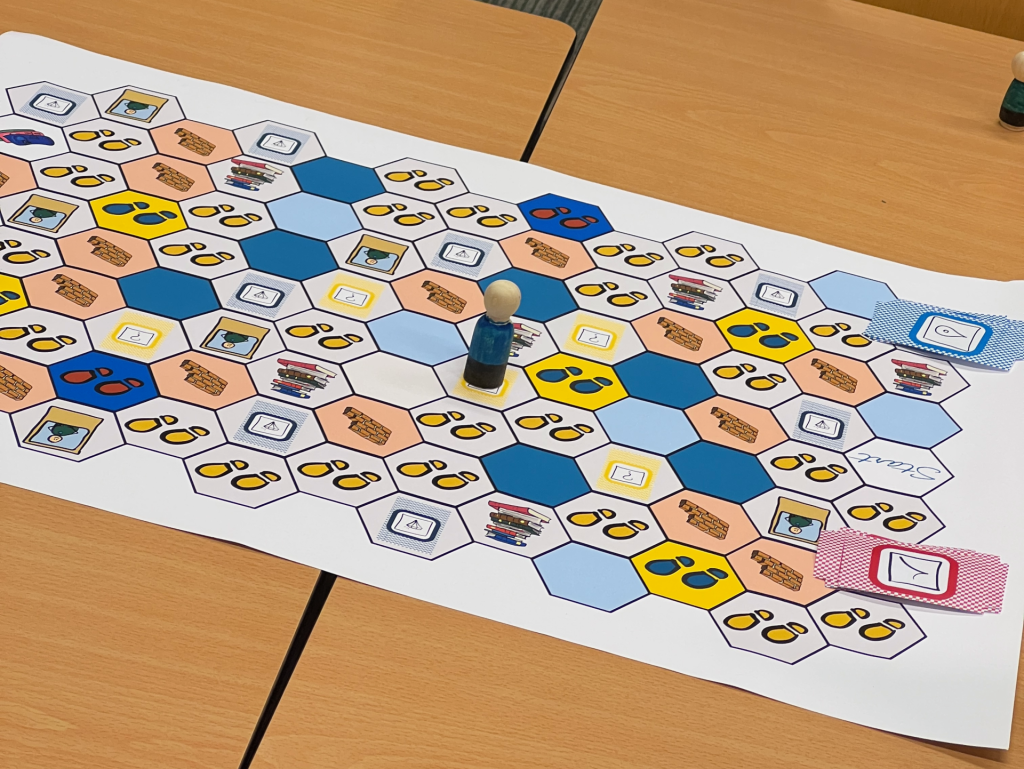
Although the game was still in development, the effect on the participants was already significant. In post-play discussions, many reported a newfound understanding of how deeply illiteracy can impact autonomy and confidence in everyday bureaucratic situations.
Read more details on this iteration here.
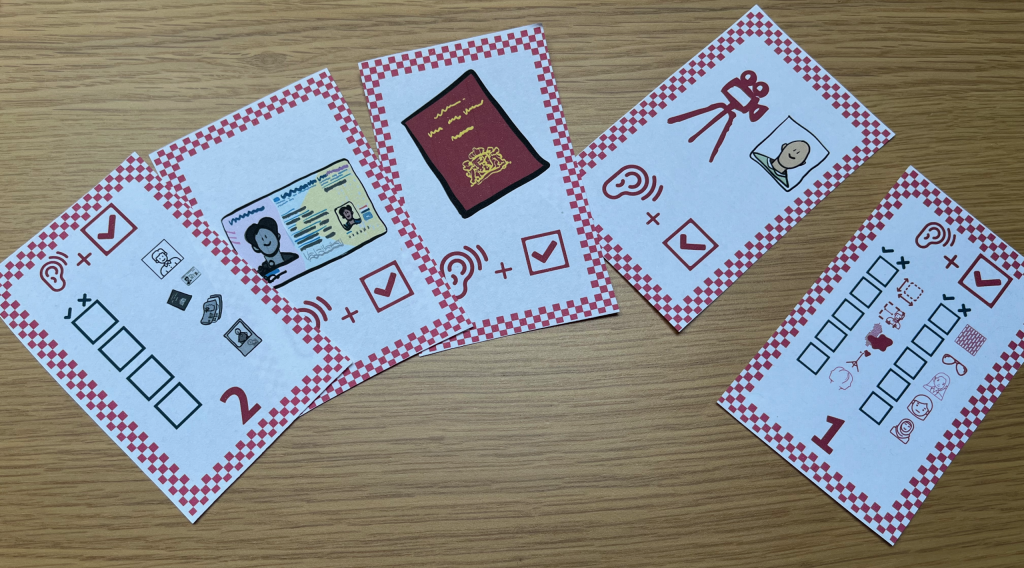
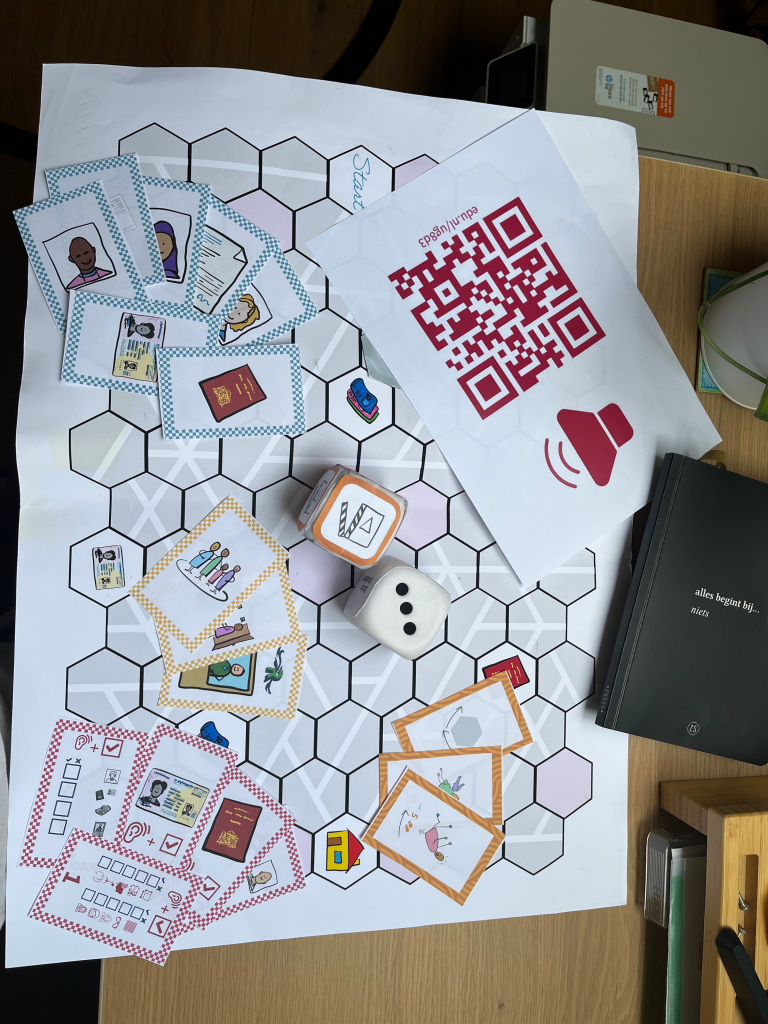
Development of the gameboard
Second iteration
Feedback from the first iteration of the game board was to complex to play within the set timeframe.
How to play the game was still unclear. And the audio quality needed improvement.
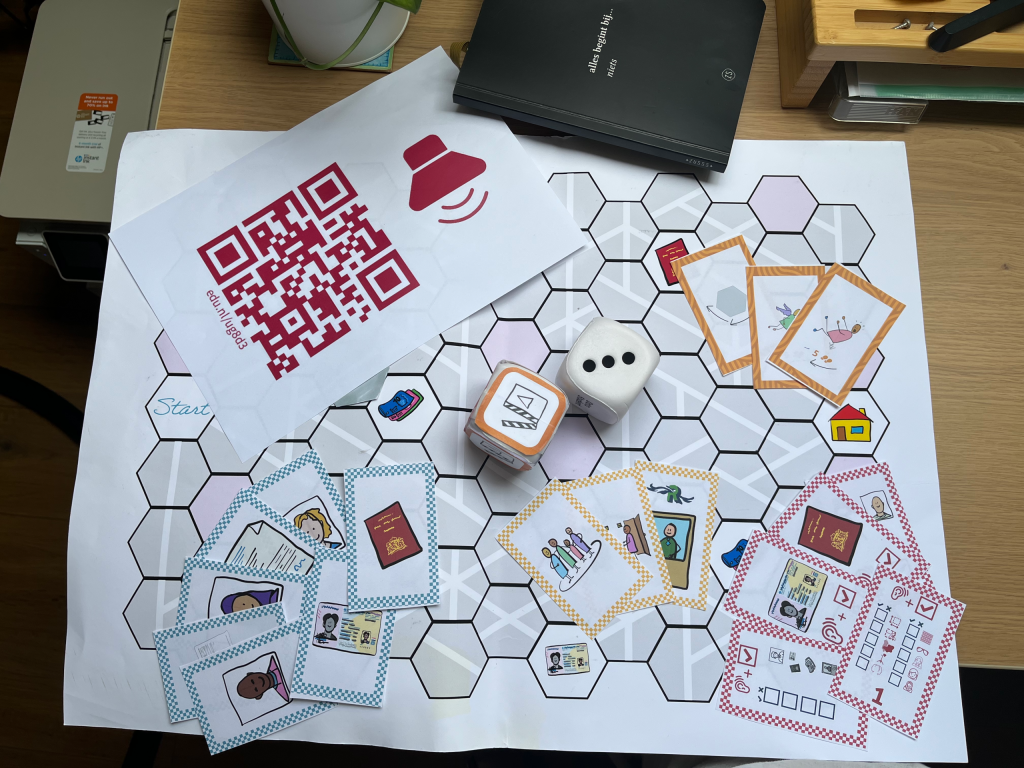
Also the gameplay didn’t flow seamlessly. Read more about this iteration here.
Third iteration
To address the issue of flow in the game two game experts were consulted on digital and boardgames. (see a more in depth piece on this here).
This resulted in an altered board, and altered gameplay.
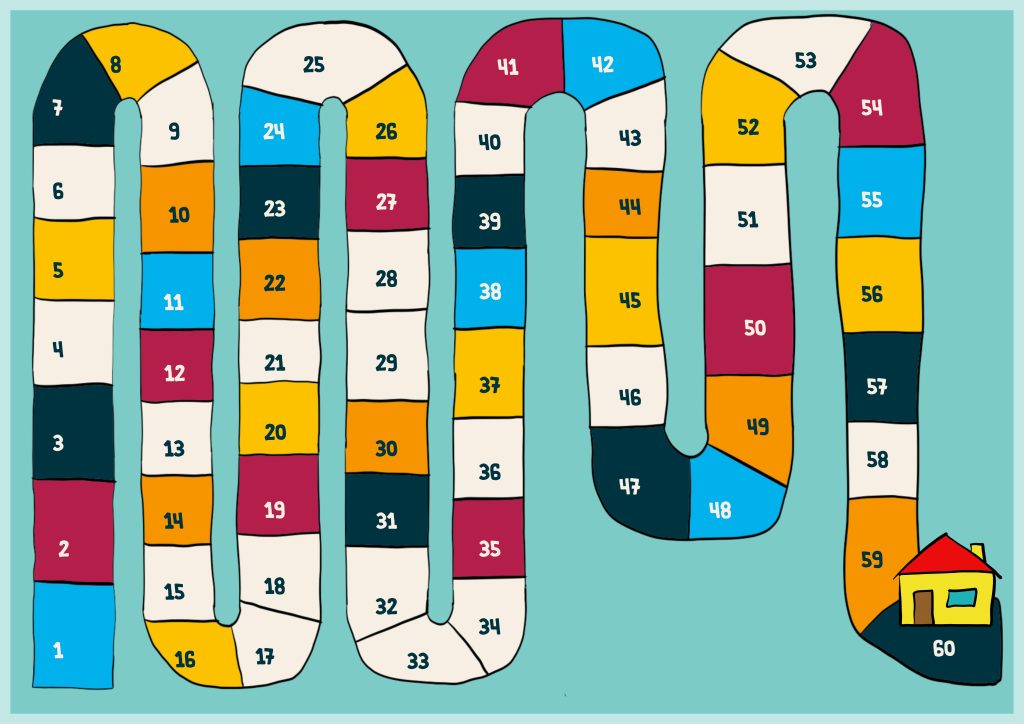
Instead of dice, a collection of time fiches now sets the pace on the board.

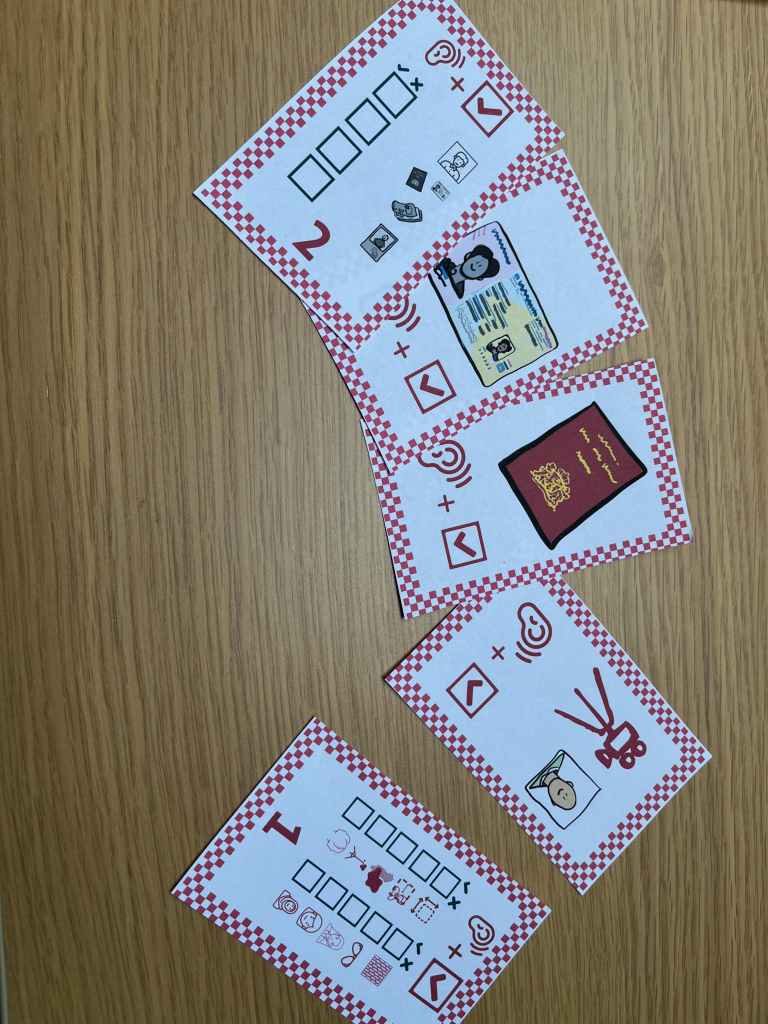
And all instruction for cards is prompted from this site, using the pictures on the cards.
All instruction is in audio now.
More detail on the development of this board is found here.
Audio
My journey into audio did not begin as a technical choice, or even as a conscious design strategy. It began with discomfort.
While experimenting with I started to realise, audio is not simply an alternative medium — it is a different mode of participation.
Unlike text, audio cannot be consumed selectively without consequence. You cannot jump to the conclusion without missing the middle. You cannot correct someone else’s interpretation by pointing at a sentence. You must listen. And listening, especially collective listening, changes behaviour. It slows people down. It introduces pauses, misunderstandings, silences. And those silences turned out to be productive. Read more on my journey with audio here.
Network

To be able to do this research I had to expand my network considerable. Having worked in the trade, transport and industry domain and in financials my network in the social domain was lacking. With the help of lector Maaike Harbers and fellow researcher Peter van Waart I was able to join the Digital Social Innovation Lab (DiSL) in Rotterdam and join the Hillevliet community in Rotterdam South. Fellow researcher Elma Oosthoek from EMI (Expertise Centre for Social Innovation) introduced me to the neighbourhood dads and the moms at the reception room of the neighborhood at the Slaghekstraat.
“In addition to the fact that this search has yielded great results, it has also brought me closer to my father. That alone made it very worthwhile.”

Tanja Ubert
Student Master Design