Using Living Without Letters in an inclusive design workshop
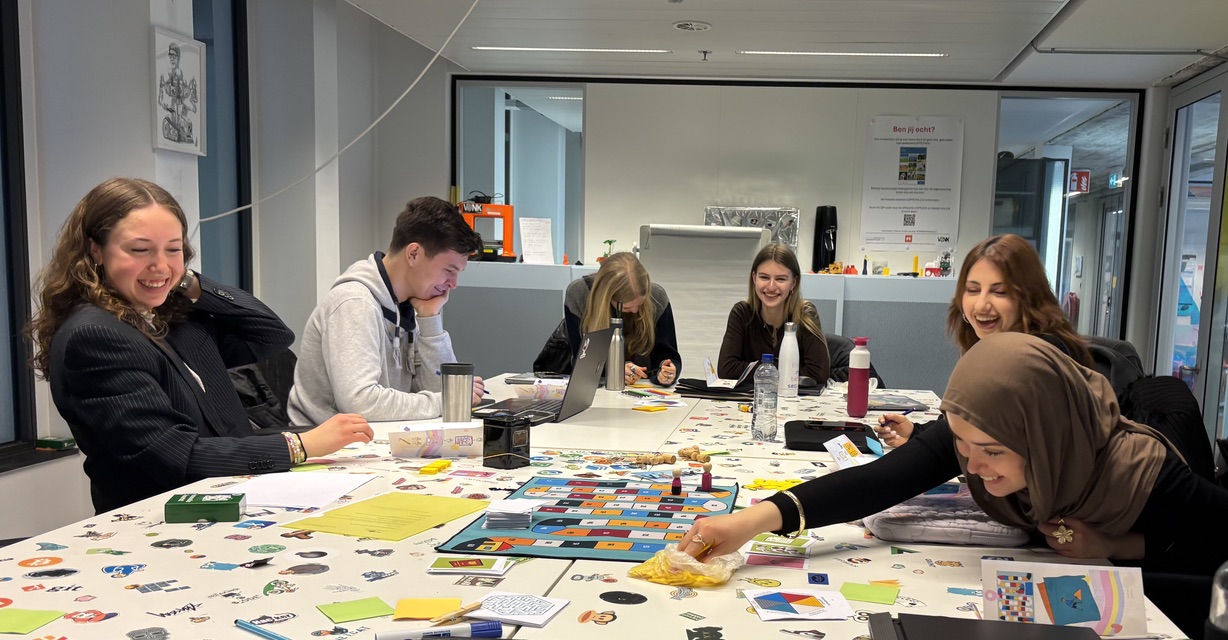
At first glance, Living Without Letters looks like a board game.
There are cards, locations, time tokens, unexpected setbacks and moments of luck. Participants work their way through Rotterdam, trying to secure something remarkably ordinary: a place to live.
Yet somewhere between confusion, laughter, hesitation and moments of discomfort, something shifts.
Because the game is not really about winning.
It is about noticing.
Over the past months, I started using Living Without Letters in educational settings at CMI and within Creating010 as part of workshops on inclusive design. Students from different disciplines—design, communication, media, AI and technology—play the game alongside language ambassadors and people with lived experience of low literacy.
And every single time, the same thing happens.
Students arrive confident.
They assume they will quickly understand the system, optimise decisions and move efficiently through the game.
Then the game quietly resists them.
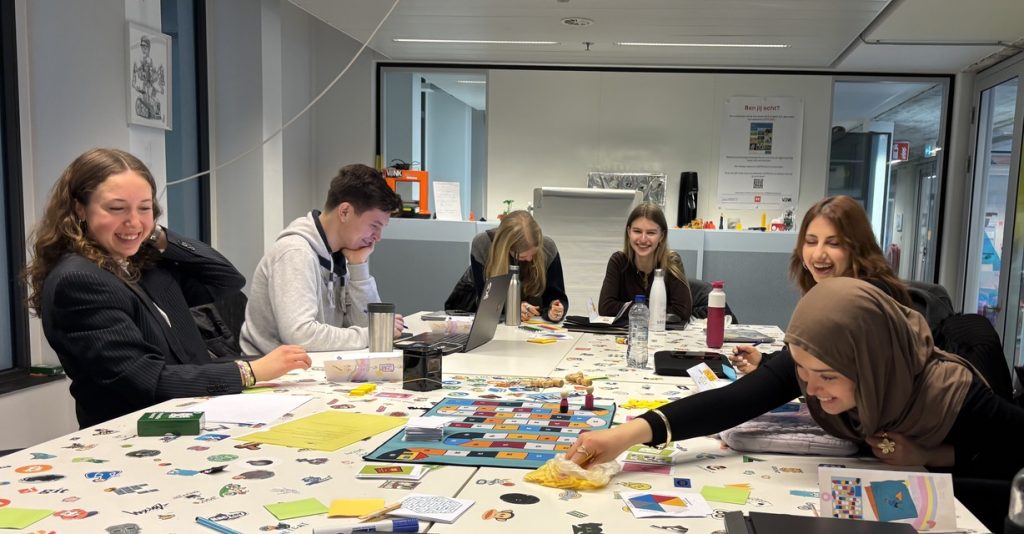
Instructions cannot easily be reread. Audio disappears once spoken. Information feels incomplete. Waiting suddenly matters. Others become necessary.
Some participants start apologising.
“I think I missed something.”
Others become visibly frustrated.
“I didn’t know what was happening, because I couldn’t look ahead.”
And occasionally someone pauses and says something that captures exactly why this work matters:
“I had no idea reading was so much part of everything I do, until it wasn’t available anymore.”
From designing for people to designing with complexity
One of the things that surprised me most in these workshops is how quickly conversations change.
Before playing, students often approach low literacy as a communication problem:
“We just need clearer language.”
Or:
“Maybe people need more explanation.”
But after playing, the conversation shifts.
Students begin recognising that literacy is not simply about reading words.
It quietly structures participation.
Confidence.
Agency.
The ability to navigate systems independently.
And suddenly, the question changes from:
How do people adapt to systems?
towards:
How might systems adapt to people?
For me, this is where inclusive design becomes interesting.
Not as accessibility added afterwards.
But as a way of rethinking participation itself.
Language ambassadors as experts
Perhaps the most meaningful moments happen when students play alongside language ambassadors from Stichting Lezen en Schrijven.
The expertise in the room changes.
People who are often positioned as vulnerable participants suddenly become guides, translators and experts of lived experience.
Students notice this immediately.
One reflected afterwards:
“I really love how you used illiterate people as experts in your research, it shows how much you value their contribution.”
Another said:
“I never considered illiterate people in my designs before. But now I think I always will.”
Those moments matter.
Because inclusive design cannot emerge from assumptions alone.
Sometimes, understanding begins when expertise shifts.
Why confusion matters
One thing I often tell students before playing is:
A little confusion is part of the workshop.
And that matters.
The goal of the game is not frustration.
Nor simulation.
No temporary experience can replicate what it means to navigate a literacy-dependent society every day.
Instead, the game tries to briefly reveal some of the conditions surrounding low literacy:
Uncertainty.
Dependency.
Interrupted plans.
Loss of control.
The emotional labour of participation.
When designed carefully, confusion becomes reflective.
Students begin recognising not only what literacy does, but what systems quietly assume.
And perhaps more importantly:
what becomes invisible when reading works effortlessly.
Designing participation differently
For me, the workshop is not really about the game.
The game simply opens a door.
What happens afterwards matters just as much.
Students reflect on values such as dignity, accessibility, trust and participation. They discuss how their own graduation projects, products or AI systems might unintentionally exclude people.
Sometimes, something much larger emerges.
A different design question.
Not:
How can we make this clearer?
But:
Who are we unintentionally leaving behind?
And perhaps that is ultimately what Living Without Letters hopes to contribute to education.
Not certainty.
But a slightly different way of seeing.
A way of recognising that inclusion sometimes begins by noticing the assumptions we did not know we were making.
Leave a Reply