Designing Inclusive Public Discourse Through Visual, Audio and Experiential Communication

1. The exclusion hidden inside inclusion
“I had no idea that reading was so much par tof everything I do, until it was not allowed during the game.”
– Participant, Living Without Letters.
For a long time, I thought my research was about literacy.
Or perhaps more accuratly: about the absence of literacy in conversations where I felt it should have been impossible to ignore.
Over the past years, I found myself incrieasingly involved in discussions about digital inclusion, participation, responsible AI, accessibility, and public services. Important conversations. Necessary conversations. WE discussed digital skills,
usability, interface design, bias,
participation gaps, and the wyas in which technologies can unintentionally reinforce exclusion. Yet after many of these conversations, I repeatedly walked away uneasy feeling that something fundamental
remained strangely absent.
Literacy.
Or more accurately: the quet assumption of literacy.
Because dispite our ambitions toward inclusion, we still often organise particpation around written language. Government systems, healthcare, housing, eduation, welfare, and increasingly digital services continue to rely heavily on text as the
primary gateway to civic life. Forms must be intepreted, letters understood, procedures followed and digital interfaces
navigated. Even systems explicitly designed to improe accessibility frequently continue to assume that reading itself is not a barrier.
For many people, this assumption remains almost invisible.
Those of us who move comfortably through written language rarely notice how deeply reading structures everyday life. We skim instructions while distracted, compare information online, reread unclear sentences, write reminders to ourselves, anticipate what comes mext, and queitly recover from misunderstanding through small acts of verification. Reading often functions less as a consious activity and more as an invisible infrastructure that supports indepence.
Its presence becomes most visible when it suddenly disappears.
In Rottterdam, apporximately one in three residents experiences difficulties with basic skills related to reading,
writing and digital participation.

Nationally, an estimated 2.5 million adults struggle with functional literacy. Yet despite decades of policy attention, much of public communication still assumes textual fluency as the norm. Participation often begins after reading.1
This matters, because literacy structures much more than access to information alone. It influences confidence,
timing, and autonomy. It shapes whether someone feels capable of acting
independently or hesitant to engage at all. It affects wheter navigating a system feels manageable or exhausting.
Perhaps most invisibility of all, literacy structures the ability to participate without constantly depending on others.
Looking back, I increasingly realise that my discomfort with this topic was never only porfessional.
It was also personal.
Growing up in a family where both of my parents struggled with reading and writing meant communication rarely felt neutral. Letters arriving from schools,
insurers or government institutions did not simply function as information. Instead, they often became moments around the dinner table where meaning had to be negotiated, guessed, interpreted, or quitly posponed. Small
misunderstandings could suddenly feel large. Uncertainty itself could become paralysing.
Long before I encountered theories of literacy, I had already learned something important: reading and understanding are not the same thing.
Nor are literacy and participation.
1Basisvaardigheden in zicht (https://basisvaardighedeninzicht.nl/)
Years later, the work of Barton and Hamilton2 on literacy as social practice, followed by Streets’s3 writing on social literacies, gave language to something I had recognised intuitively for much longer.
2. Barton, D., & Hamilton, M. . Local Literacies: Reading and Writing in One Community. Routledge (1998)
3. Street, B. V. . Social Literacies: Critical Approaches to Literacy in Development, Ethnography and Education. Routledge(2013)
Literacy is not symply an individual skill.
Literacy is not symply an individual skill someone either possessess or laks. It is social, situated, and deeply embedded in everyday life. It shapes relationships, access to institutions, confidence, dignity, and the ways in which people organise thier participation in society.
This perspective slowly shifted the direction of my research.
Low literacy no longer felt solely like an educational issue. Increasingly, it began to feel like a design issue. Not because literacy itself is designed, but because so many systems quietly depend on it. Public participation is contiously mediated through choices about communication, timing, access and interpretation. When written language becomes the dominant mode through wich systems organise themselves, literacy becomes a condition for participation.
Once I started looking at literacy this way, the questions began to change.
The issue no longer felt limited to how people could become (better) readers or how institutions might simplify written communication. Instead, I became interested in the assumptions hidden inside participation itself. What happens when systems for all people queitly presume a level of literacy that not everyone shares? How do people navigate these systems when meaning remains uncertain? While the assumption is, that written information is clear and available for everyone? And perhaps more importantly: Where does responsibility sit when participation
becomes difficult?
Initially, I assumed that explanatin might be enough. If people better understood the scale of low literacy, heard lived experiences, and recognised the effort required to navigate text-heavy systems, surely perspectives would begin to shift.
Yet increasingly, I realised something essential was missing.
The issue entered the conversation, but somehow rarely entered the body.
Students, colleagues and professionals often responded with practical solutions: clearer text, simpler language, improved instructions. Valueble suggestions, certainly. Yet many of these responses continued to assume text itself as the answer. The system remained intact. Literacy remained the quit expectation underneth participation.
Slowly, I started recognising an uncomfortable paradox with my own work.
I was trying to explain something deeply embodied through explanation alone.
And perhaps more painfully, I was relying on the very thing I was trying to question:
Language itself.
This became the starting point for Living Without Letters (Leven zonder Letters), an ongoing design research project exploring how visual, audio and experiential forms of communication might enable more inclusive participation in public life.
Rather than attempting to simulate illiteracy, which would neither be possible nor ethical, the project explores whether highly literate participants can briefly encounter some of the structural conditions that literacy quietly organises.
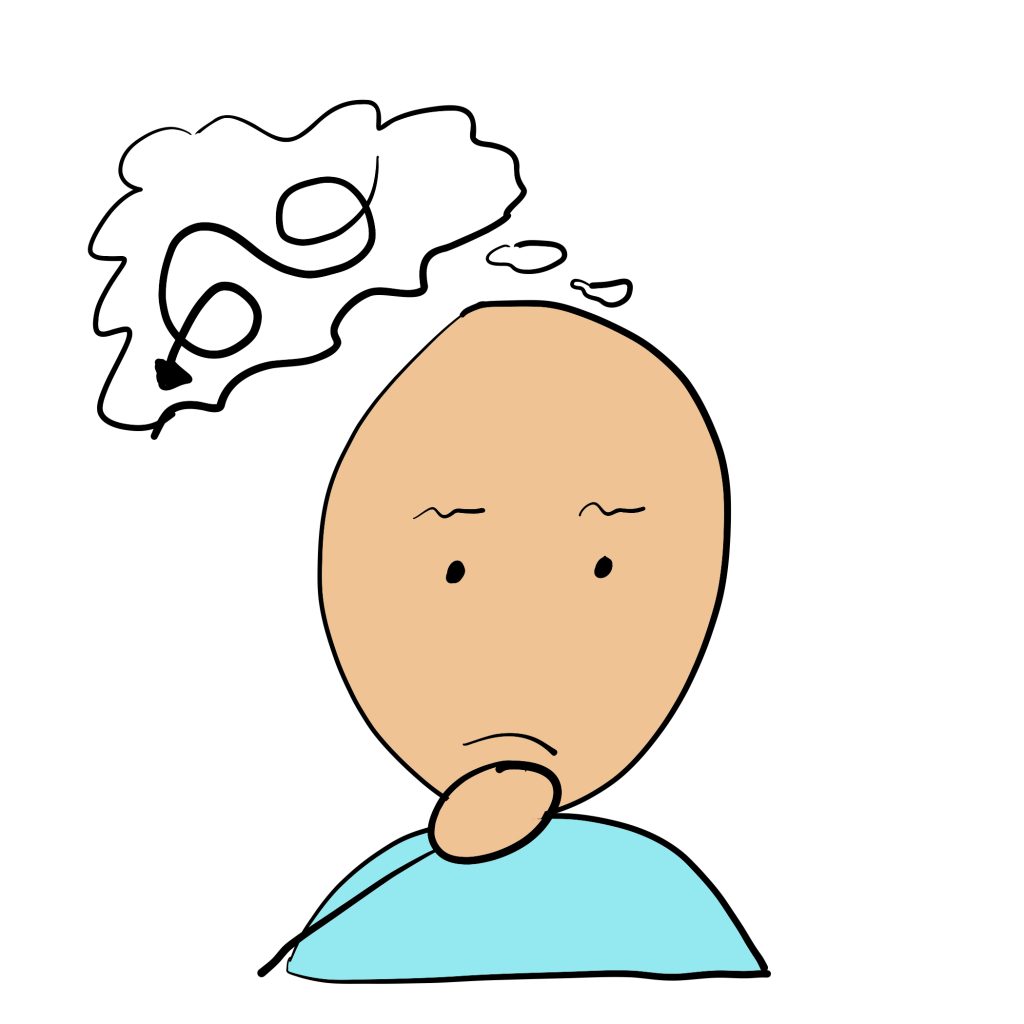
Uncertainty, fragmented information, interrupted plans, dependancy, waiting, and the inability to privately verify what comes next become central elements within designed experiences.
This shift mattered because exclusion itself rarely feels abstract.
It accumulates quietly through ordinary moments: a letter that remains partly unclear, an appointment missed because instructions were misunderstood, a form that appears straightforward to everyone else, or a phone menu that moves to quicly to process. What often appears minor in isolation can gradually become exhausting in repetition.
Increasingly, I began wondering whether designed encounters might make some of these invisible dynamics briefly perceptible Not by asking people to imagine exclusion, nor by asking them to become someone else, but by temporarily removing familiar supports that usually remain unnoticed. Like all commodities (for example: running water, electricity, roads) as long as it works, you don’t see it, but when it fails, you notice.
What happens when information behaves differently?
When certainty becomes fragile?
When other suddenly become necessary?
And what becomes visible when literate people cna no longer rely on reading as their dominant way of navigating the world?

2. When explanation stopped working
As stated in the introcution, in the beginning of this research, I genuinely believed awareness might be enough.
This is one of the actions the Stichting Lezen en schrijven (Foundation for reading and writing) is taking. The explain the scale, introduce language ambassadors to share lived experiences, to make people recognise the invisible effort involved in navigating text-heavy systems, convinced that something will begin to shift. That is why I also started with explanation. I introduced the topic into conversations about digital inclusion, brought examples into educational settigns, and increasingly invited reflection on how deeply written language structures participation in public life.
People listened.
Students were often engaged. Colleagues responded thoughtfully. Discussions about inclusion frequently led to practical ideas and good intentions. Yet after many of these conversations, I repeately walked away with the same uncomfortable feeling that something essential had not moved.
The issue had entered the conversation, but somehow it had not yet landed.
Students regularly proposed solutions that, on the surface, sounded promising: simplify language, improve instrucitons, make communication clearer, or visualise information more effectively. These were thoughtful responses, and in many situations undoubtely valuable.
Yet over time, something about these suggestions unsettled me. Despite the intention to make systems more inclusive, most of these ideas still quietly positioned text as the centre around which participation was organised. Literacy remained the invisible expectation underneath the solution. It still positioned the ‘problem’ with the illiterate people. Not in the system that was excluding them.
Looking back, I was asking people to intellectually understand something that is often profoundly embodied.
The challenge was not simply informational, it was experiental.
I recognised that I was relying on language itself to explain what happens when language stops functioning.
This changed the direction of the research.
ather than continuing to ask how low literacy could be explained more effectively, I became increasingly interested in what might happen if some of the underlying dynamics could be
experienced, however termporaryly. What would happen if familiar supports disappeard? Could uncertainty itself become meaningful? And might
participation look different if people could no longer rely on reading as their primary way of making sense of the world?
One of the earlies experiments emerged through something remarkably ordinary: a recipe.
Inspired by the Ikea instructions for creating fourniture and Michelangelos picture of a shopping list.

Michelangelo, picture of shopping list, Archivio Casa Buonarroti (dated by a stamp at 18-03-1518), https://www.casabuonarroti.it/ricerca/archivio/ date visited: 28-05-2024, (1518)
Together with neighbourhood fathers in Hillesluis, I began exploring what would happen when written instructions
disappeard from an everyday activity that most people assume is relatively manageble. Rather than following a conventional recipe, particpants
received only visual cues.
The assumption was deceptively simple: perhaps visuals might replace text.
At first, particularly among highly literate participants, there was confidence. Cooking felt familiar, even while some of the participants had never cooked before. The task was sovable. Yet uncertainty entered the room suprisingly quickly. Images that initially seemde obvious suddenly required interpretation. Participants slowed down.
Conversations emerged around meaning. People started checking assumptions with one another.
What facinated me was not simply that confusion emerged.
It was what happend socially because of it.
Without written instrucitons quietly organising certainty, understanding became collective. Participants increasingly relied on one another to negotiate meaning, compare interpretations and decide what should happen next. The experiment revealed something I had not fully anticipated: text does not only communicate information. It also quietly distributes authority. Written instructions often allow people to move independently, recover from uncertainty privately, and reassure themselves without relying on others.
Once those supports disappeared, participation itself changed.

Neighbourhood dads of Hillesluis watching video of recipe.
At the same time, the experiment reveailed its limitations.
The uncertainty remained temporary. Participants hesitated, but they rearely felt vulnerable. Meaning became onstable, yet the emotional weight I associated with literacy in everyday life remained largely absent. People experienced inconvenience, but not dependancy. They dads did not depend on cooking for something important. At home their wives did most of the cooking for some, others worked as a professional cook, so no uncertainty there, or just didn’t cook this elaborately. Noting ‘on the line’.
The experiment had reveailed something important, but it also made visible what was still missing.
The issue was not simply the absence of text.
The issue was understanding what text quietly does.
A second experiment complicated this further.
Participants received what looked unmistakably like an official document. The layout felt familiar, the typography carried authority, and the structure resembled the kinds of forms or institutional communication many people encounter regurlarly. Yet dispite its recognisable appearance, the lenguage itself had become unreadable.


During the workshop the neighbourhood dad’s of HIllevliet made a first draft of the recipe.
Vegetarian couscous recipe without words

Meaning suddenly stopped functioning.
At first, participants responded as highly literate people often do when uncertainty emerges: the searched for patterns, tried to decode fragments, and looked for clues that might restore clarity. But gradually something else entered the room. Frustration gave way to hesitation, and hesitation slowly shifted toward self-doubt.
On participants eventually and quietly admidded:
Understanding what text quietly does.
‘I feel like I should understand this.’
That sentence stayed with me.
It resembled the reaction of my father when confronted with things he couldn’t read so much. It was a recurring thing in my meetings with the ‘language ambassadors’ who are all experience experts.

Puzzle experiment at Smart & Social Fest 2024
Because when systems become difficult to navigate, people rarely question the system first. More often, they question themselves. Confusion becomes internalised. Not understanding starts to feel personal.
What I recognised in those moments echoed experiences I had witnessed much earlier in life around the dinner table growing up. That it is rarely about reading itself. But the effect on confidence, relationships and dignity. It shapes whether people feel capable of acting independently or hesitant to engage at all.
Yet something interesting happened once participants started reflecting collectively on the experience.
Initially, many framed their struggle as personal failure. They had missed something. They had not listened carefully enough. They should have tried harder. But gradually, the conversation began to shift. Participants increasingly recognised that perhaps the difficulty had not originated in themselves at all. The conditions themselves had shaped the experience.
Responsibility slowly moved.
The question changed from:
‘Why didn’t I understand this?’
toward:
‘Why is this system organised in such a difficult way?’
That movement, from internalised failure toward systemic awareness, would later become one of the most important insights within the research.

At the same time, the experiments continued reveailing their own limitations.
A recipe remained temporary. An unreadable document represented only a single moment of breakdown. Every day life rarely consists of one confusing interaction. More often, exclusion accumulates quietly over time through repetition: misunderstood letters, appointments, phone systems, delays, procedural uncertainty, fragmented information and the exhausting work of repeatedly trying to make sense of systems that appear straightforward to others.
I wanted to understand what happens when literacy structures not a single moment, but an entire system.
Alongside these experiments, another important shift was taking place.
Through conversations with language ambassadors, neighbourhood participants, Stichting Lezen en Schrijven and people navigating literacy barriers in everyday life, my own assumptions slowly started changing. At the beginning of this research, I unconsciously framed literacy primarily through absensce: something missing, something people needed more of.
Yet the more conversations I had, the more complicated this assumption became.
Many participants did not primarily describe their lives through deficiency. Instead, they spoke about ingenuity, relationships, and
strategies that allowed every day life to remain
manageable. Family members helped interpret formal letters, neighbours explained unfamiliar procedures, libraries functioned as trusted places for support, and social networks queitly became infrastructures of participation. What repeatedly surfaced was not a picture of
passivity, but one of resilience and adaption.
Several lived-experience partners also challenged assumptions I had not realised I carried into the research.
Not everyone experiencing low literacy necessarily prioritised learning to read or write. For some, literacy education later in life felt
emotionally difficult, socially isolating, or disconnected from the support systems they had built over time. What participants described more often was frustration with institutions that continued communicating as if written language were the only reasonable way toorganise participation.
This insight mattered profoundly.
Because gradually, the problem shifted.
The issue no longer felt limited to how people could adapt themselves to literacy-dependent systems. Increasingly, it became a question of how systems themselves continue organising participation through assumptions that remain largely invisible to those who meet them comfortably.
The challenge was no longer only about accessibility.
It became about participation.
How might public systems communicate differently? What would happen if communication relied less exclusively on written language? And perhaps most importantly: How might highly literate people begin recognizing assumptions they normally move through without noticing?
It became about
participation.
In this process I started realising that I needed something capable of holding these questions for longer. Not another isolated experiment.
Something capable of containing uncertainty, waiting, fragmented information, interrupted plans, and independence at the same time. Something that could move beyond awareness.
Wondering if this required something less like an intervention and more like a system in itself.
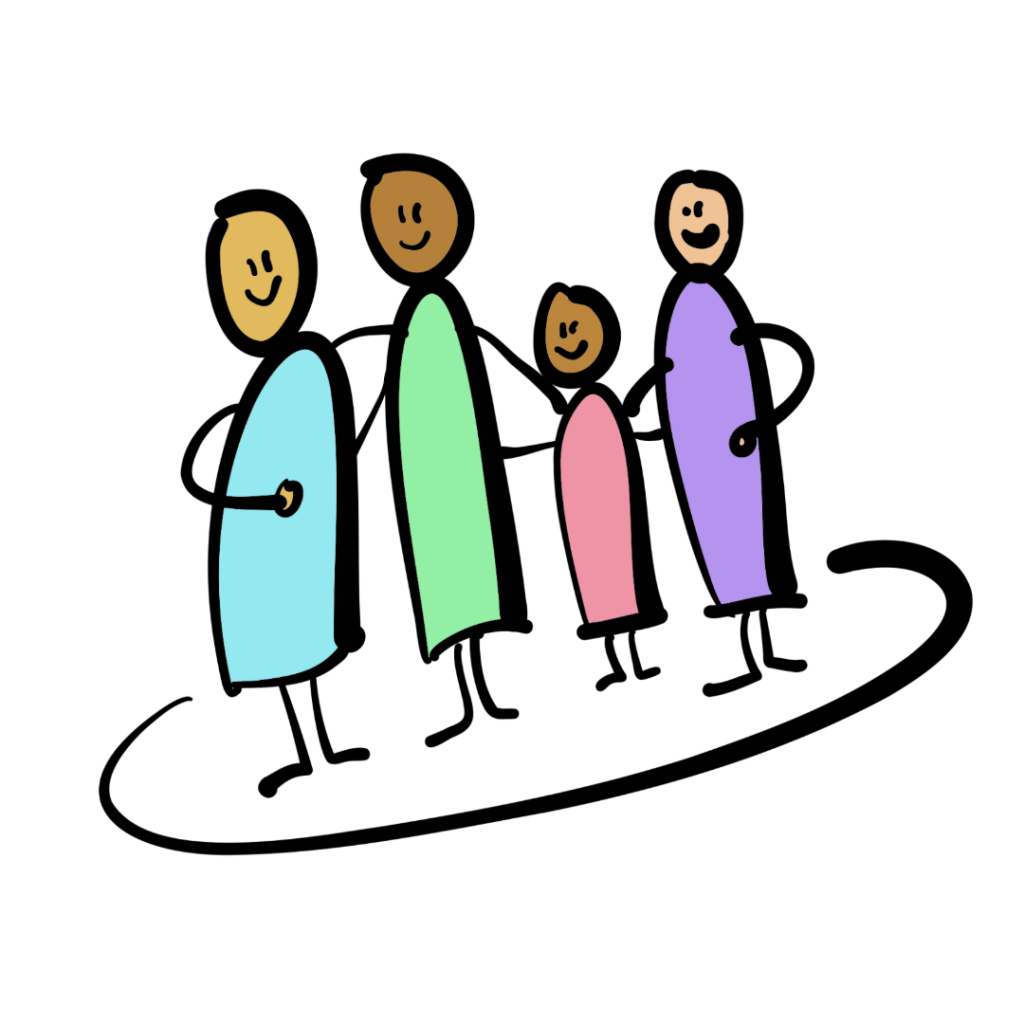
Illustrations in the game

3. Designing confusion carefully
By the time the earlier experiments began setting into place, one realisation had become increasingly difficult to ignore.
I no longer needed an experiment that isolated a single moment of uncertainty.
The recipe had revealed how quickly meaning becomes collective once written instructions disappear. The unreadable document puzzles had shown how easily confusion turns inward, becoming self-doubt rather than critique of the system itself. Conversations with the lived-experience partners had complicated my assumptions further, shifting the focus away from literacy as an individual limitation and toward the systems that quietly organise participation around written language.
So I needed to find a way to create an experience that was more complete.
Exclusion does not emerge through one dramatic moment.
through one dramatic moment. It accumulates gradually through ordinary interactions that become difficult once certainty starts slipping away. Just missing a document in and of itself is not a problem, but if it affects another procedure, causes incomplete information, fragments your avialiable time and all these small instances start shaping larger outcomes turnes what initially appears manageble into something exhausting.
Wondering what would happen, if these dynamics could exist together in one designed environment. Carefully placed in Rotterdam to increase ownership.
The idea of designing a game initially felt uncomfortable.
Games often carry assumptions of entertainment, simplification and competition. I worried that translating experience connected to literacy and exclusion into something playable might unintentionally trivialise them. The intention in this research had never been to reduce complexity or turn vunerability into spectacle. Nor was the aim to simulate illiteracy itself.
Such a simulation would neither be possible nor ethical. No temporary intervention could reproduce the histories, emotional realities, or structural inequalities surrounding illiteracy.
Yet I had, in previous projects also seen the upsides of games, they evoke commitment, focus attention and, if done right, they are remembered.
So despite these hesitations, the idea of a game kept returning.
The more I reflected on the earlier experiments, what I needed was something capable of holding relationships between moments. A system that could contain waiting, interrupted plans, uncertainty, fragmented information and dependance all at the same time. This experience must allow participants to move through a structure.
A game, might be able to do that.
Not because games simplify systems, but because they can temporarily hold them.
This insight became the starting point for Living Without Letters. The game does not explicitly focus on literacy. It centers on something remarably ordinary: Trying to obtain a house. Participants move to a fictionalised but recognisable Rotterdam., while navigating institutions, work, transport, bureacracy and everyday practicalities. At first glance, the task appears relatively straightforward. Yet slowly, participants discover that seemingly simple goals depend on increasingly interconnected conditions.
Obtaining housing requires proof of income, income depends on work. Work often requires identification, photographs, travel, appointments and time. A bankstatement becomes necessary, yet obtaining one first requires a bank account. Procedures quietly build upon on another until everyday actions gradually stop feeling ordinary.
What interested me was not whether participants would fail.
It was what happened once progress stopped feeling predictable.
The intention was never to design dramatic exclusion. Instead, I wanted ordinary life to become slightly more difficult than expected. Frustration needed to emerge not through catastrophe, but through accumulation.
The game increasingly became an attempt to translate structural conditions into experience. Delays, fragmented or wrong information, dependence on others, uncertaincy, and interrupted plans slowly became part of how the system behaved.
At first the game struggled under the weight of its own ambition.
Confusion itself was never the goal. The intention had always been reflection. yet reflection requires space, and if participants spend all their energy deciphering mechanics, little attention remains for what those mechanics are intended to revail.
So I itterated, rather than adding more realism, I began removing things.

Board iterations during the research
The earliest versions attempted to represent too much. Wanting to remain faithful to the overwhelming complexicty of literacy-dependent systems. I unintentionally created something participants found difficult to navigate. Multiple mechanics overlapped. Rules competed for attention. Participants became overwhelmed, not in meaningful ways. It didn’t create the engagement I was looking for.
What emerged from these early playtests became one of the most important lessons in the design process.
People were becoming confused about the game, rather than reflecting through the game.
This distinction mattered.
Movement became simpler. Mechanics became more clear. I skipped rules. What was removed from the game as important as what remained. Over time, the challenge became about carefully designing conditions through which complexity might become perceptible.
Feedback from others was very important in this process.
Board game expert Diewertje Schuur repeatedly pushed me to think more carefully about player agency. Even with conditions of uncertainty, participants needed meaningful decisions. Rob Zoetewij consistantly challenged unnecessary complexity, encouraging simplification whenever mechanics distracted from reflection.
Cristian van der Stoep helped thing through the social dynamics of gameplay and how interaction itslef might contribute to meaning-making. Rather than treating these perspectives as corrections, I increasingly experienced them as productive tensions that helped clarify what the game was actually trying to do.
The result was somewhat pardoxical.
As the game became simpler, the experience became stronger.
Participants no longer struggled primarily with rules, instead, they encountered the kinds of conditions the game was designed to surface. Progress slowed unexpectedly, information was percieved incomplete. Plans became interrupted. Waiting started shaping decisions. Co-operation with others became necessary.

The game shifted from too complicated to emotionally precise.
One significant change happend through the introduction of time.
In earlier versions, movement resembled conventional board games, structured through dice and chance. But something about this felt disconnected from what participants repeatedly described in conversations around literacy. Everyday difficulty is not only about making the wrong decision. More often it is waiting, delay, retrying and the emotional labour of navigating systems that move at unfamiliar speeds.
This led to add time itself to the design.
Participants received time tokens that functioned both as movement and scarcity. Every step required investment. Moving forward became a negotiation rather than a certainty. Losing time suddenly mattered, because time structured what remained possible.
Unexpectedly, this also changes social behaviour. Participants become more deliberate. Some took risks. Others hesitated. Negotiation emerged around decisions that previously felt automatic.
Unvertainty started behaving differently.
Another important shift emerged through sound.
Initially, audio entered the game almost pragmatically. If written language excludes, spoken language appeared an obvious alternative. Yet once participants began relying on audio rather than written instructions, something more significant emerged.
Audio changed participation itself.
Audio changed
participation.
Reading allows poeple to privately manage uncertainty. Readers can pause, reread, skim, compare information, or quietly recover from misunderstanding. Spoken information behaves differently. It unfolds in time and, once passed, cannot easily be revisited in the same way. Participants described a sense of losing control.

Ai generated picture of players listening to audio.
One particpant reflected afterwards:
‘I felt I had no control over what was happening, because I didn’t have a way to look up what was coming next.’
Another observed:
‘I never thought about how little audio I can process at once without making notes’
These reflections revealed something I had not fully anticipated. Literacy quietly enables anticipation, it supports memory, planning and the ability to privately repair uncertainty. Once those supports disappeared, participants increasingly depended on collective listening, trust and one another.
At the same time, audio forced me to rethink communication itself.
What works well in writing often fails in sound. Longer instructions overwhelmed participants. Too much information disapeared before it could be processed, even when it was already shortened from the original audio from real institutions. Gradually, scripts became shorter and increasingly layered with visual support. Rather than replacing text with audio, the game slowly became an exploration of how communication modes might complement each other.
Visuals helped orient participants.
Audio shaped pacing and attention.
Together, they redistributed participation.
Throughout playtests with students, Stichting Lezen en Schrijven, The Hero Guild participants, colleagues and visitors at the Smart & social fests, similar patterns gradually started emerging. Highly literate participants often entered the experience confidently. They assumed they would quickly understand the system and regain control. Yet as uncertainty accumulated, something shifted. Delays interrupted expectations, information that remained incomplete or was misunderstood. Others became necessary.
For some participants frustration entered first. For others, vulnerability.
One participant admitted afterwards:
‘I didn’t expect to feel so helpless and confused’
Another reflected:
‘I had no idea that reading and taking notes was so much part of everything I do, until it was not allowed during the game.’
What iterested me most, was not the confusion itself, but what happened afterwards.
Again and again during collective reflection, participants initially interpreted their struggles as personal shortcomings. They had probably missed something. perhaps they had not listened carefully enough. Yet over time, the conversation often shifted toward something larger. Participants increasingly recognised that their experiences had not emerged accidentally.
The conditions themselves had shaped them.
One participant expressed this beatifully:
‘I didn’t understand anything… and I think that was exactly the point.’
The game Living Without Letters stopped functioning merely as a game.
It became something closer to a shared language through which experiences that often remain invisible could be discussed collectively. Conversations emerged around dignity, dependancy and authonomy, participaton and public systems. Students started questioning assumptions within their own designs.
Professionals recognised barriers they had previously overlooked. Lived-experience partners recognised situations that felt painfully familiair.
Increasingly, I realised the game was not simply helping people think differently about literacy.
It was helping recognise participation differently. And perhaps more importantly, it created a space where invisible systems could briefly becom visible together.
But also held an illustration of effective and ineffective ways of communication, by experiencing what worked and what didn’t. A design inspiration for designing differently.

‘I feel like I should
understand this.’
Comment from a literate participant, after he did not fully understand an audio instruction on the first try.

4. When the research started travelling
When I started this research, I imagined education primarily as a place where findings might eventually land.
The sequence seemed relatively straightforward: first conduct the research, then translate insights into teaching, workshops, or professional conversations. Education appeared somewhere near the end of the process, a place where knowledge could be shared once the work itself had stabilised.
What I did not anticipate was how quickly this relationship would begin to reverse.
Rather than functioning as a destination, educational settings gradually became part of the research itself. Workshops, classrooms and conversations increasingly evolved into places where assumptions were challenged, prototypes tested, and unexpected questions emerged. Students did not simply receive the research. More often than I expected they complicated it.
This happened partly because Living Without Letters rarely offered immediate clarity.
Students often entered conversations about inclusion without thoughtful intentions and familiar assumptions. Accessibility was regularly framed through more clear communication, better interfaces, or simpler language. These responses were valuable and often practically useful. Yet once students encountered earlier experiments or later iterations of the game, something more subtle happened.
The conversation shifted.
Rather than asking only how communication might become easier, students increasingly began questioning assumptions through which participation itself is organised. The issue slowly moved beyond readability toward something broader: who public systems quietly assume people to be.
One student reflected afterwards:
‘I never considered illiterate people in my designs before. But now I think I always will.’
Another recognised something larger than communication alone:
‘I recognise your statement that it is a systemic issue, not a personal issue. We are excluding people from a big part of society.’
What interested me most about these reflections was not simply whether students understood low literacy better. More often,
what emerged was a shift in perspective. Solutions that initially focused on simplifying information gradually expanded into questions about responsibility, participation and exclusion. Students increasingly began noticing how often design quietly assumes abilities people may not share.
A project group pivoted their focus from helping illiterate people to assisting and teaching the civil servants writing the information for the public. Giving voice to their understanding that the exclusion was systemic, rather than a personal issue.
Some students in the Smart & Social graduation lab decided to choose the illiteracy issue as a graduation topic.
In this sense, education stopped functioning as dissemination.
It became a site of inquiry.
This became particularly visible in workshops where students worked alongside language ambassadors and people with lived experience. Expertise quietly started redistributing itself. Individuals who are often positioned in public discourse primairily as recipients of support increasingly became contributors, experts and holders of situated knowledge. Students frequently arrived assuming they would learn about low literacy. Instead they found themselves learning from people who had developed sophisticated ways of navigating systems that rarely felt designed for them.
One student reflected afterwards:
‘I really love how you used people with lived experience as experts in your research. It shows how much you value their contribution.’
That observation stayed with me because it captured something I had gradually been learning throughout the research itself.
The people involved in this work were never simply participants.
They repeatedly reshaped the research.
Conversations with language ambassadors, neighbourhood dads and moms, Stichting Lezen en Schrijven, and others navigating literacy barriers continuously complicated my assumptions. Their perspectives challenged deficit-oriented thinking and redirected attention toward the systems through which participation becomes difficult in the first place. Increasingly, the research became more about creating situations in which assumptions could be collectively examined through experience.
This way of working shaped how Living Without Letters moved through education.
Within the transdisciplinary Semester 6 programme at CMI, the game became part of workshops about inclusive design. Students from different disciplines encountered the research not only through conversation, but through experience. Together with language ambassadors and partners from the learning community, they reflected on how public systems organise participation while simultaneously app;ying those insights to their own projects.
What matterd in these settings was not necessarily agreement.
More often it was friction, but also developing a shared language to discuss the inclusion issue, but also other issues.
As the research developed these conversations began travelling beyond education as well.
Within communities as the Digital Social Innovation Lab (DiSIL), literacy surfaced as something strangely absent from discussions that otherwise centred strongly on participation and inclusions. Conversations around digital citizenship, public systems and responsible technology regularly focused on access, skills, ethics, and fairness, while often still quietly assuming that people could comfortably navigate written communication.
Once literacy entered these conversations more explicitly, something interesting started happeing.
People recognised it immediately.
Not because the issue itself was new, but because its absence suddenly became visible.
A similar shift emerged within the Social AI Lab Rotterdam. Discussions around responsible AI frequently emphasised transparency, participation, accessibility, and availability of devices. Yet often without fully questioning how people access meaning itself. Increasingly, the research created space for another layer of reflection:
what happens when systems become more technologically advanced while continuing
to rely heavily on forms of communication that many people already struggle to navigate?
These conversations mattered because literacy is rarely positioned at the centre of public debate.
It often exists somewhere at the edges, visible enough to be recognised, yet strangely absent from how systems are imagined. What repeatedly surfaced throughout the research was that many people care deeply about inclusion, while still unintentionally reproducing assumptions about literacy within their own practices.
Gradually, the research itself started changing shape.
The first intention for the game was a research instrument and educational intervention. Yet over time, I noticed that the game was functioning differently depending on who encountered it. Students used it to reflect on assumptions in their designs. Professionals recognised barriers they had previously overlooked. Researchers used it to discuss participation in more systemic ways. People with lived experience often recognised situations that felt immediately familiar.
The game became something shared.
Not because everyone interpreted it in the same way, but because it created enough common ground for different perspectives to meet.
Looking back, I increasingly understand this through the idea of a boundary object: something flexible enough to carry different meanings across contexts, yet stable enough to support shared reflection. The game rarely produced consensus, nor was that ever the intention. Instead it often created better questions.

Questions about participation, dependency, dignity.
About who systems quietly include and exclude.
This gradual movement accross context also changed how I understand the contribution of the research itself.

‘I just always had two pieces of tools in my hands,
so I could ask my partner or
assistant to write down the notes.
When the notes needed to be read back, I ‘forgot’ my reading glasses…
From the interview with my dad, ways he avoided reading and writing on the job.
5. What this research changed for me
When I began this journey, I thought I was investigating literacy.
In hindsight, I realise that what unfolded was something broader, and perhaps more difficult to see at first. The research gradually moved beyond literacy itself and toward the assumptions through which participations becomes organised. What initially felt like a question about communication slowly evolved into questions about systems, relationships and responsibility.
The shift was gradual.
At the beginning of the project, I often approached literacy through a familiar lens: as something people lacked and instituions might support through clearer communication, better accessibility, or educational interventions. Like many people working around inclusion, I instinctively searched for ways to reduce barriers. Could information become easier to understand? Could visual communication compensate where written language became difficult? Could systems simply become clearer?
These questions still matter.
Yet over time, the research began complicating them.
Again and again, I encountered people who had developed sophisticated ways of navigating systems that rarely felt designed for them. Every day life did not simply stop because written language became difficult. Instead, people adapted. They developed routines, relied on family members, sought help from neighbours, volunteers, libraries, or community organisations, and carefully built networks through which participation remained possible.
What emerged repeatedly was not a picture of incapacity, but one of ingenuity.
At the same time, many conversations also revealed something more uncomfortable. Participants often expressed frustration not primarily with themselves, but with institutions that continued communicating as if written language were the only reasonable way to organise participation. Complexity, unclear procedures, and bureaucratic systems repeatedly surface as sources of exhaustion.
Gradually, this changed how I understood the problem itself.
Low literacy increasingly stopped feeling solely like an educational issue.
It began to feel like a question of design.
Not because literacy itself can be designed, but because participation is continuesly shaped through decisions about communication, timing, access, interpretation, and procedure. Public systems quietly organise who can move comfortably through them and who must continuesly negotiate uncertainty. These decisions often remain almost invisible to those who navigate them with ease.
The research also changed how I understand what design might do.
At the beginning, I often found myself searching for solutions. Could communication become more inclusive? Could systems become easier to navigate? Could barriers be removed?
Yet over time, I realised that clarity alone rarely addressed deeper assumptions. Even well-intentioned interventions can continue reproducing exclusion if they leave the organisation of participation itself unquestioned. Simplifying language matters, but simplification alone does not necessarily shift how systems relate to people.
During the research my role slowly began changing as well.
Instead of focussing on designing solutions for people experiencing exclusion, I became interesed in designing conditions through which assumptions might become visible. The intention behind Living Without Letters was never to teach people what low literacy feels like. Such a claim would neither be possible nor ethical. Instead, the work gradually became about creating temporary encounters through which highly literate participants might briefly recognise supports they usually move through without noticing.
Because the game and earlier experiments had quietly removed the supports, made the invisible, visible. Created experienced vulnerability, confusion, uncertainty. Plans stopped unfolding as expected.
What interested me most in those moments was what happened once participants started reflecting on where that confusion came from.
Again and again, conversations shifted from personal discomfort toward questions about systems. Participants who initially blamed themselves for misunderstanding often began recognising how profoundly the conditions themselves had shaped their experience. Small moments of uncertainty gradually opened space for larger conversations about dependancy, dignaty, bureaucracy, authonomy and participation.
Looking back, I realise what mattered most in this work was rarely the moment of disruption itself. It was the reflection that followed.
This reshaped how I understand my own practice.
I no longer see myself as someone working around literacy or communication. I recognize my work as situated somewhere between design research, education and public reflection. What interests me most is not simply making systems easier, although taht remains important. But I find myself drawn toward creating encounters through which assumptions become discussable.
Sometimes this happens in educational settings, where students suddenly recognise how deeply literacy shapes their own desing decisions. Sometimes it emerges in conversations with researchers, policymakers or professionals who begin noticing barriers hidden within familiar procedures. And sometimes it happens through collaboration with people whose lived experiences repeatedly challenge assumptions that otherwise remain comfortably invisible.
Across these contexts, I increasingly notice a recurring question returning:
The urgency of this question feels difficult to ignore.
What happens when participation depends on assumptions people do not share?
Public life is becoming increasingly digital, procedural, and technologically mediated. Conversations around inclusion frequently focus on accessibility, participation, and responsible innovation, while literacy still remains surprisingly absent from many discussions. Yet participation in digital society continues to rely heavily on interpretation, procedural understanding, and written communication.
If literacy remains invisible inside conversations about inclusion, exclusion risks remaining invisible too.
This research has not solved that problem.
Nor was that ever the intention.
What it has done, however, is create moments where something previously unnoticed briefly becomes visible. Students started questioning assumptions they had previously taken for granted. Professionals recognised barriers embedded within everyday systems. Participants reconsidered what participation actually requires.

Group of 3d printed avatars, designed and created by
Senna de Almeida, intern with the Rotterdam City Lab
Sometimes these moments were small.
Sometimes temporary.
Yet often long enough to linger.
Perhaps that is ultimately what I have come to value most within this work.
Not certainty.
Not even solutions.
But moments where something quietly shifts.
Moments where people start seeing familiar systems slightly differently than before.
Participation is never neutral.
Because if this research has taught me anything, it is this: participation is never neutral. It is organised through assumptions that some people move through comfortably while others must continuously negotiate.
And perhaps inclusive design begins not only when communication improves, but when we start questioning the conditions through which participation itself becomes possible.
Disclosure of AI Use
AI tools were used selectively to support the production and communication of this research. During writing, AI-assisted tools helped improve readability, structure, and language consistency. For several visuals, AI-supported image generation and editing were used to refine communication of concepts based on the author’s own sketches and design direction. All research decisions, interpretations, analysis, and conclusions remain the responsibility of the author and were critically reviewed and validated throughout the process.