Playtest v12 — When confusion starts to speak
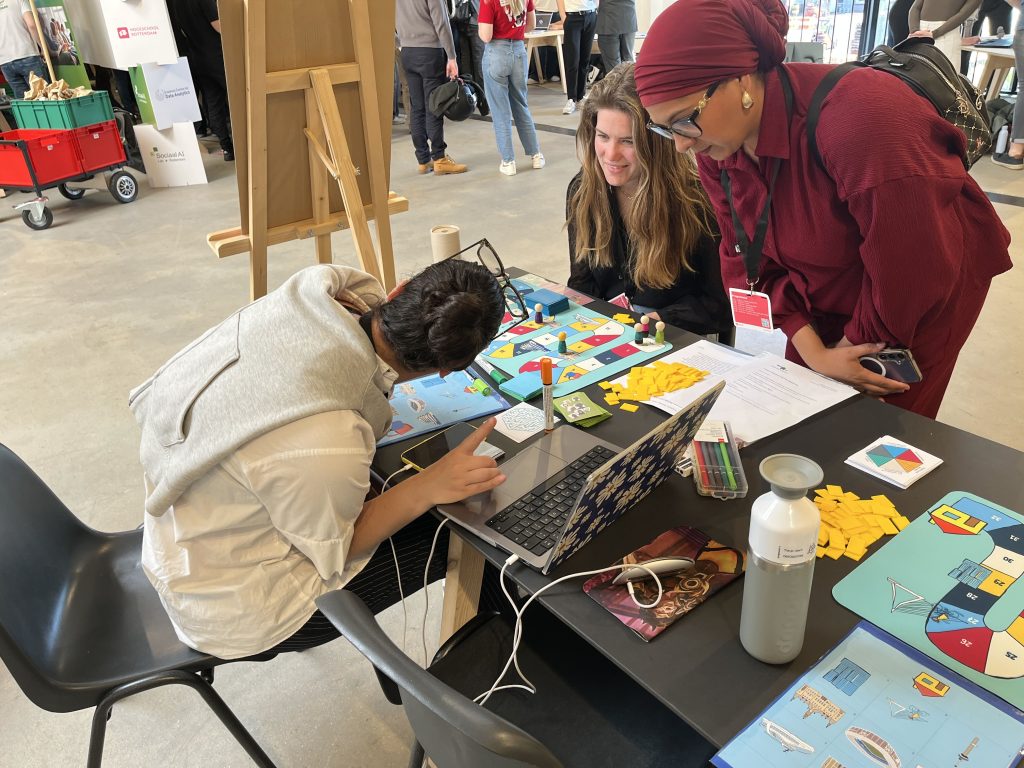
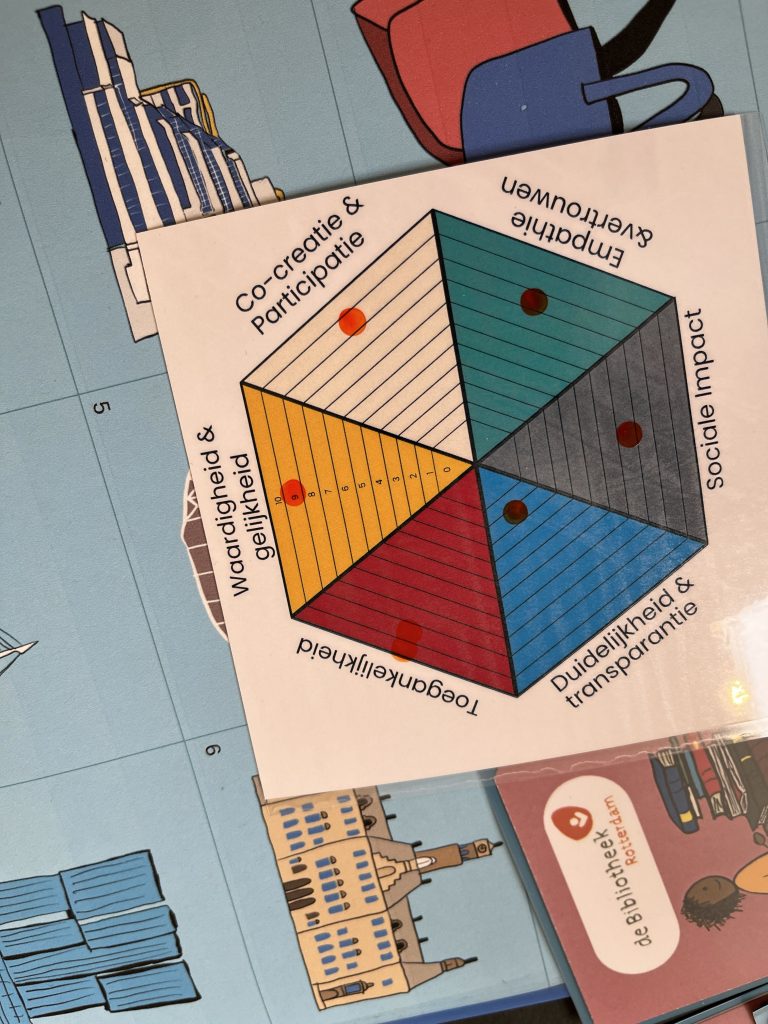
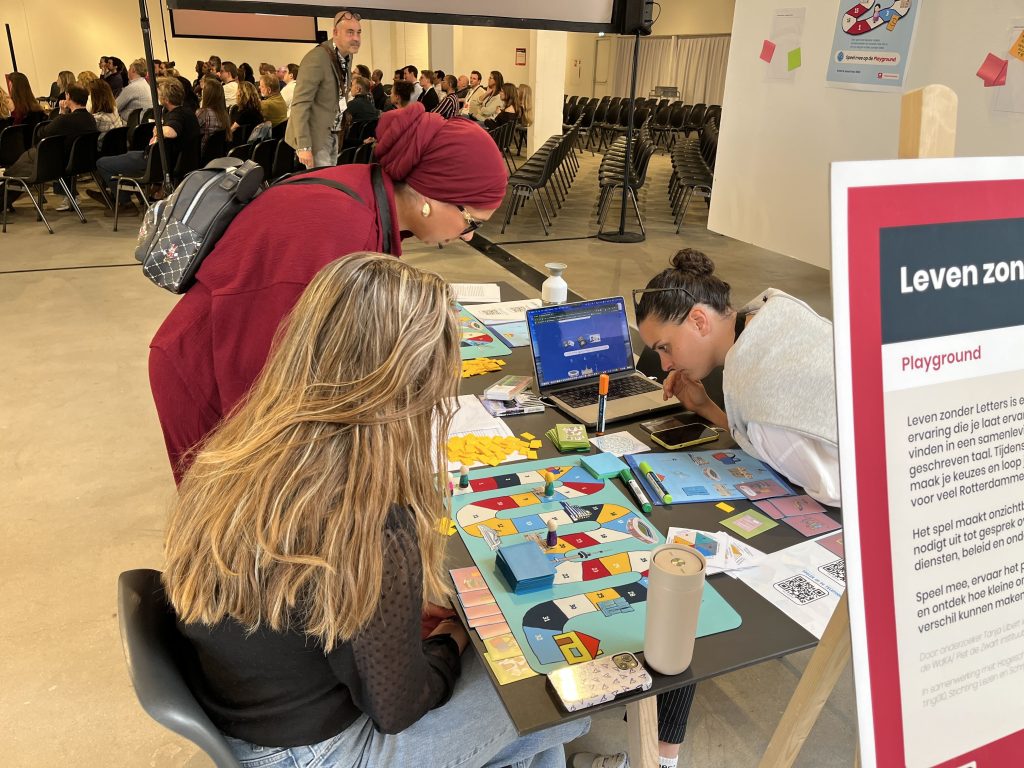
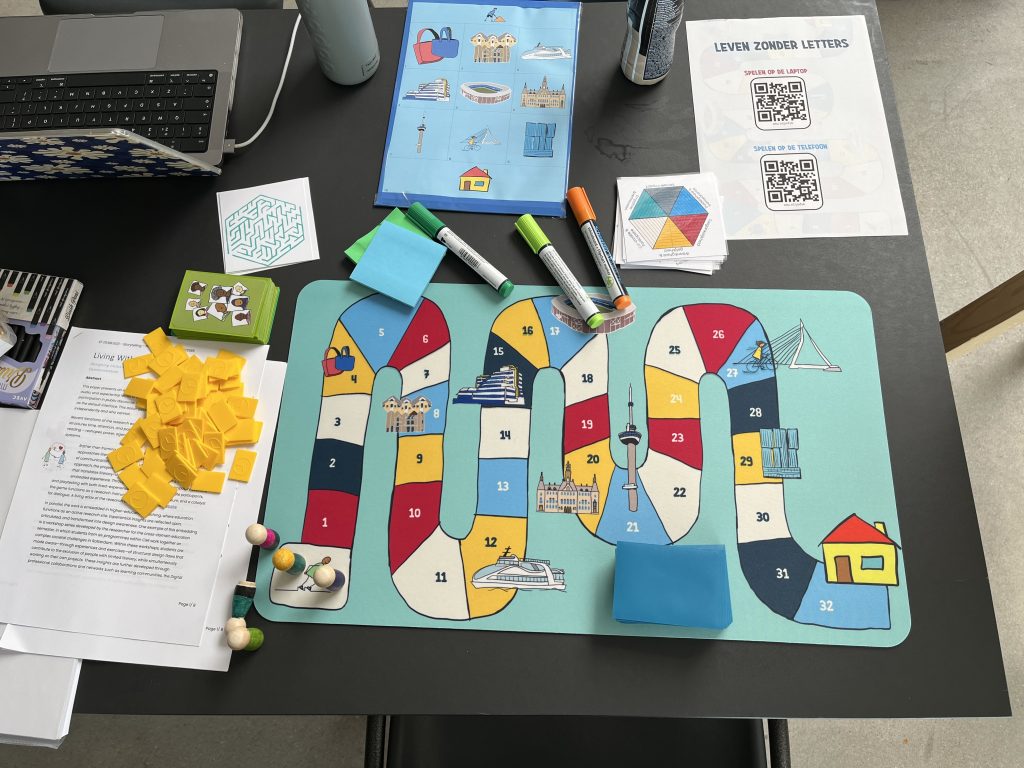
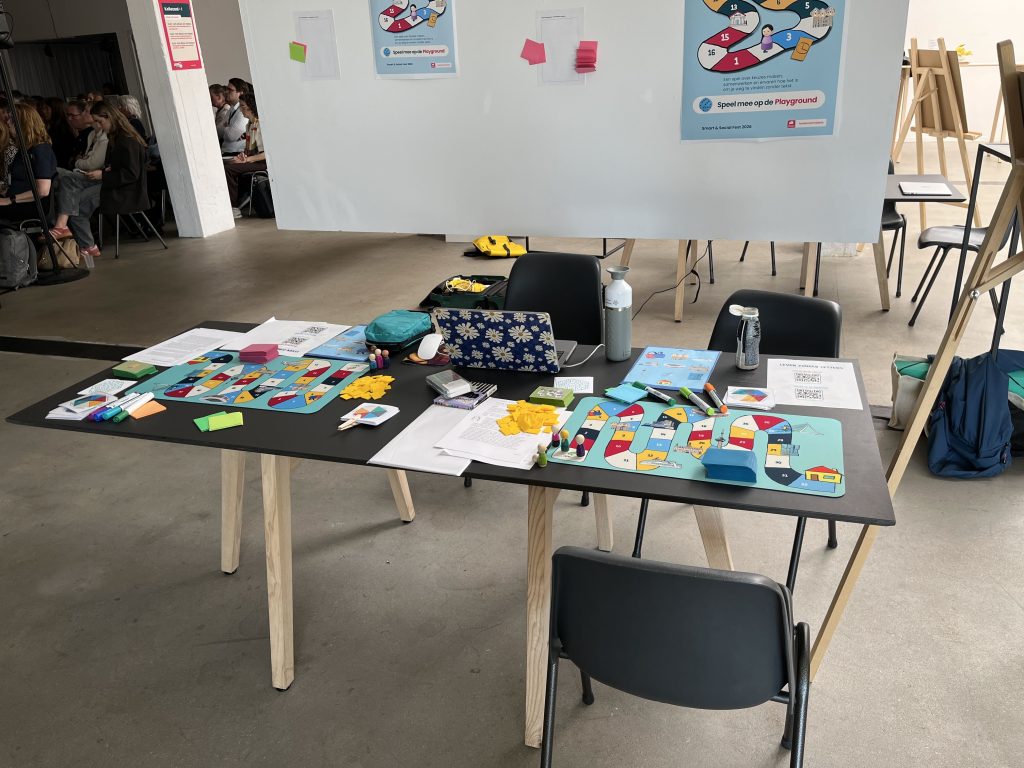
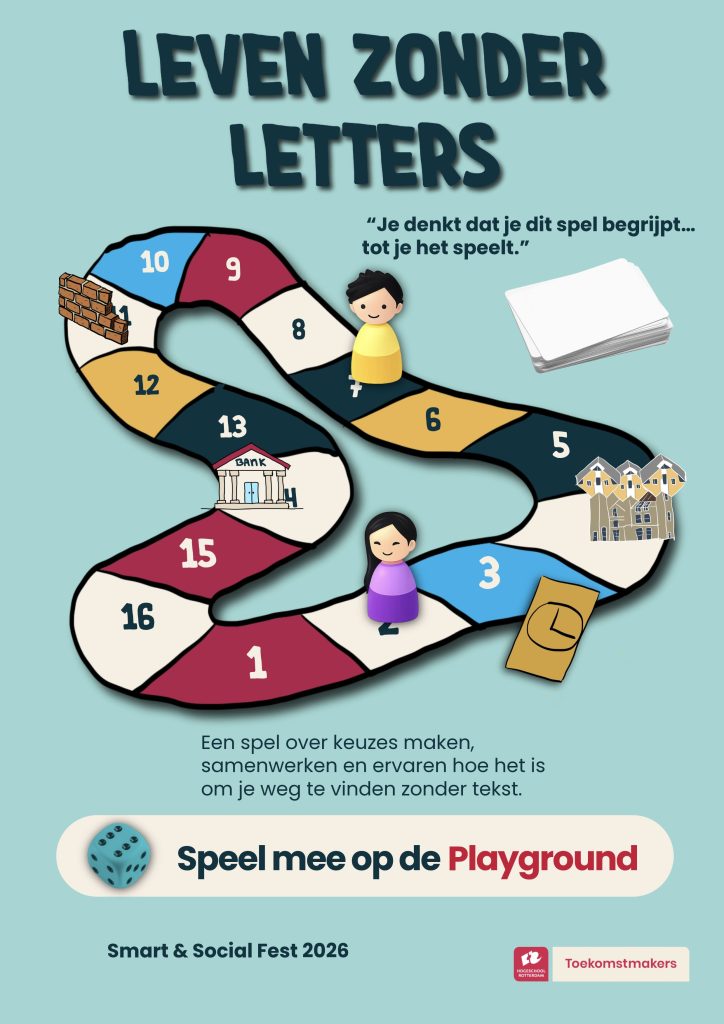
On April 23rd, during the Smart & Social Fest 2026, visitors tested the twelfth iteration of Leven zonder letters (Living without letters). At this stage, the game is no longer about whether it works—it is about what exactly it makes visible, and how precisely the experience can be tuned.
Small changes, big shifts
Version 12 required only minor adjustments, but their impact on the flow of the game is telling.
- The Speedo follow-up was added using the backpack visual, strengthening the idea that mobility is earned. Securing the job now rewards players with an extra time token—literally speeding up their navigation through the system.
- The starting number of time tokens was reduced. This pushes players to take risks, to engage more actively with task cards rather than playing it safe.
- Some elements were corrected for coherence: the treasure chest audio now matches the card, and the “fired” and “sick” cards require players to skip a turn—because in life, these events don’t just cost effort, they cost time.
- A phone-based version of the cards was introduced, opening up the possibility of using the phone as an assistive layer in gameplay.
None of these changes are radical. Yet together, they recalibrate the experience: the game becomes slightly faster, but more dependent on decision-making under constraint.
Designing within limits
The ideal scenario would be an app that recognises visual elements on the board and automatically plays the correct audio. A system where interaction becomes seamless, intuitive, almost invisible.
That version does not exist—yet.
Time, scope, and resources matter. But so does imagination. Perhaps this is not a limitation, but an invitation. A future student, a collaborator, a next iteration. The design is open.
What the players told us
What matters most is not the system itself, but what it does to people.
Across all participants, one insight was consistent:
The game simulates what it feels like to live without access to written language.
Players described:
- the slowness of navigating systems
- the irritation of not knowing what is expected
- the helplessness of depending on incomplete information
- the confusion of fragmented communication
These are not side effects. They are the experience.
What is particularly striking is that this confusion is not rejected. It is recognised. Players understand that what they are feeling is not a failure of the game, but a reflection of reality.
From experience to engagement
The response went beyond reflection. Several participants asked to bring the game into their own organisations—to use it as a tool for conversation, awareness, and change.
This is where the work begins to shift.
From:
- designing an experience
To:
- enabling dialogue
- supporting practice
- entering systems
Where I stand now
With version 12, the question is no longer:
Can we simulate this experience?
The answer is yes.
The question now becomes:
What do we do with this experience once we have felt it?
Because understanding is not the end point.
It is the starting point for responsibility.
Leave a Reply