
Changing Roles, Deepening Expertise: Lessons from the Lived Experience of Koos Vervoort for Design Researchers
In contemporary design research, the concept of expertise is being fundamentally redefined. Where once the “designer” was positioned as a central authority, recent approaches emphasize shared authorship, participatory methods, and the inclusion of lived experience as a legitimate form of knowledge (Björgvinsson, Ehn & Hillgren, 2012). The late Koos Vervoort from Schiedam, the Netherlands, embodied this shift. As an “expert by experience,” Koos contributed not only to literacy advocacy but also offered design researchers valuable insight into how to collaborate with vulnerable populations in more ethical, responsive, and meaningful ways.
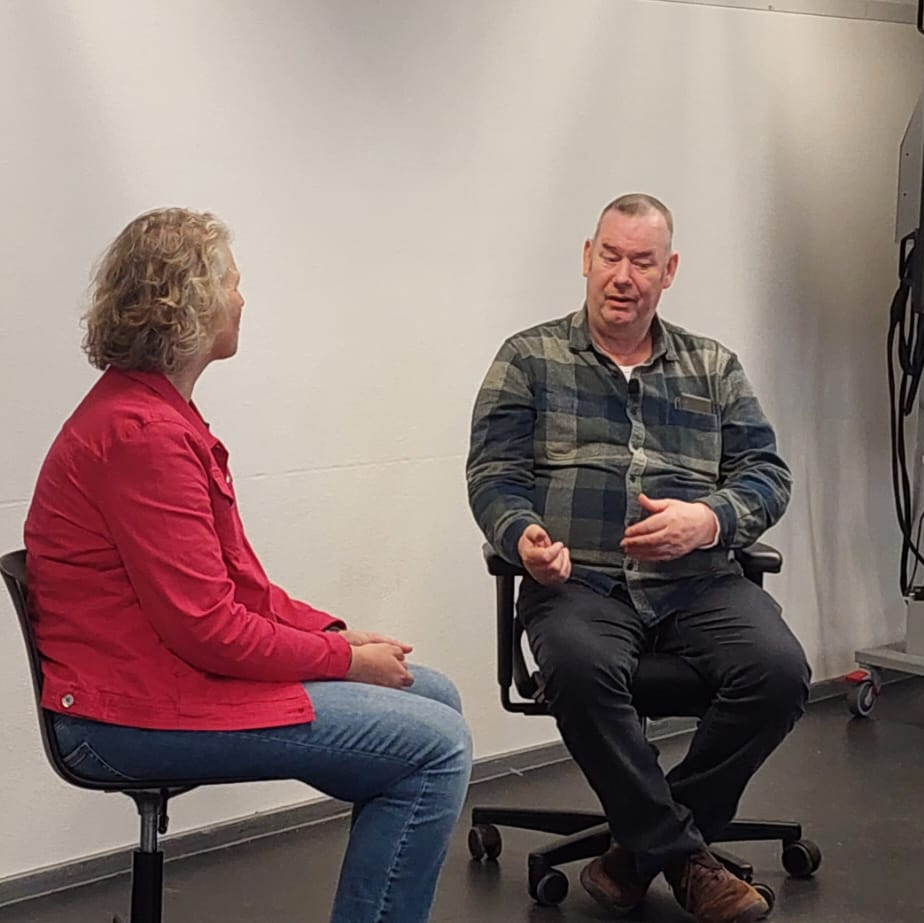
This interview was part of an expert meeting assignment conducted a year before Koos passed away on October 30, 2024. Despite battling lung cancer, his energy, positivity, and purpose were striking.
He used to be illiterate—a story not uncommon in his generation—and discovered later in life that he was dyslexic, just like my father. It wasn’t until the age of 45, when his wife noticed him typing phonetically into a search engine, that he sought help.
Reframing Expertise in Design Research
Design researchers are increasingly required to work in interdisciplinary and socially complex environments, engaging not just as creators but as facilitators, advocates, and learners (Buchanan, 2001; Manzini, 2015). Koos’s story is a compelling reminder that “users” of systems or services often possess rich experiential knowledge that challenges established assumptions. His insight into shame, stigma, and resilience associated with illiteracy illustrates the importance of deep listening and co-creation with those who live the problem.
His lived expertise—of finding creative workarounds, navigating misunderstanding, and eventually regaining agency—mirrors the user journeys that design research often seeks to uncover. However, unlike abstract personas or focus group data, Koos brought these narratives forward with lived authority. His participation in the documentary Duidelijke Taal with Loes Luca and his book Dit is pas het begin demonstrate that storytelling is not just a research method but a tool for empowerment and societal change.
Emotional Literacy and the Design Researcher’s Role
Koos became one of the first language ambassadors for the Dutch Reading and Writing Foundation (Stichting Lezen en Schrijven), offering guidance and hope to those on a similar path. His openness about shame and fear—a common but hidden experience among people with low literacy—underscores the need for emotional intelligence in design research. This resonates with the ethical stance proposed by Willis (2007), who argued that design shapes not just systems or services but “relational and ethical ways of being.”
These insights are critical for students of design research. If we are to take co-creation seriously, we must also take seriously the emotional and psychological safety of participants. Koos’s testimony offers a call to humility: people do not always need designers to speak for them—they need allies who are ready to listen and co-create solutions grounded in dignity, not charity.
Barriers to Participation: Still a Design Challenge
Despite significant progress, Koos’s experiences reflect persistent barriers faced by people with low literacy—barriers that are not just individual, but systemic:
- Shame and Silence: Many hide their illiteracy out of fear of judgment, developing strategic “workarounds” (e.g., pretending to forget glasses or requesting to take documents home).
- Stereotypes and Misunderstandings: Illiterate individuals are often wrongly assumed to lack intelligence or capability.
- Lack of Awareness Among the Literate: Koos highlighted that most people have no idea how many adults struggle with reading and writing, nor how isolating it can be.
- Self-Imposed Isolation: Koos didn’t travel until he learned to read. Literacy opened up not just educational opportunities but also social and spatial freedom.
These points illustrate the continuing need for design researchers to move beyond mere “problem-solving.” As Freire (1970) emphasized in his theory of conscientização (critical consciousness), transformation begins when those in privileged positions become aware of their complicity in systems of exclusion—and act differently as a result.
Design Research and the Power of Witnessing
Koos’s goal during our expert lecture was simple: to make an impact. He succeeded—not just by informing, but by transforming the way his audience thought about inclusion, vulnerability, and learning. For design research students, his story is a reminder that social innovation does not always require new tools or platforms. Sometimes, it begins with bearing witness, with providing a stage for lived truths to reshape professional assumptions.
As design researchers, we must continue to explore our evolving roles—not as saviors or strategists, but as collaborators in deeply human processes of change. People like Koos Vervoort are not subjects of study; they are fellow designers of more inclusive futures.
References
Björgvinsson, E., Ehn, P., & Hillgren, P. A., Design Things and Design Thinking: Contemporary Participatory Design Challenges, Design Issues, (2012).
Buchanan, R., Design Research and the New Learning, Design Issues, (2001).
Freire, P., Pedagogy of the Oppressed, New York: Continuum, (1970).
Manzini, E., Design, When Everybody Designs: An Introduction to Design for Social Innovation, MIT Press, (2015).
Willis, A.-M., Design, Redesign and the Transformation of Understanding, Design Philosophy Papers, (2007).
Leave a Reply