
Research into illiteracy
We, as Design researchers, are increasingly called upon to address complex, human-centered challenges. Among these is the persistent issue of illiteracy, a barrier that affects more than 2.5 million people in the Netherlands alone—and millions more across Europe. Yet in the rush to innovate and intervene, we often overlook the most important resource available to us: the people who live with these challenges every day.
In this essay, I argue that experts by experience—in this case, individuals who are or have been functionally illiterate—offer profound insights that should be central to design research. Their stories reveal not only the hidden systems of exclusion, but also the resilience, intelligence, and resourcefulness that often go unrecognized in traditional research methods.
A Personal Entry Point into Research
My research began in the most personal of places: my own family. My father is illiterate, and I’ve been helping him navigate bureaucratic systems since I was a teenager. Insurance forms, government communication, healthcare documents—tasks that are effortless for some—became daily challenges we faced together.
Growing up, I assumed the problem was the formal language of these institutions. Only later did I understand the deeper reality: my father hadn’t received any education beyond primary school. That realization reframed my understanding—not only of him, but of society’s assumptions about intelligence, success, and value.
Learning from Experts by Experience
As I delved into formal research, I encountered work by Maurice de Greef, chairholder of Adult Education at UNESCO. His essay De laaggeletterde leert het ons (The illiterate teaches us) reframes the issue: instead of viewing illiterates as people in deficit, he positions them as people with expertise in surviving in a literate world. His findings confirmed what I had experienced first-hand: that shame and silence often prevent people from seeking help or revealing their struggles (De Greef, 2021).
This was further affirmed by the work of Stichting Lezen en Schrijven (Reading and Writing Foundation), which highlights how stigma shapes every part of an illiterate person’s life—from healthcare access to job opportunities. Importantly, they advocate for involving experts by experience in public communication projects, encouraging organizations to move beyond token inclusion and instead co-create with those directly affected.
One of the most emotional and meaningful moments in my research came through an interview with my own father. Though I had been helping him for years, it wasn’t until this structured, open-ended conversation that I truly grasped the daily emotional weight he carried. His vulnerability gave me a new sense of responsibility—not only as a daughter, but as a designer.
The Legacy of Koos Vervoort
Another turning point came during an interview with Koos Vervoort, an advocate and former illiterate who became literate later in life and even published a book about his experience. Though terminally ill at the time, Koos generously agreed to speak at an “expert lecture” I helped organize. His insights stayed with me long after he passed.
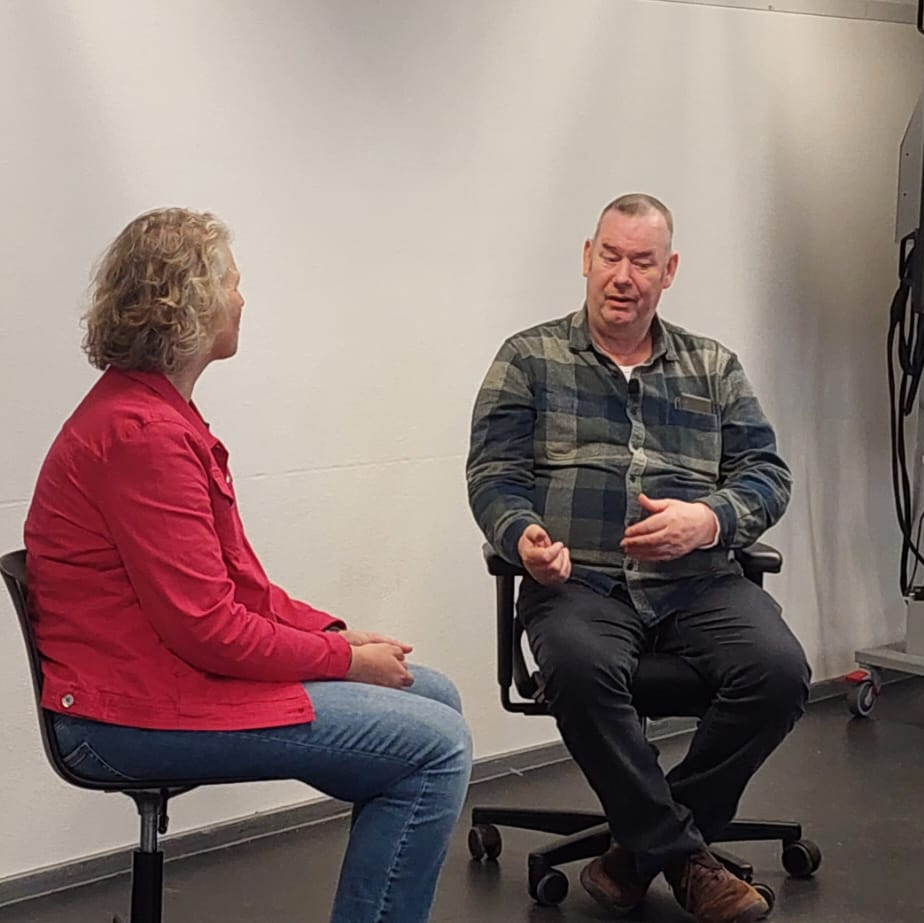
Koos Vervoort
Illiteracy expert by experience
What struck me most was his candidness about shame. Not only did illiterate individuals often judge themselves harshly, but they were frequently judged by society as lazy, stupid, or indifferent. Koos’s story, like my father’s, dismantled those stereotypes. These men were clever, adaptable, and intelligent—just in ways that aren’t always measured by the ability to read text.
As Maurice de Greef (2021) emphasizes, when we center these voices, we don’t just gain emotional insight—we gain practical, design-relevant knowledge. Experts by experience know exactly where systems break down and where design fails to communicate.
Implications for Design Research
Designers must shift from assuming expertise to learning from lived expertise. Following Harbers’ (2021) argument for ethical design, we must ensure dignity, respect, and inclusion in every stage of the process. This involves more than testing a prototype with users—it means valuing experiential knowledge as equal to academic or professional knowledge.
This is echoed by Ezio Manzini (2015), who advocates for design as a collaborative social practice. Design, when truly participatory, can expose blind spots and offer new directions that would otherwise remain invisible.
Conclusion: Toward Design with, Not For
The most valuable lesson from this research is simple: we must design with, not for. Illiteracy is not just a technical problem to be solved—it is a social condition shaped by stigma, structure, and silence. By treating illiterate individuals as co-researchers, not just subjects, we unlock their potential as partners in creating a more inclusive world.
Their stories challenge our assumptions, expand our empathy, and ultimately make our designs—not just better, but more just.
References
Manzini, E., Design, When Everybody Designs: An Introduction to Design for Social Innovation, MIT Press, (2015).
De Greef, M., De laaggeletterde leert het ons [The illiterate teaches us], Arteduc, (July 2021).
Harbers, M., Ethisch Ontwerpen: Mensgerichte Keuzes in Digitale Ontwikkeling, Kenniscentrum Creating010, (2021).
Leave a Reply