
Experiment Recipe without words
In design research, particularly in the context of inclusive and participatory methods, working with so-called experts by experience is vital for uncovering the hidden frictions in daily life caused by systemic exclusion. This experiment explores whether visual communication—specifically a recipe without words—can be a tool for inclusion, especially for people who are functionally illiterate or who have limited proficiency in the Dutch language.
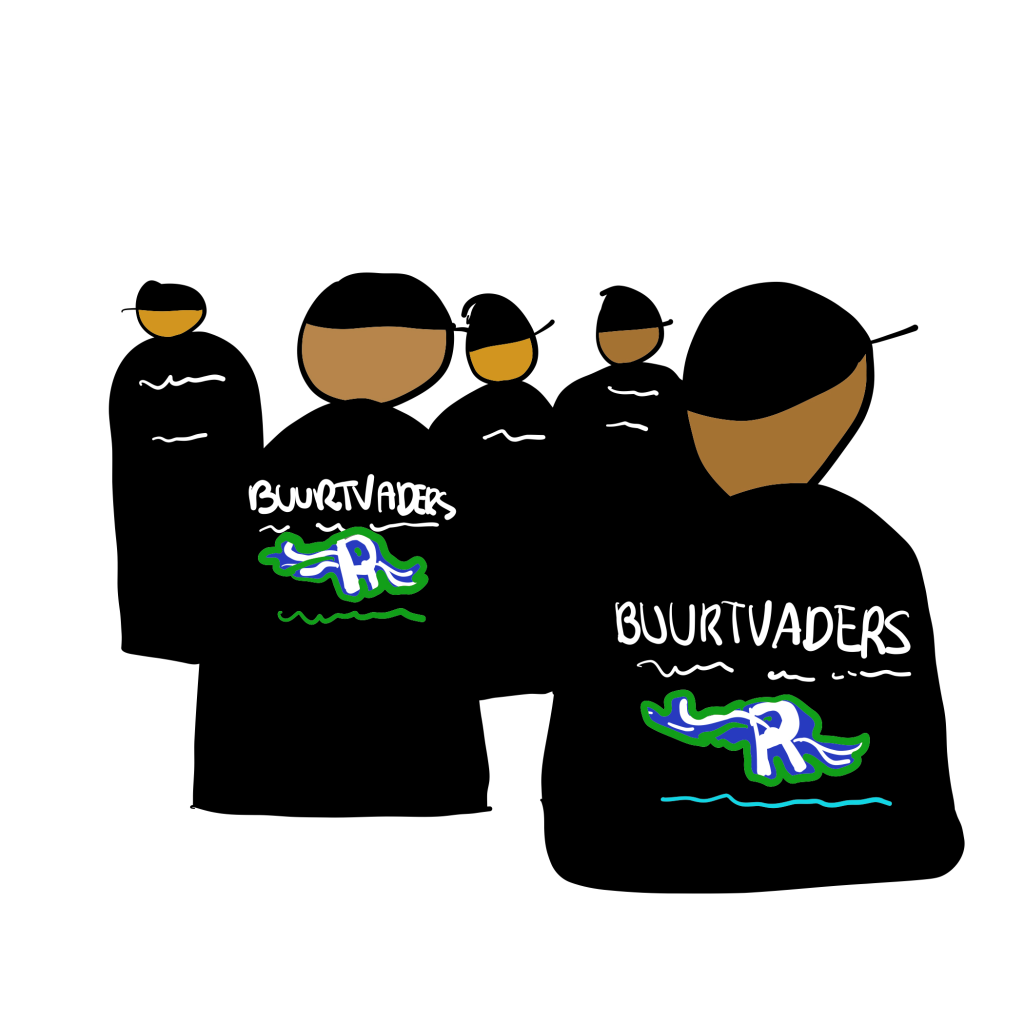
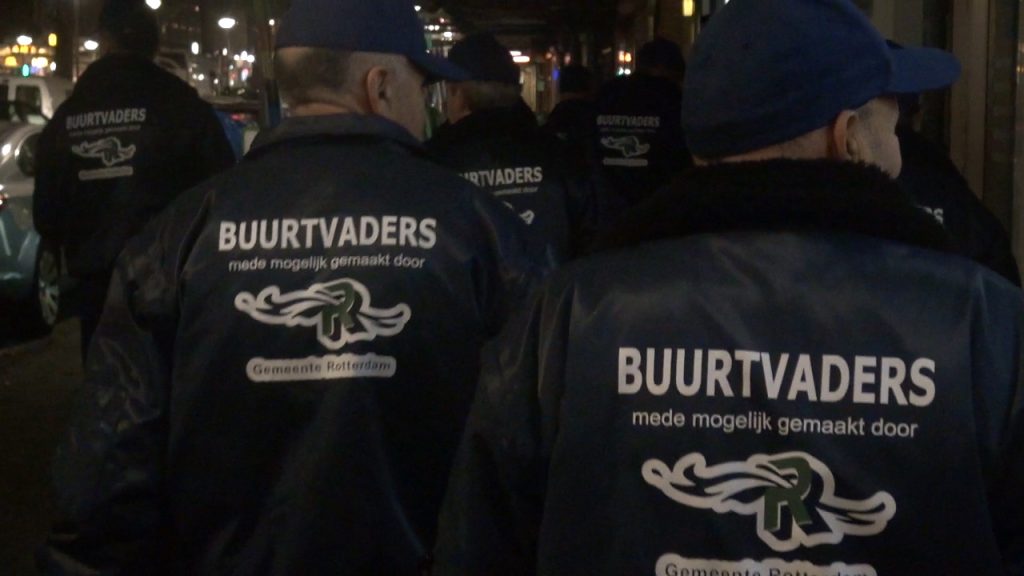
The experiment took place in Hillesluis, Rotterdam-South, in collaboration with the Neighbourhood Dads, a community-based initiative consisting mostly of men with Turkish roots. The Dads conduct daily patrols to promote safety and cleanliness in the area. Though literacy was not openly discussed, the group leader, Mustafa, indicated that some members likely face challenges with reading Dutch, even if they wouldn’t openly admit it. This aligns with research from De Greef (2021), who highlights the taboo and shame surrounding low literacy and the tendency for people to hide their struggles until absolutely necessary.
Research Objective
The central question was: Can we co-create a recipe that functions without any written language—using only images—and is accessible to people regardless of their literacy level?
This aligns with inclusive design principles outlined by Manzini (2015), who emphasizes designing with communities, rather than for them.
Method: Participatory Co-Design in a Familiar Context
Working with the group over several sessions, we engaged in a co-creation process around a vegetarian couscous recipe—a suggestion from Mustafa, motivated by his desire to encourage healthier eating habits in the community to combat diabetes.
I brought materials inspired by the visual food project De keuken van Staart by Toppie Dordrecht and Alka Goos, including illustrated ingredient lists, markers, glue, scissors, and large sheets of paper. My classmate Anna Bonomi assisted with illustration and documentation.
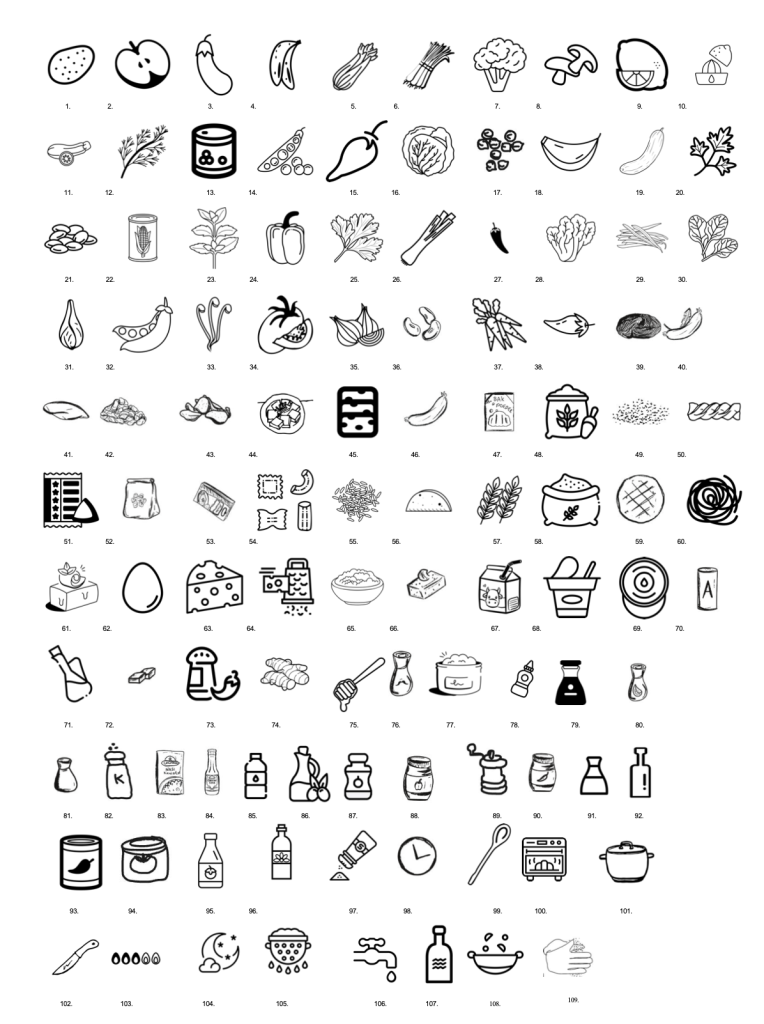
In this experiment I wanted to remove literacy as a factor. Therefore participants were not allowed to use written words.
During the sessions, participants broke into smaller groups to create visual steps for the recipe. Initially hesitant, the group gradually became enthusiastic—debating preparation methods, discussing alternatives to meat, and sharing YouTube clips as references.
Interestingly, two members with experience in cooking emerged as informal leaders during the creative process, showing how expertise shifts when literacy is removed from the equation.
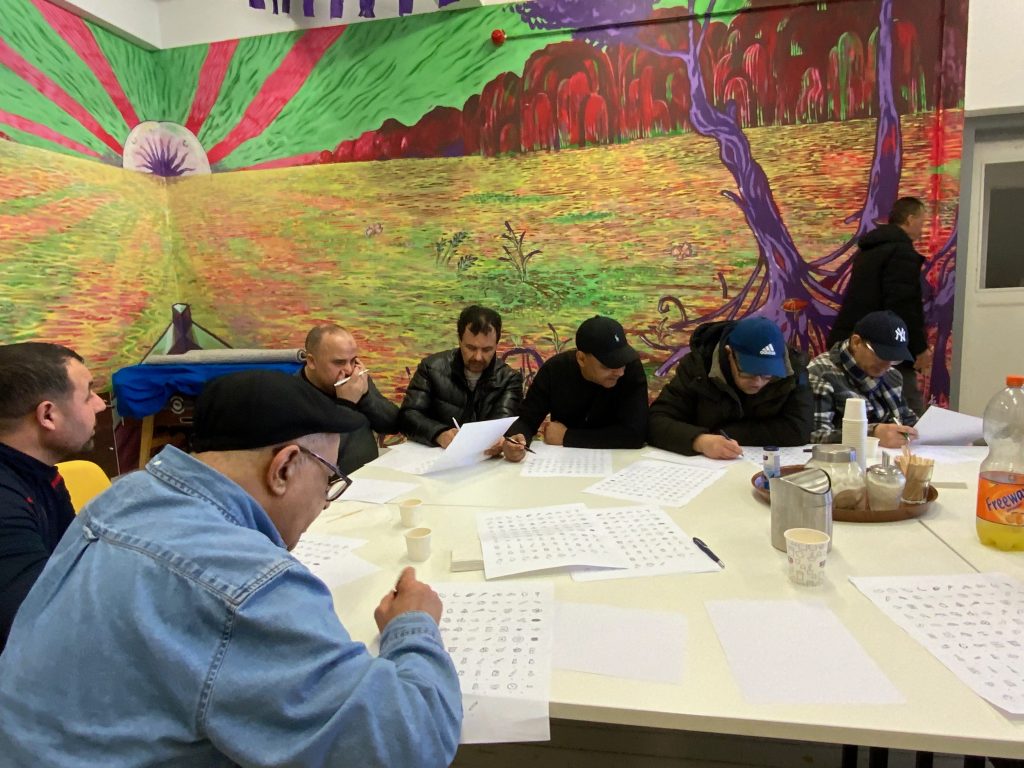
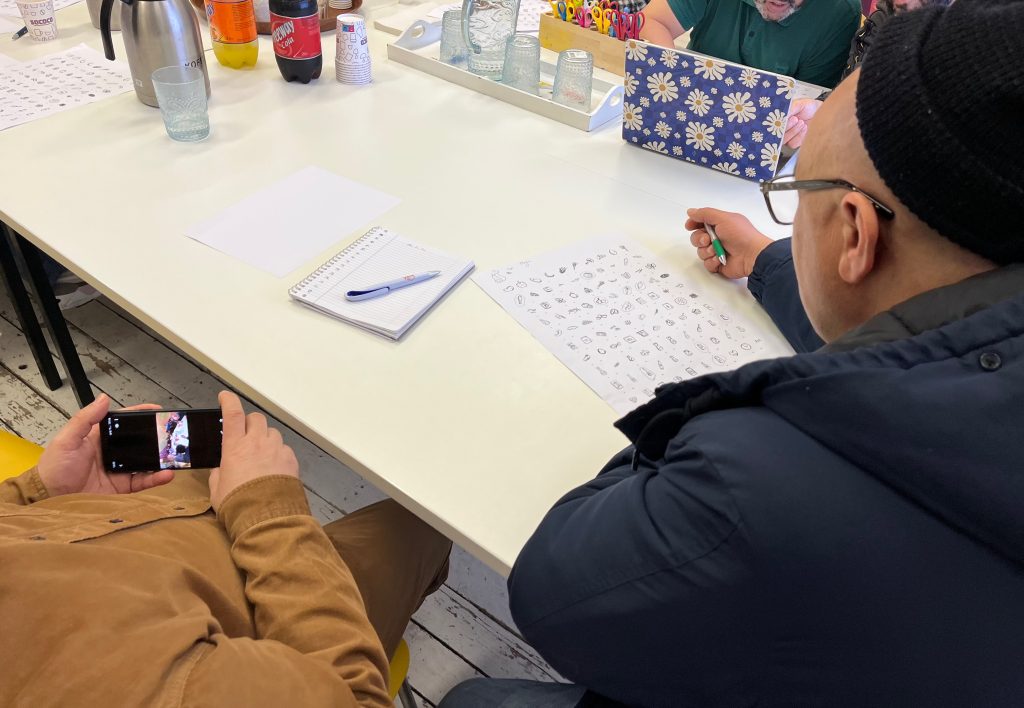
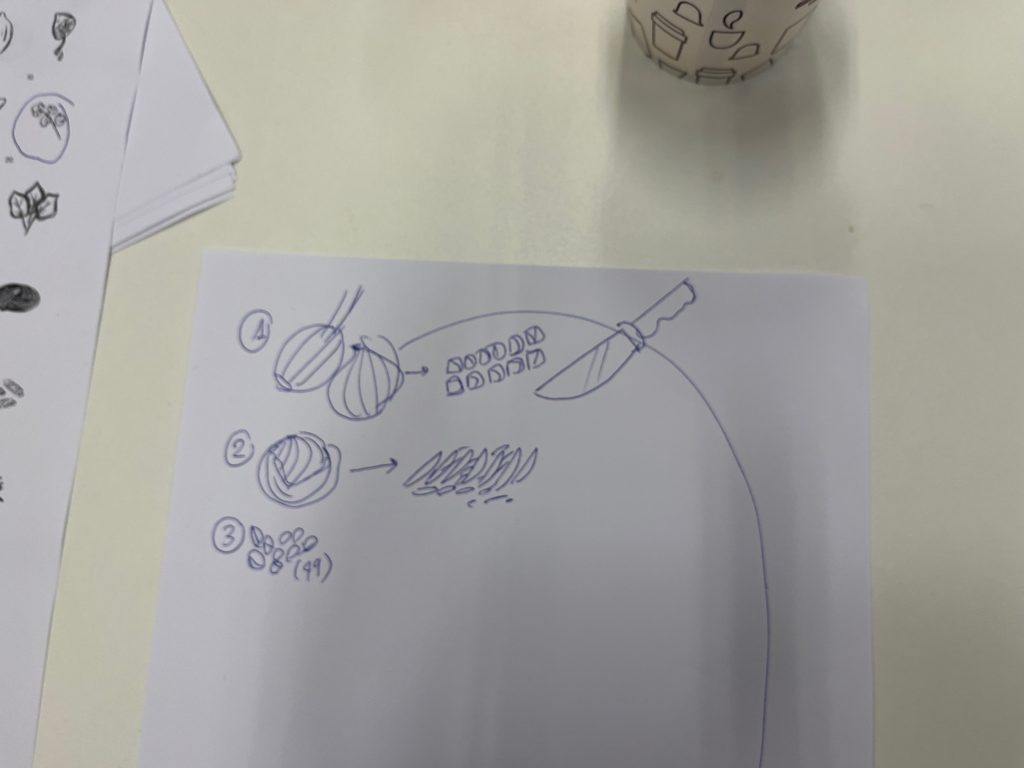
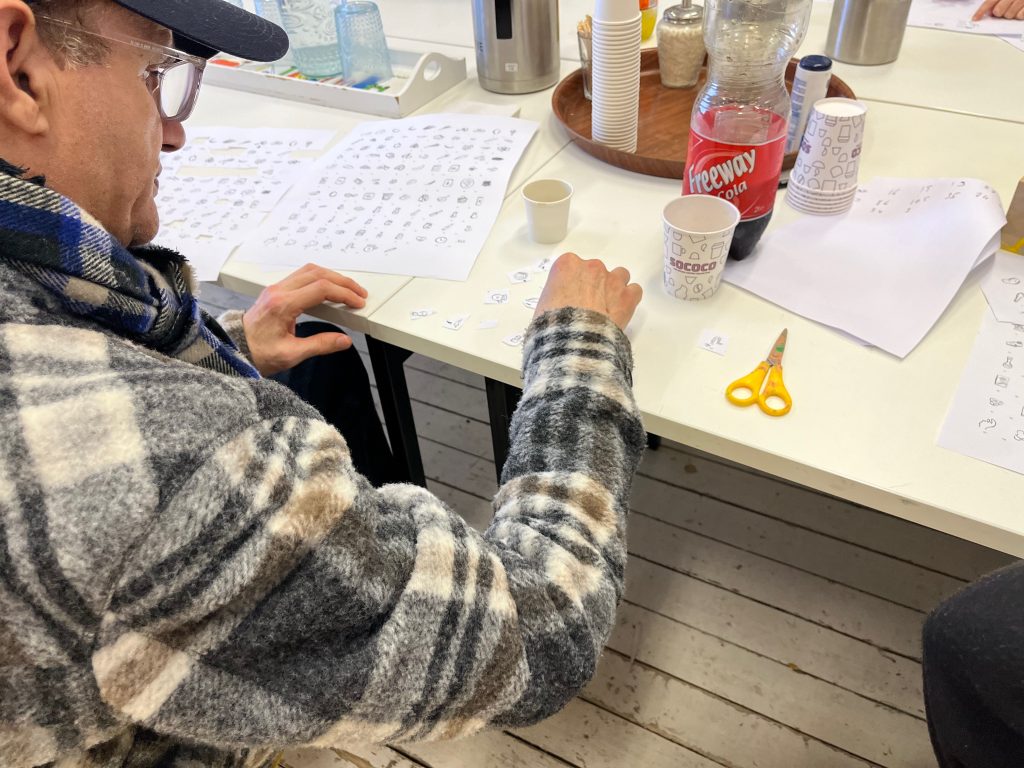
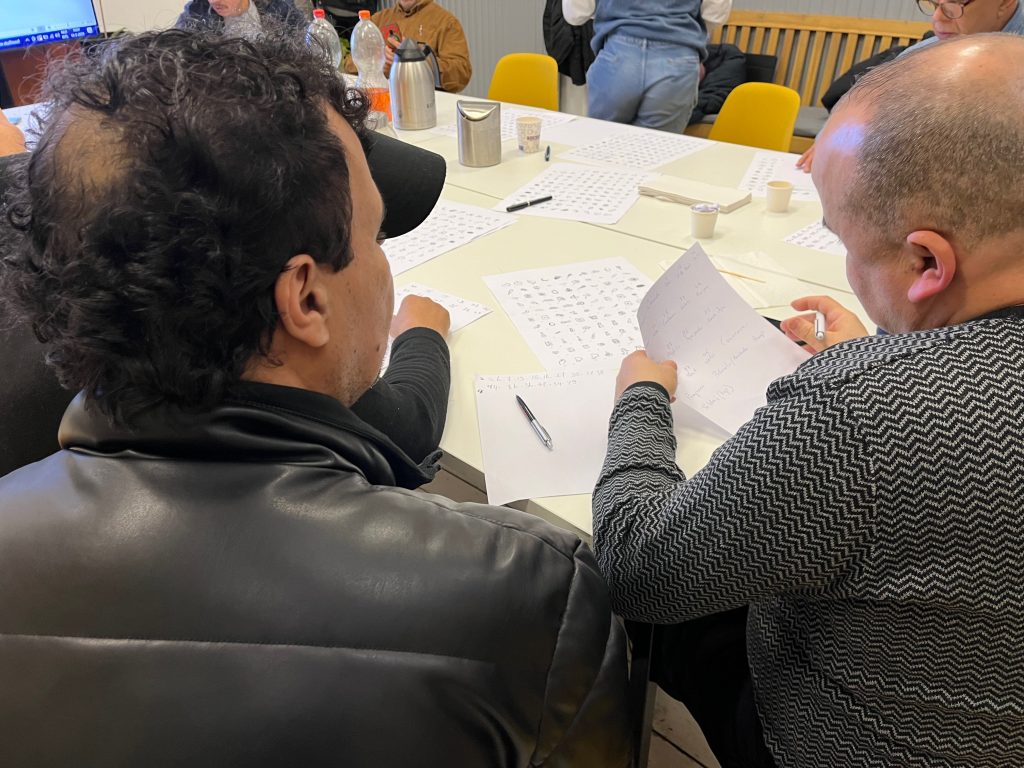
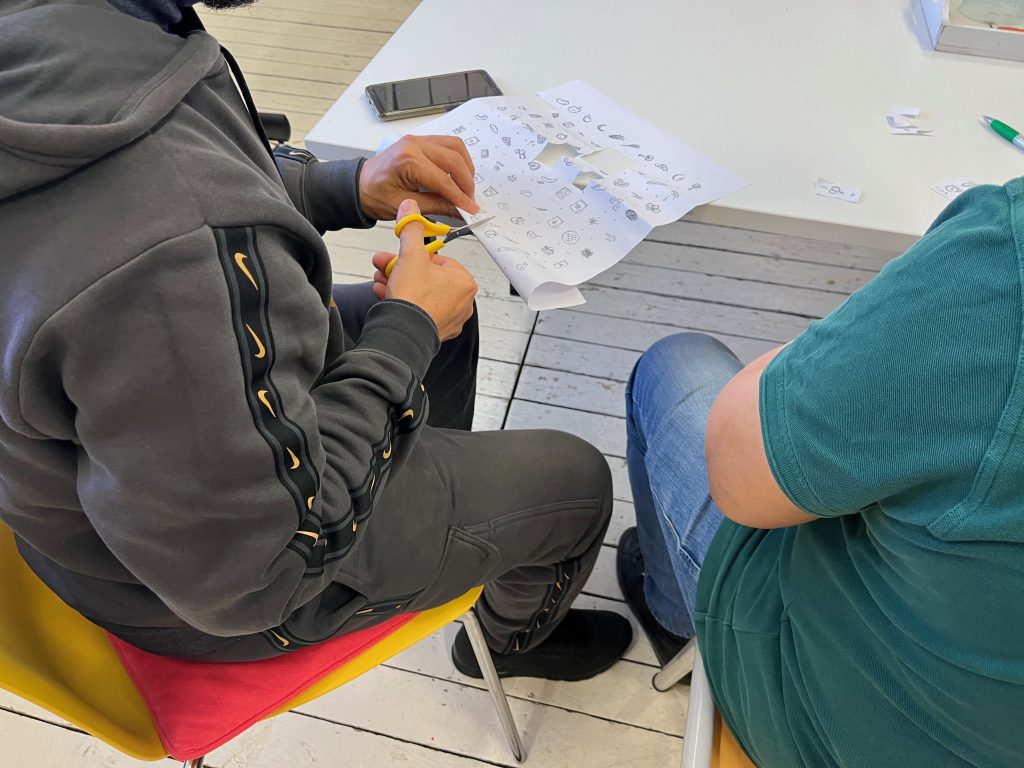
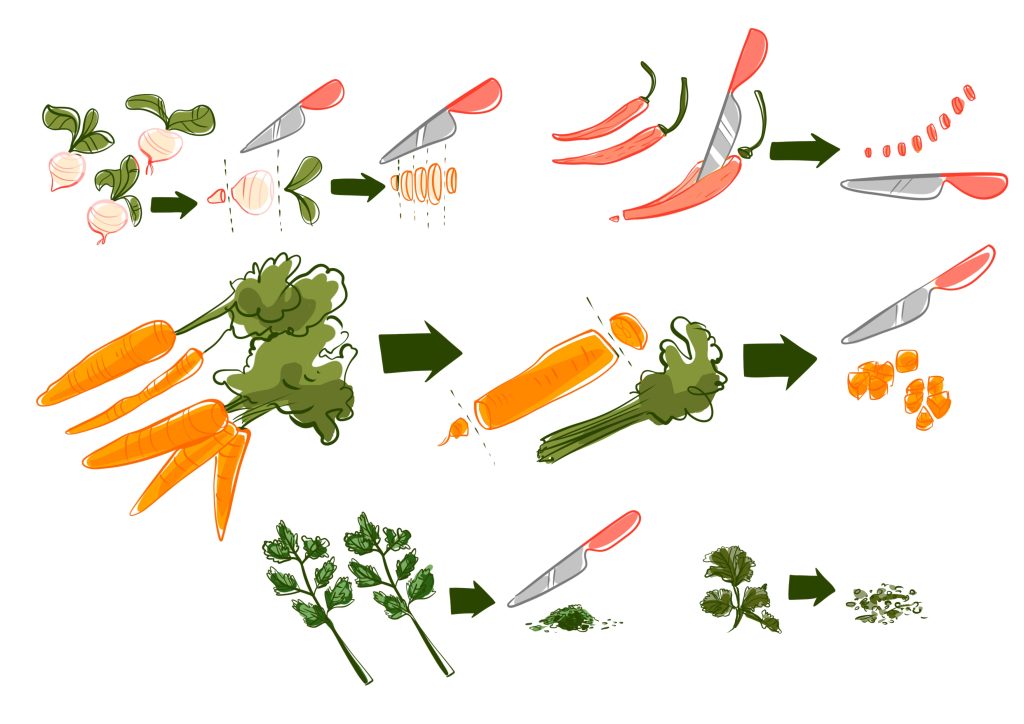
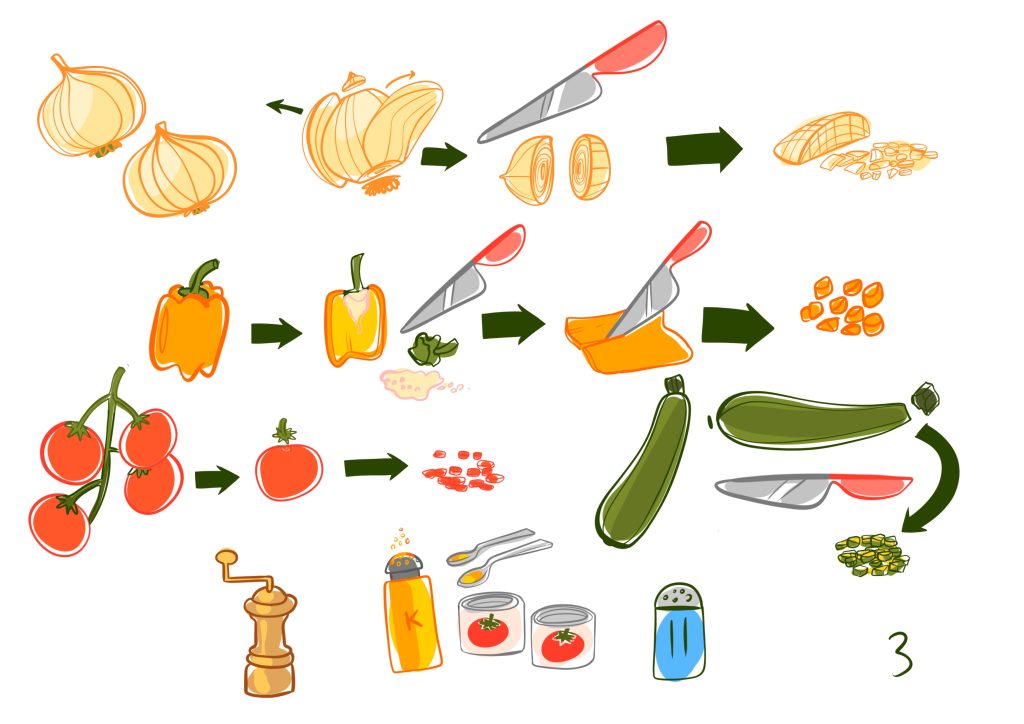
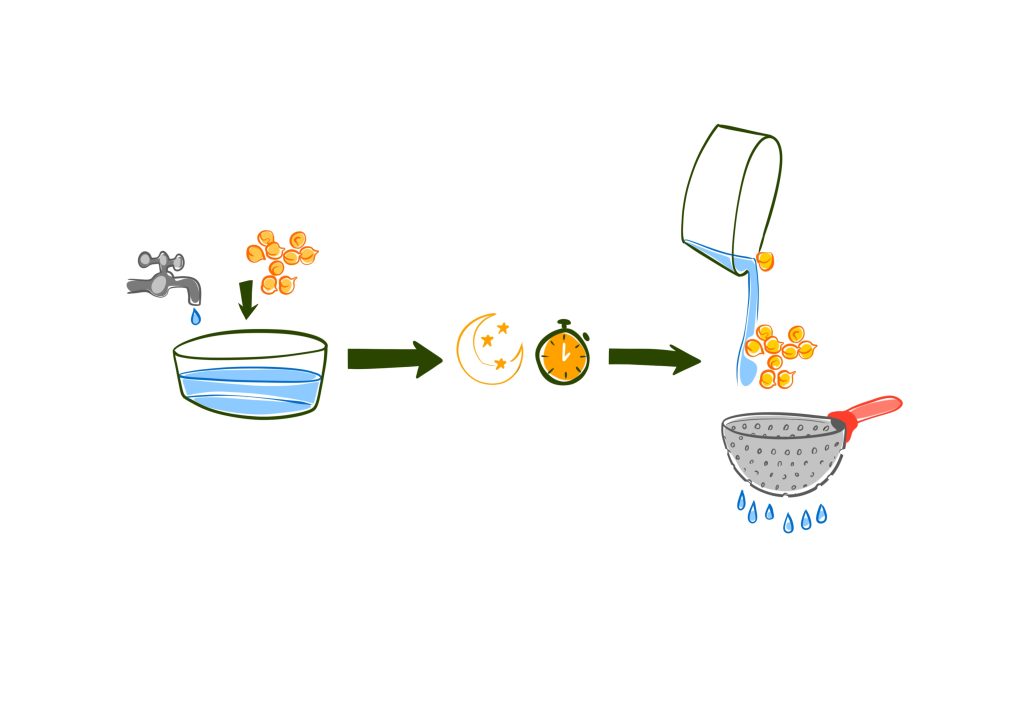
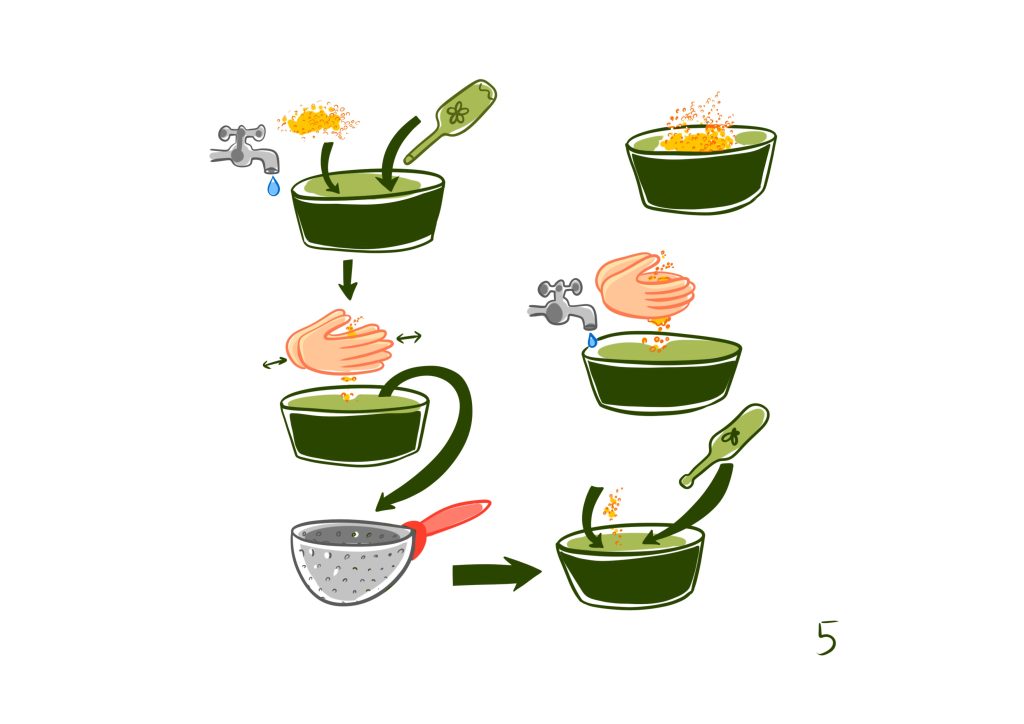
By the end, we had five iterations of the recipe, each visually mapping the cooking process from start to finish.
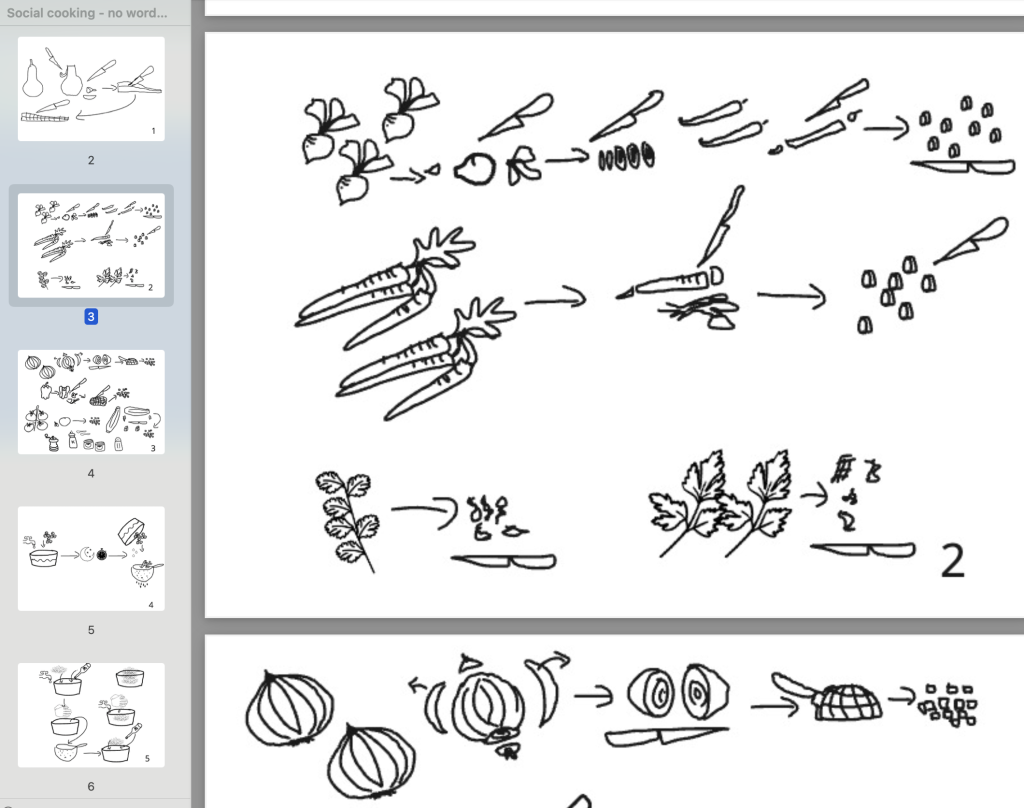
These were consolidated into a working prototype, which we tested in a live cooking session at the Mensa Mensa community kitchen at Hillevliet.
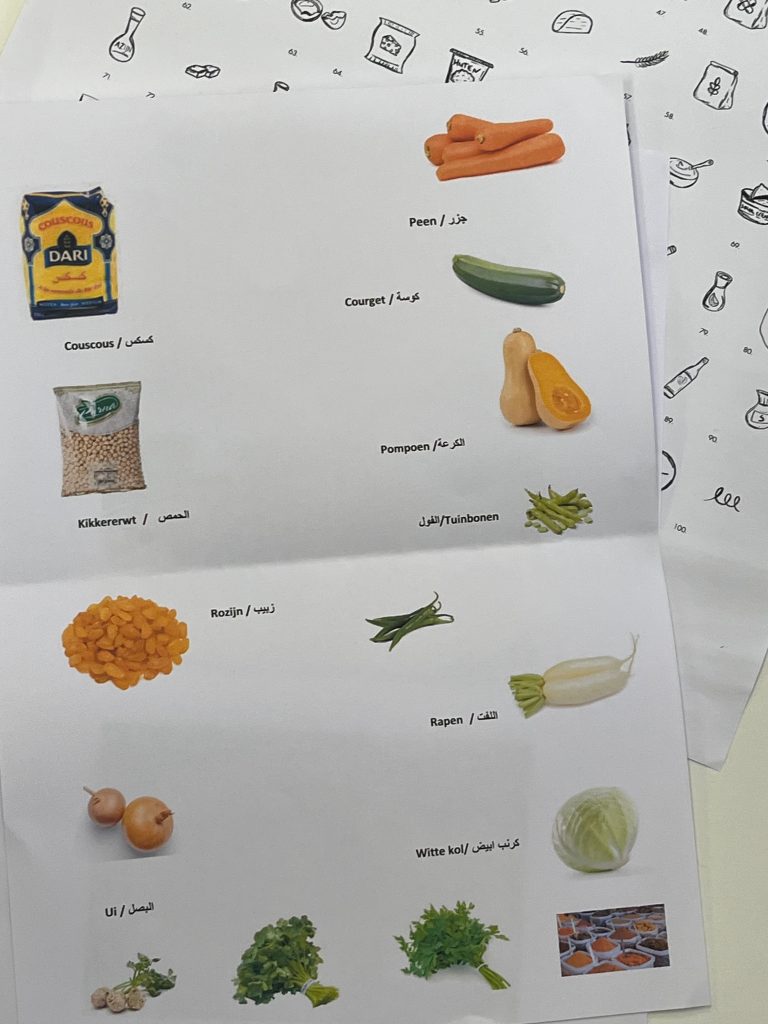
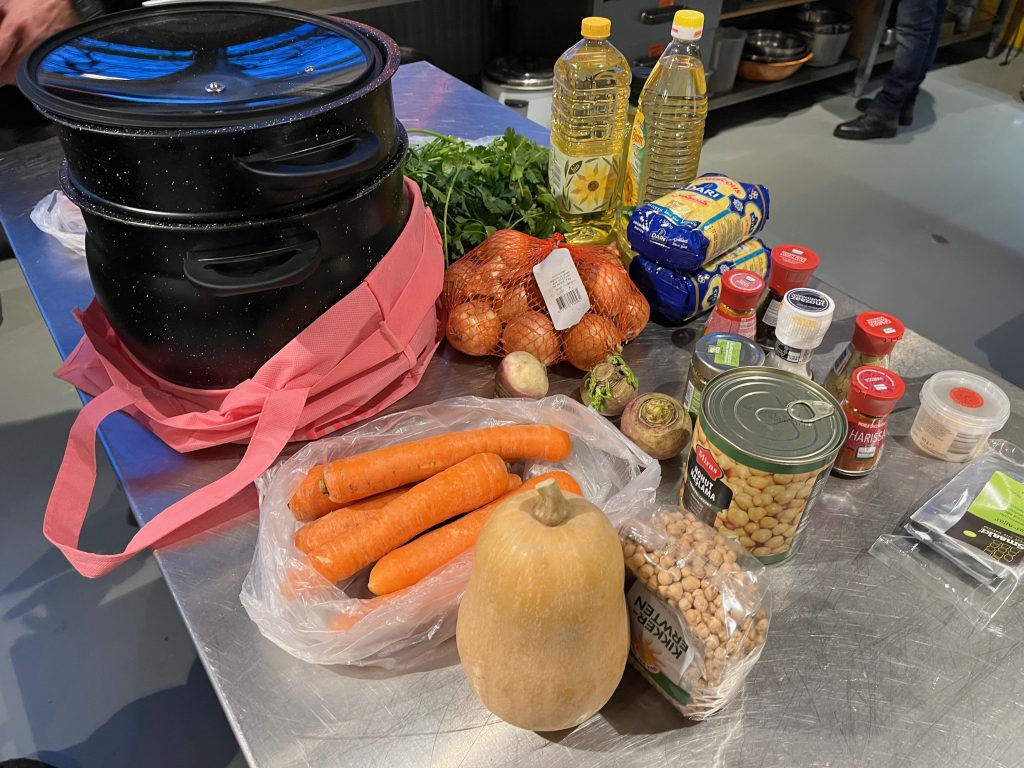
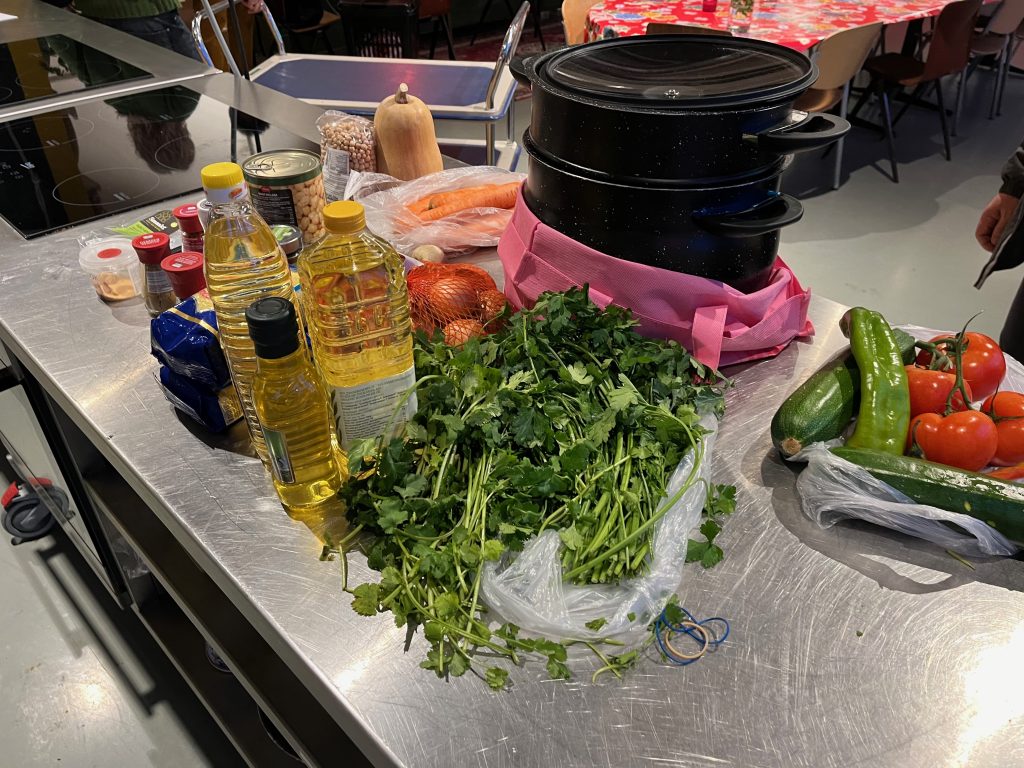
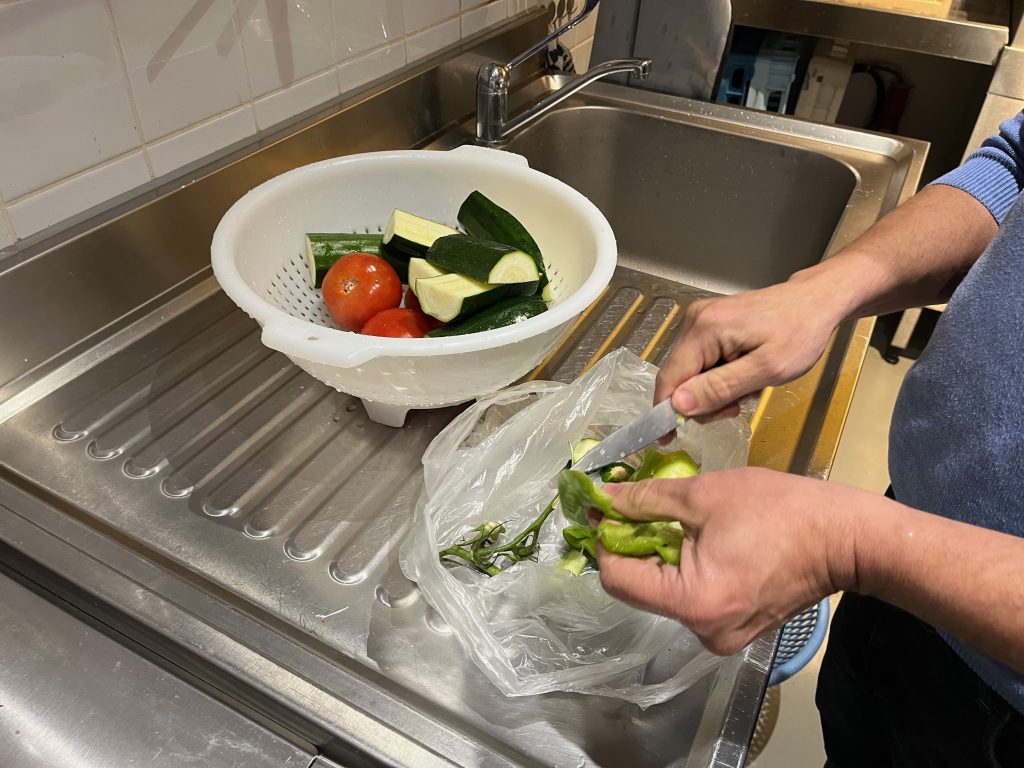
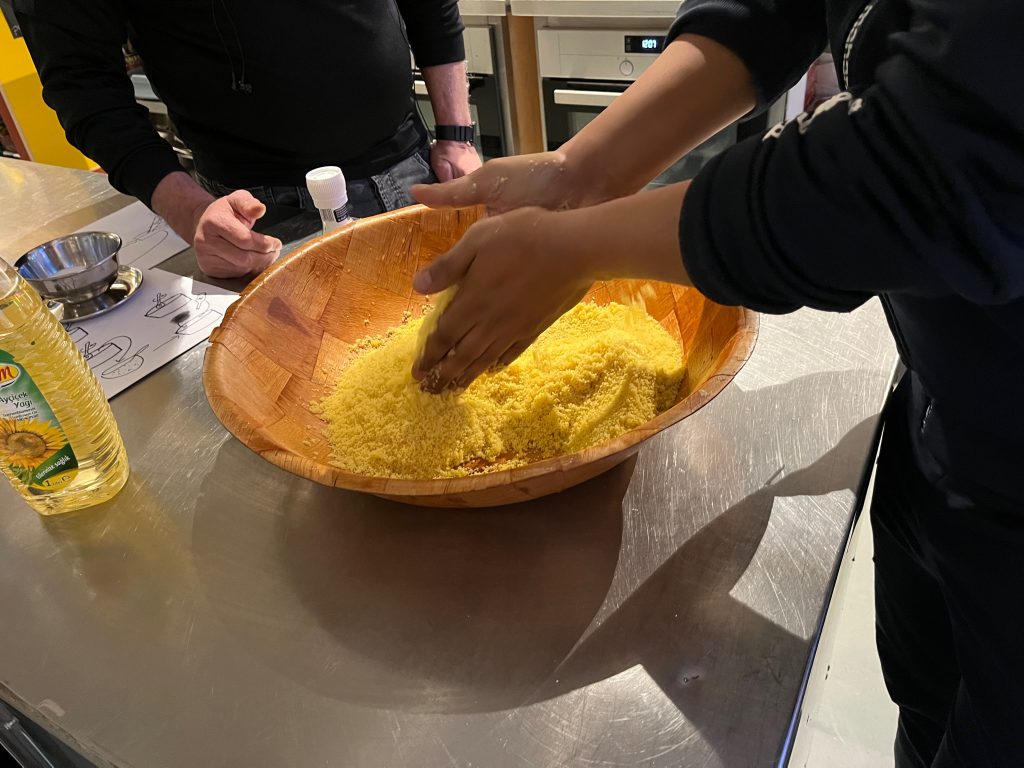
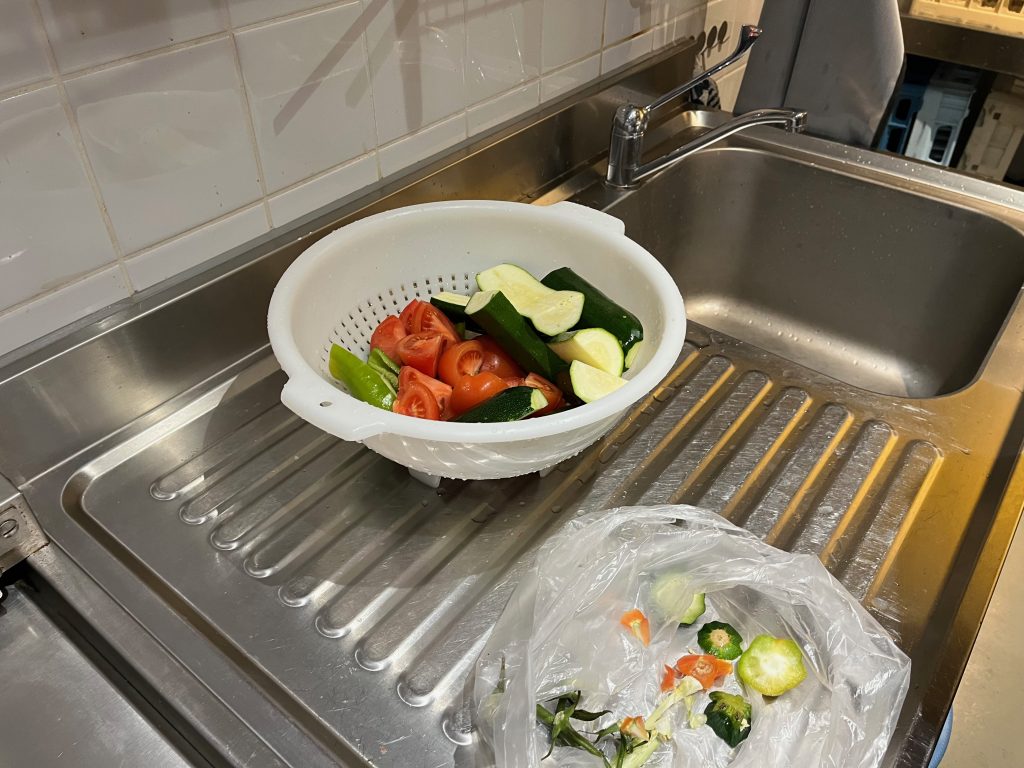
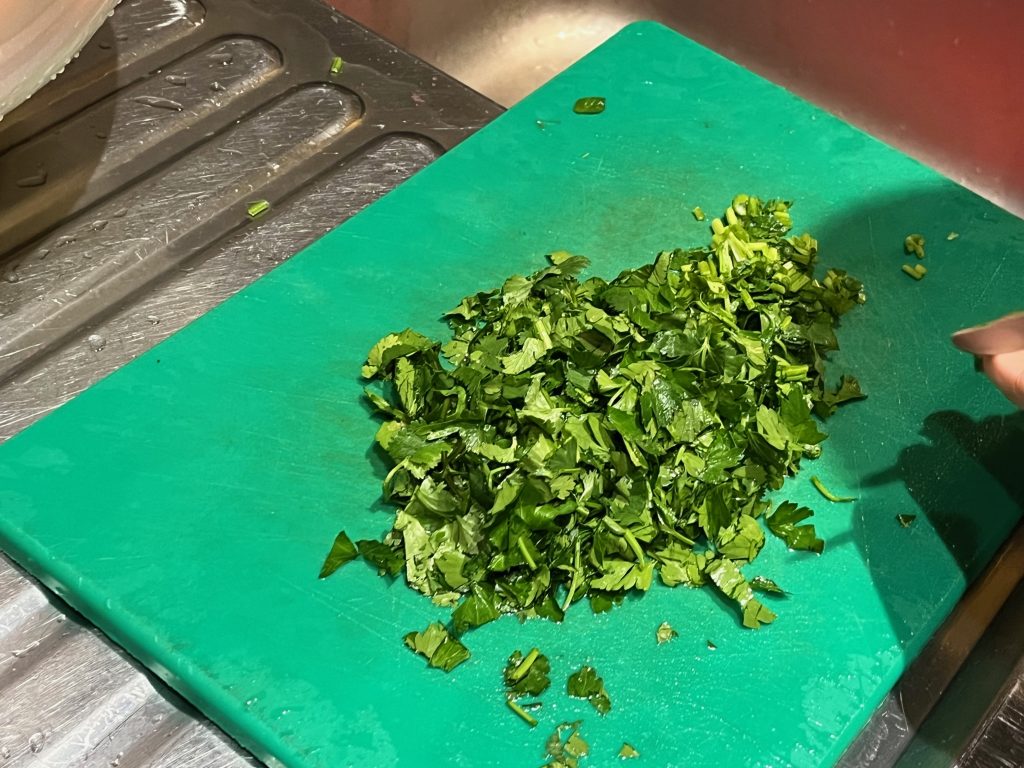
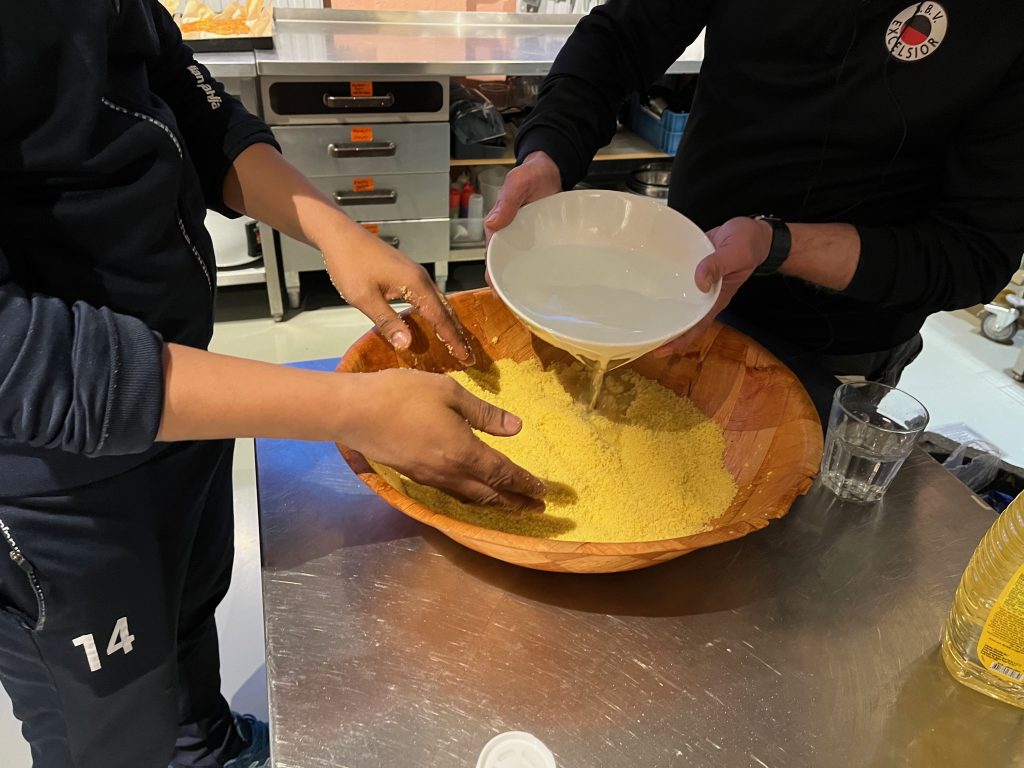
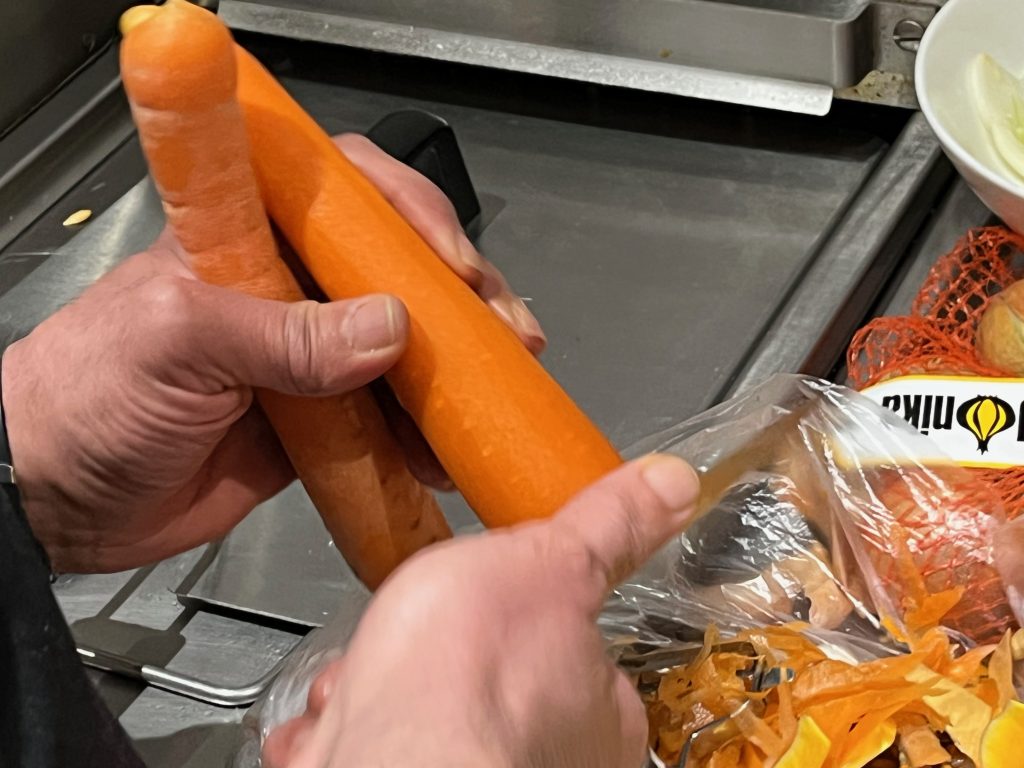
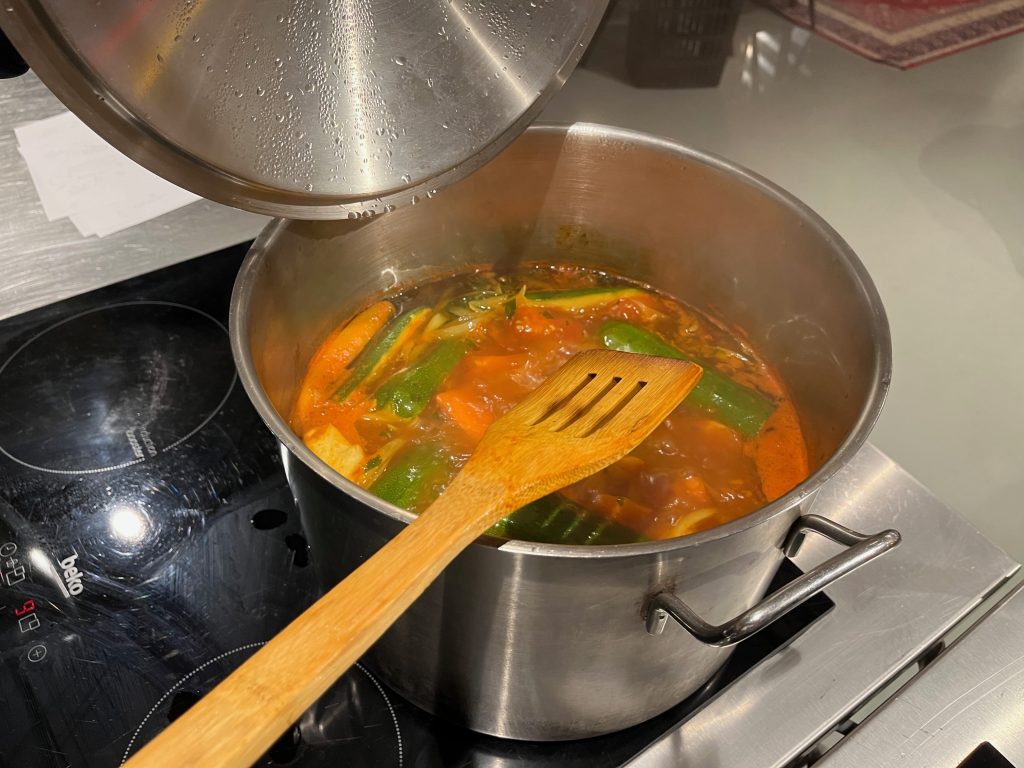
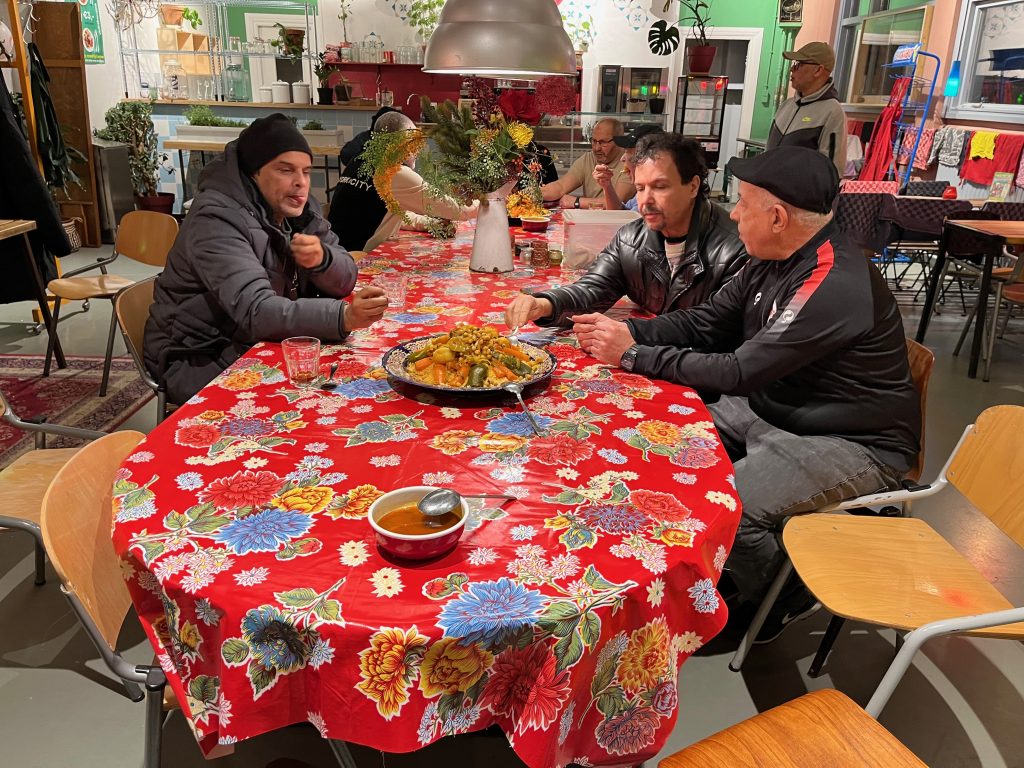
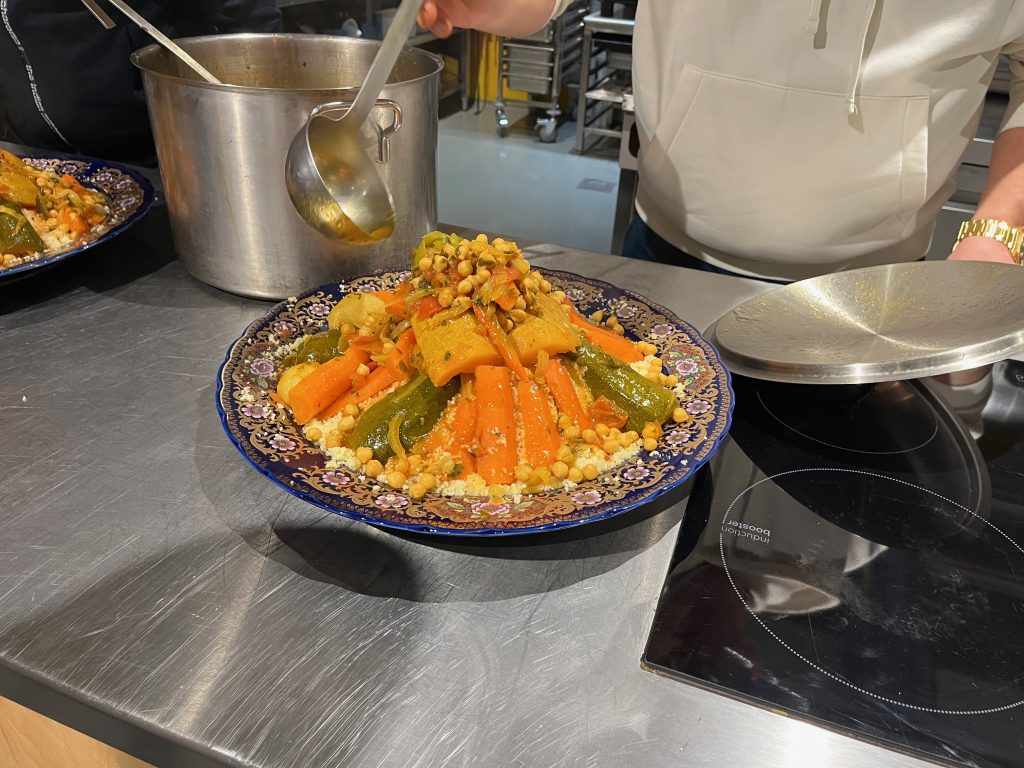
The recipe is now available for all visitors of the Mensa mensa social kitchen, so all Hillevliet visitors can use the recipe.
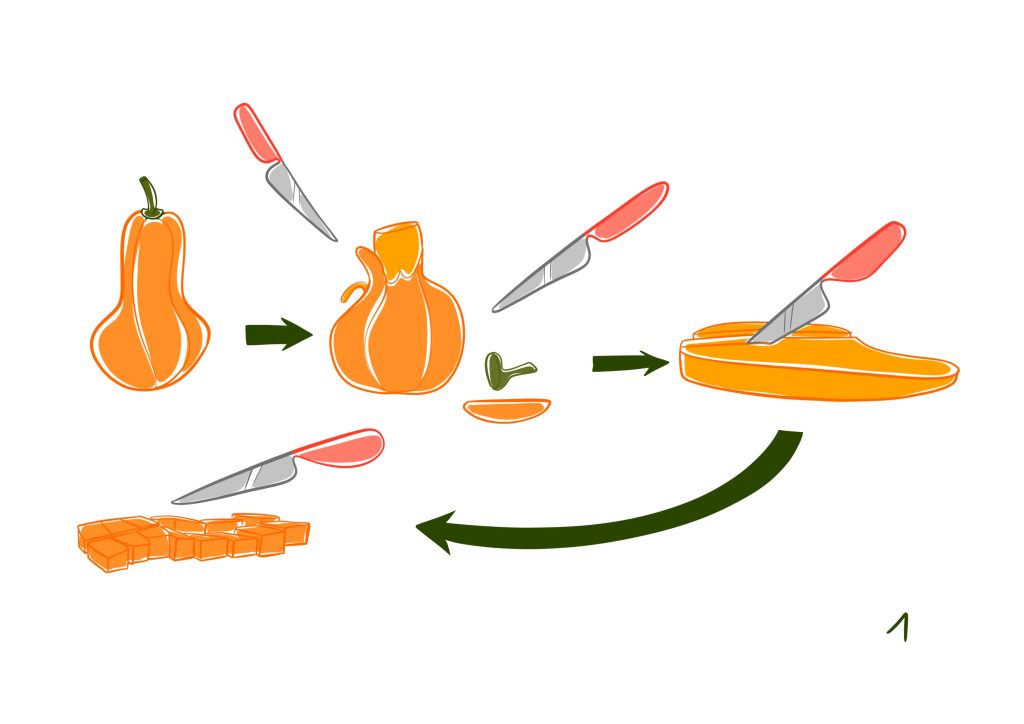
This is the final product – made beautiful by artist Anna Bonomi.
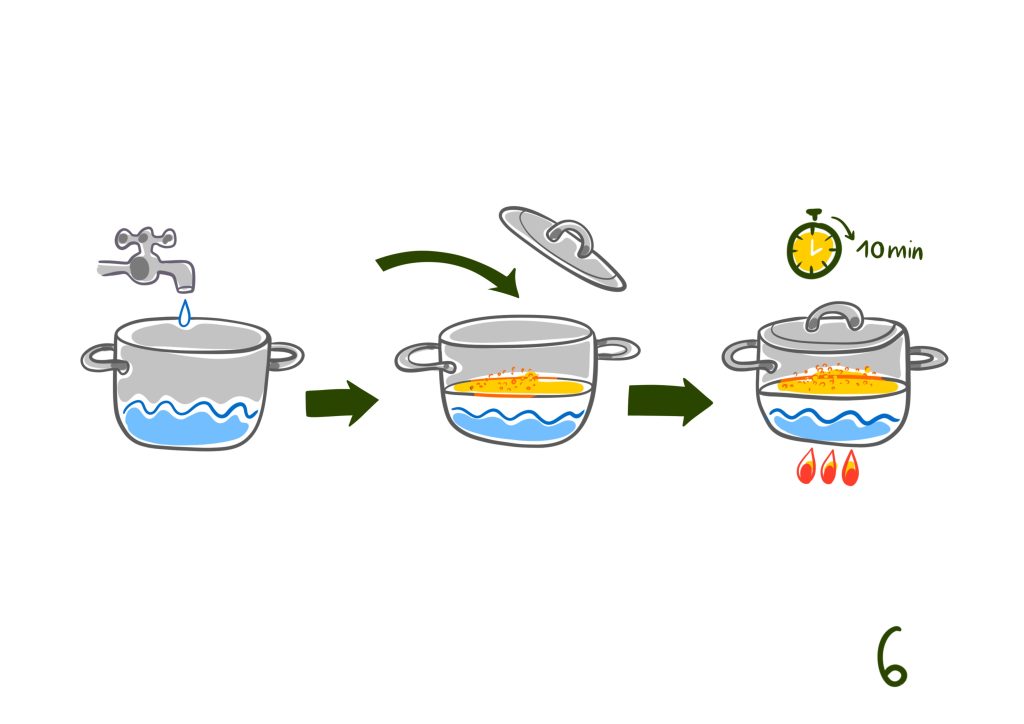
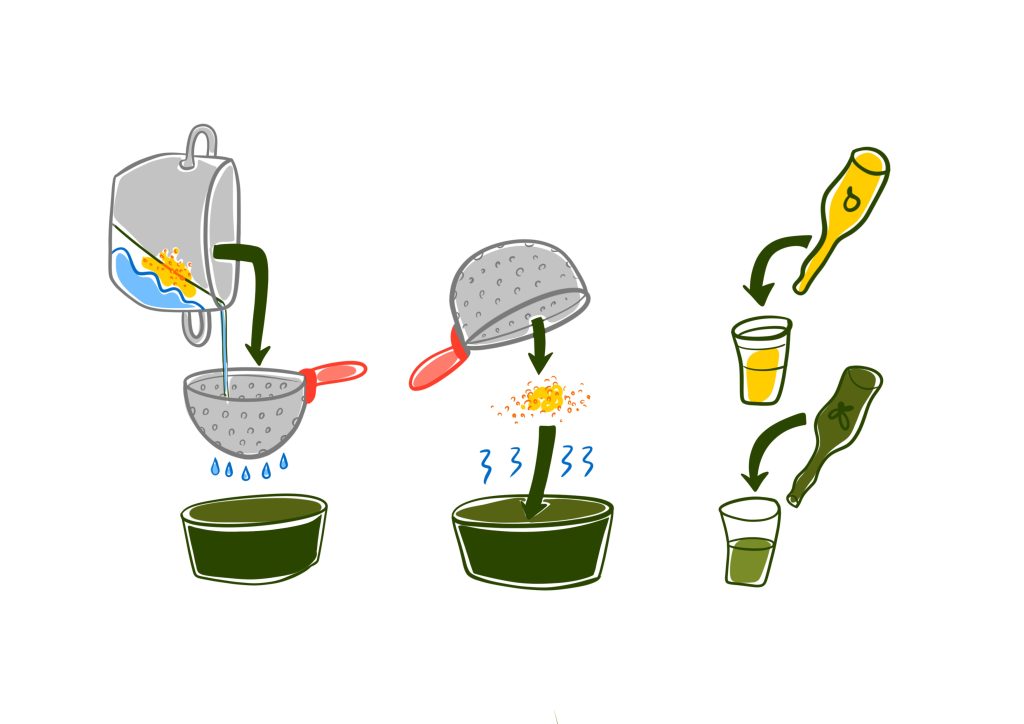
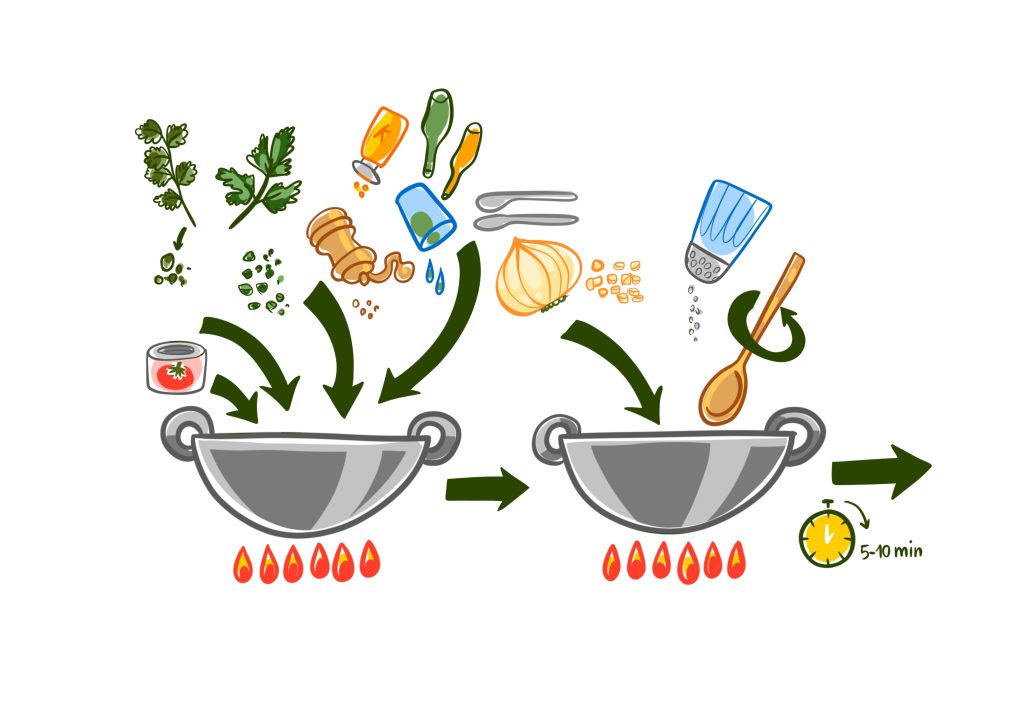
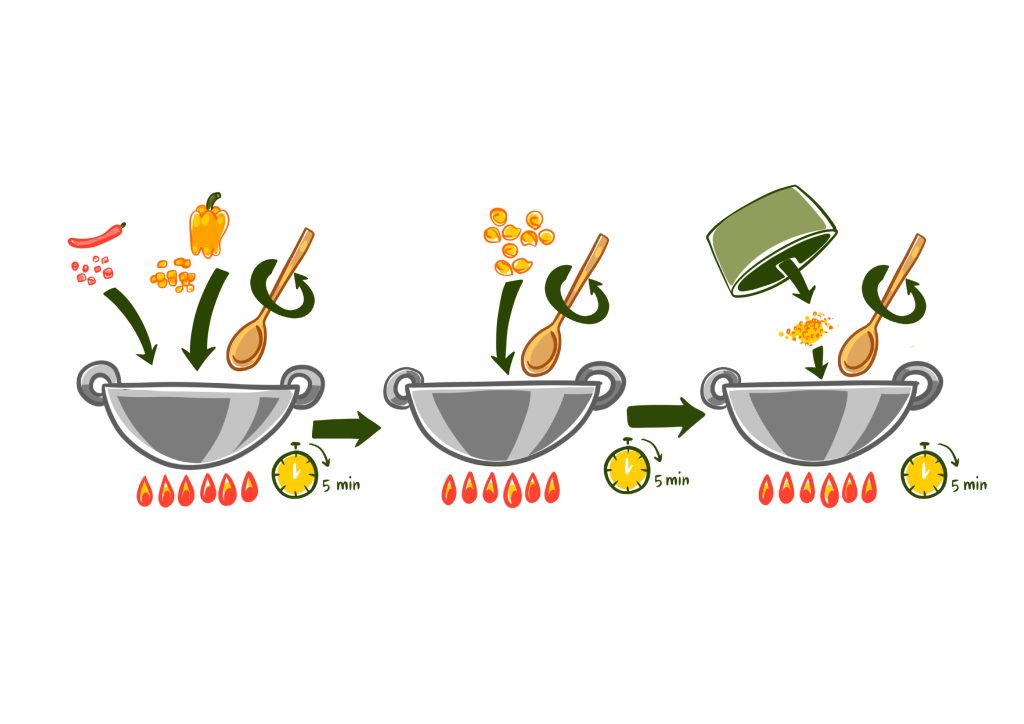
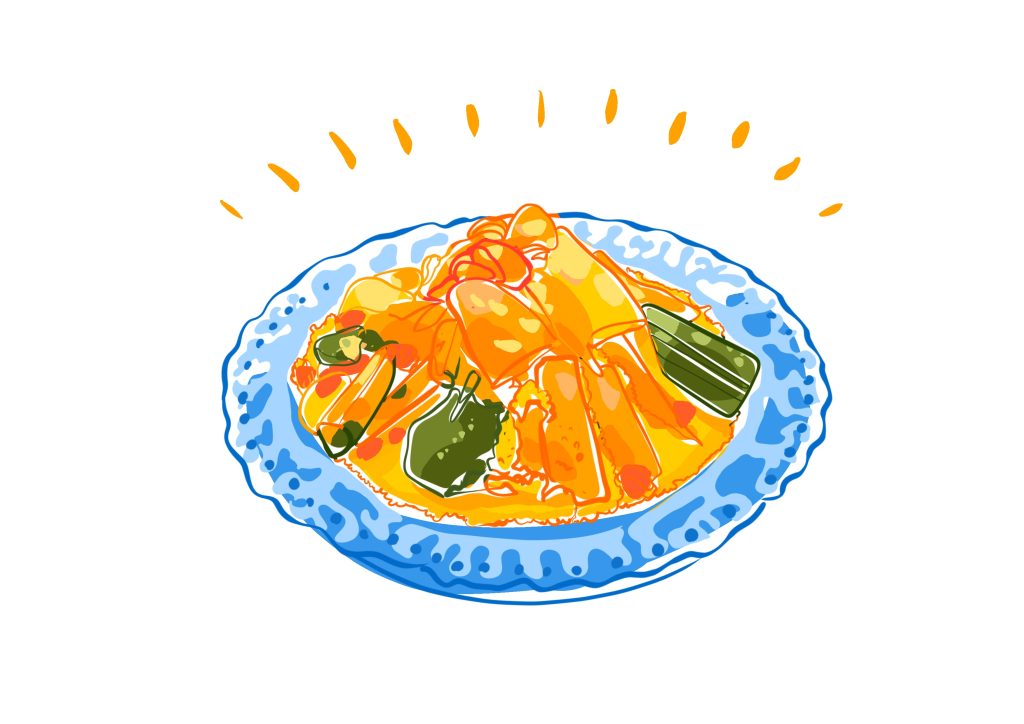
Findings: Inclusion Through Visual Design
The live testing confirmed our hypothesis: all participants were able to follow the recipe without written instructions, and no one was excluded from the activity. Mustafa noted that this was the first time he had seen every dad participate on equal footing.
This echoes findings from Stichting Lezen en Schrijven, which support multimodal and co-created communication tools as a way to bridge gaps in accessibility. Their work also emphasizes that most illiterate people develop subtle coping mechanisms—claiming they’ve forgotten their glasses or that they prefer to read documents at home—rather than disclosing their literacy level. These mechanisms were present in our sessions as well.
References
- Bauer, Frans, NPO, Live without letters’(Leven zonder letters)
https://npo.nl/start/serie/leven-zonder-letters/seizoen-1/leven-zonder-letters_4, (2023), date visited: 12-03-2025. - De Greef, M. De laaggeletterde leert het ons [The illiterate teaches us]. Arteduc, (July 2021).
- Interviews with illiterate volunteers from the language ambassadors of Stichting Lezen en Schrijven (foundation for reading and writing).
- Interviews and co-creation session with the Neighbourhood dads of Hilevliet.
- Human, Clear language (in Dutch: ‘Duidelijke taal’) https://www.human.nl/duidelijke-taal.html, (2023) date visited: 20-02-2025.
- Manzini, E. Design, When Everybody Designs: An Introduction to Design for Social Innovation. MIT Press, (2015).
Leave a Reply