
Third iteration
The redesign of the game board and gameplay mechanics was undertaken as a research-through-design (RtD) iteration, in which design practice itself functioned as a mode of inquiry. Rather than treating the game as a final artefact to be refined or optimised, each iteration was approached as an opportunity to investigate how systemic complexity, agency, and exclusion are experienced—particularly by people who struggle with written language. This positioning aligns with European traditions of design research in which knowledge emerges through making, testing, and reflecting on artefacts in situated use (Frayling, 1993; Findeli, 2001).
Early playtests revealed that the initial version of the game board introduced unnecessary cognitive and navigational complexity, which interfered with the experiential insights the game was intended to evoke. In response, the board was redesigned into a clear, snake-like path. This simplification was not conceived merely as a usability improvement, but as a deliberate design intervention that foregrounds temporal progression and lived experience over spatial complexity. Within an RtD framework, the redesigned board functions as a research artefact: a material hypothesis about how sequencing, anticipation, and clarity shape engagement and understanding (Gaver, Dunne, & Pacenti, 1999).
Adding a mechanism to regulate movement
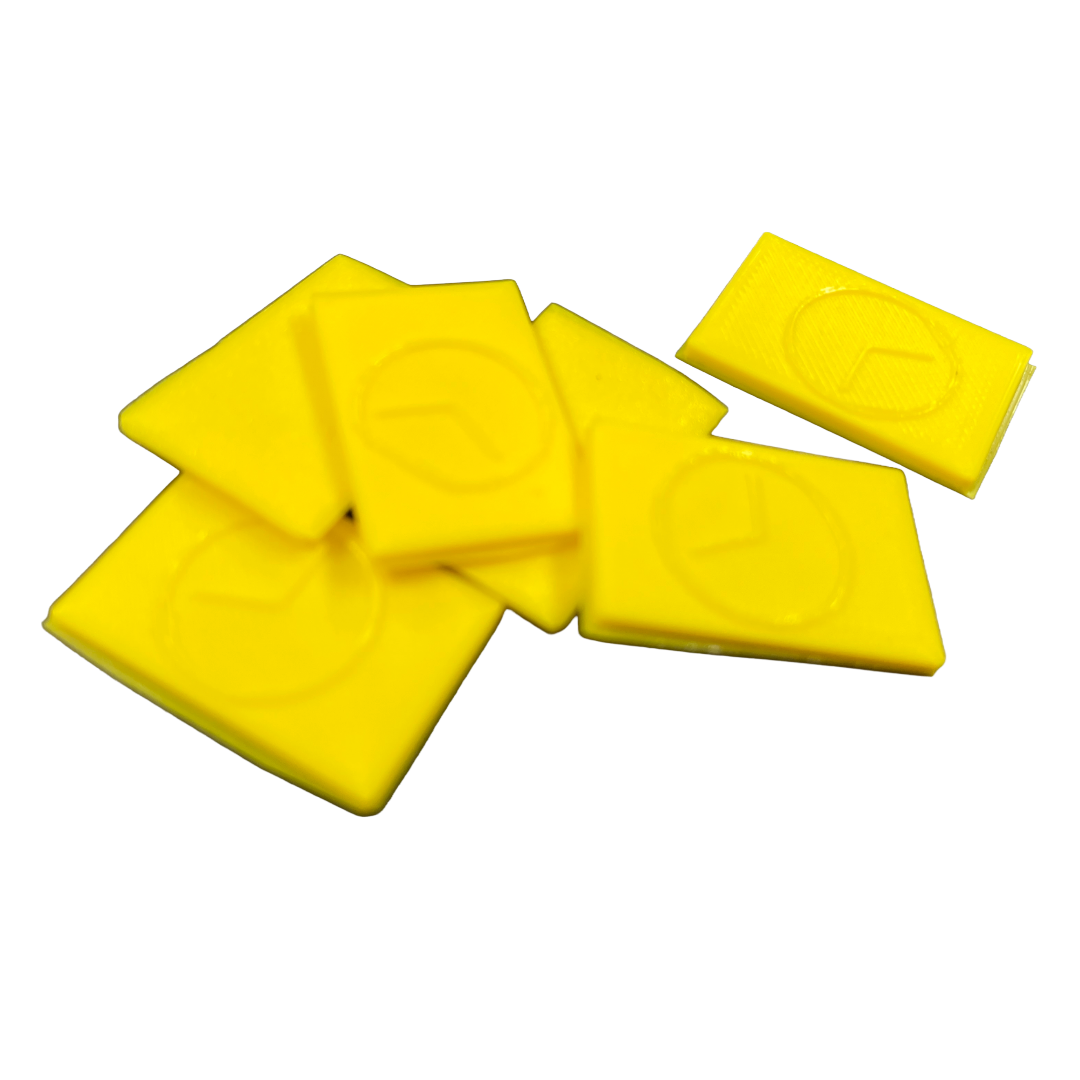
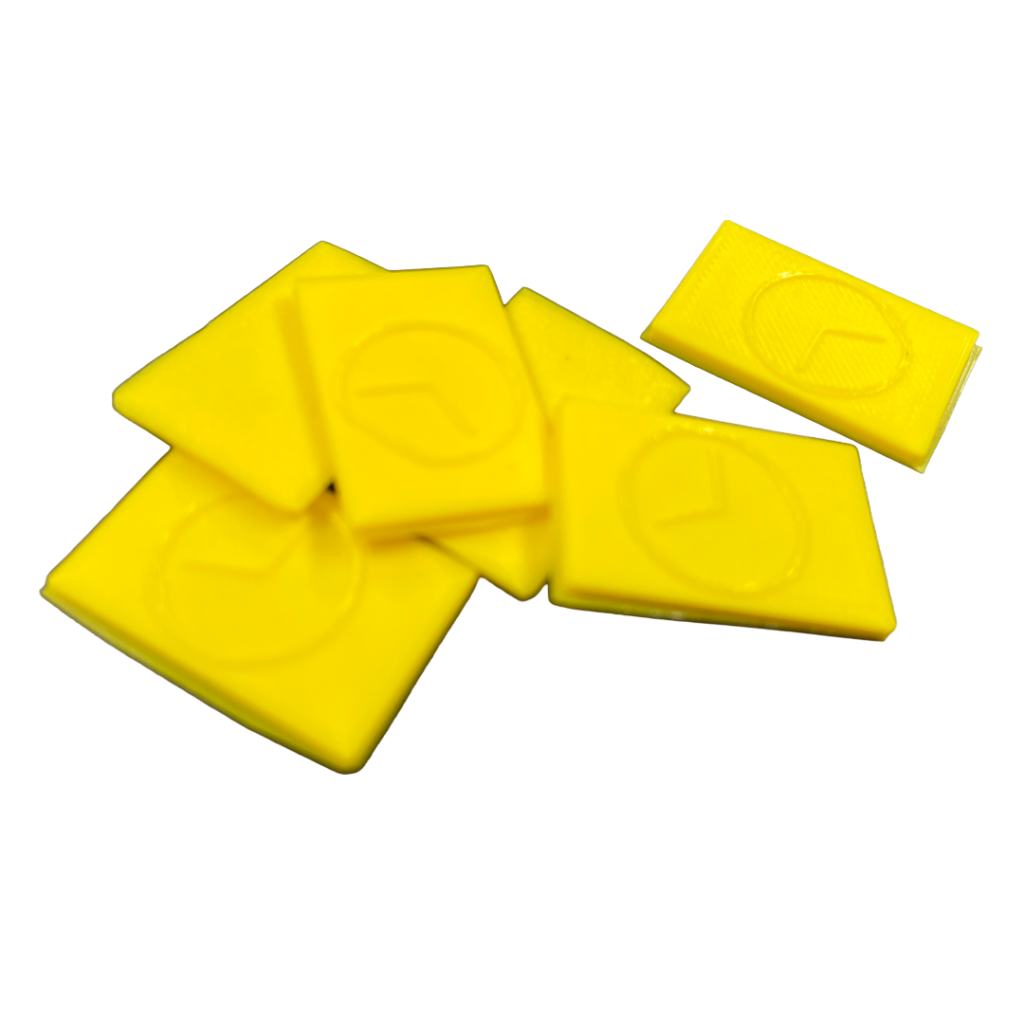
A second critical insight concerned the absence of a mechanism to regulate movement forwards and backwards across the board. Without such a mechanism, the game could not adequately represent the uneven, non-linear trajectories that characterise bureaucratic systems. To address this, time fiches were introduced as a central gameplay mechanic. By making time tangible, it shifted from an implicit background condition to an explicit resource that players could gain, lose, negotiate, and reflect upon. This design move resonates with RtD approaches that externalise abstract systemic forces—such as delay, dependency, and institutional friction—through material artefacts that can be collectively experienced and discussed (Findeli, 2001).
The introduction of time fiches also enabled a more controlled yet flexible progression through the game. Essential items—such as identification, money, and a bank statement—were no longer dependent on chance encounters but embedded within a structured logic supported by colour-coded zones. These colours function as visual cues that guide attention and signal opportunity, reducing the likelihood that players inadvertently miss critical moments required for advancement. In this way, progression is framed not as a test of individual competence, but as an interaction between player agency and system design, reflecting participatory design principles that emphasise mutual learning and democratic access (Ehn, 1988; Sanders & Stappers, 2008).
The newly established structure created space to enrich gameplay through event cards that allow players to gain or lose time fiches and acquire necessary items. These events operate as designed frictions: moments in which progress is interrupted, redirected, or unexpectedly accelerated. Within European RtD and critical design traditions, such frictions are understood as productive rather than problematic, as they expose underlying assumptions, power relations, and emotional responses embedded in systems of use (Gaver et al., 1999).
To support these mechanics, a suite of accompanying artefacts was developed, including new events, visual assets, and audio scripts. All visual materials were hand-drawn to maintain a consistent visual language, while audio components were produced using a combination of voice acting and AI-based text-to-speech tools to ensure tonal coherence across the game. These artefacts are not supplementary outputs but integral research materials. They embody insights, provoke interpretation, and enable reflection-in-action during play, consistent with RtD perspectives that treat artefacts as epistemic objects rather than illustrative outcomes (Frayling, 1993; Findeli, 2001).
In addition, a series of interactive mini-games was developed to deepen immersion and to situate systemic issues within embodied experiences. Scenarios such as navigating a bureaucratic maze, encountering an impossible digital form, experiencing setbacks, or benefiting from moments of unexpected luck reflect well-documented challenges faced by people with limited literacy. At the same time, the game foregrounds coping strategies—working together, drawing on community support, and navigating systems collectively. These dynamics resonate with participatory and democratic design traditions that frame participation as a collective, socially situated practice rather than an individual skill (Ehn, Nilsson, & Topgaard, 2014; Manzini, 2015).
Taken together, the evolving game board, mechanics, and supporting artefacts exemplify research-through-design as articulated within European design research discourse: design is not the outcome of research, but its medium. Knowledge emerges through the iterative making and use of artefacts that operate in real contexts, generating insights into systemic exclusion, agency, and participation that cannot be accessed through abstract analysis alone (Frayling, 1993; Findeli, 2001).
Sources
Ehn, P. (1988). Work-oriented design of computer artifacts. Lawrence Erlbaum Associates.
Ehn, P., Nilsson, E. M., & Topgaard, R. (Eds.). (2014). Making futures: Marginal notes on innovation, design, and democracy. MIT Press.
Frayling, C. (1993). Research in art and design. Royal College of Art Research Papers, 1(1), 1–5.
Findeli, A. (2001). Rethinking design education for the 21st century: Theoretical, methodological, and ethical discussion. Design Issues, 17(1), 5–17. https://doi.org/10.1162/07479360152103796
Gaver, W., Dunne, T., & Pacenti, E. (1999). Design: Cultural probes. Interactions, 6(1), 21–29. https://doi.org/10.1145/291224.291235
Manzini, E. (2015). Design, when everybody designs. MIT Press.
Sanders, E. B.-N., & Stappers, P. J. (2008). Co-creation and the new landscapes of design. CoDesign, 4(1), 5–18.
Leave a Reply