
Second iteration
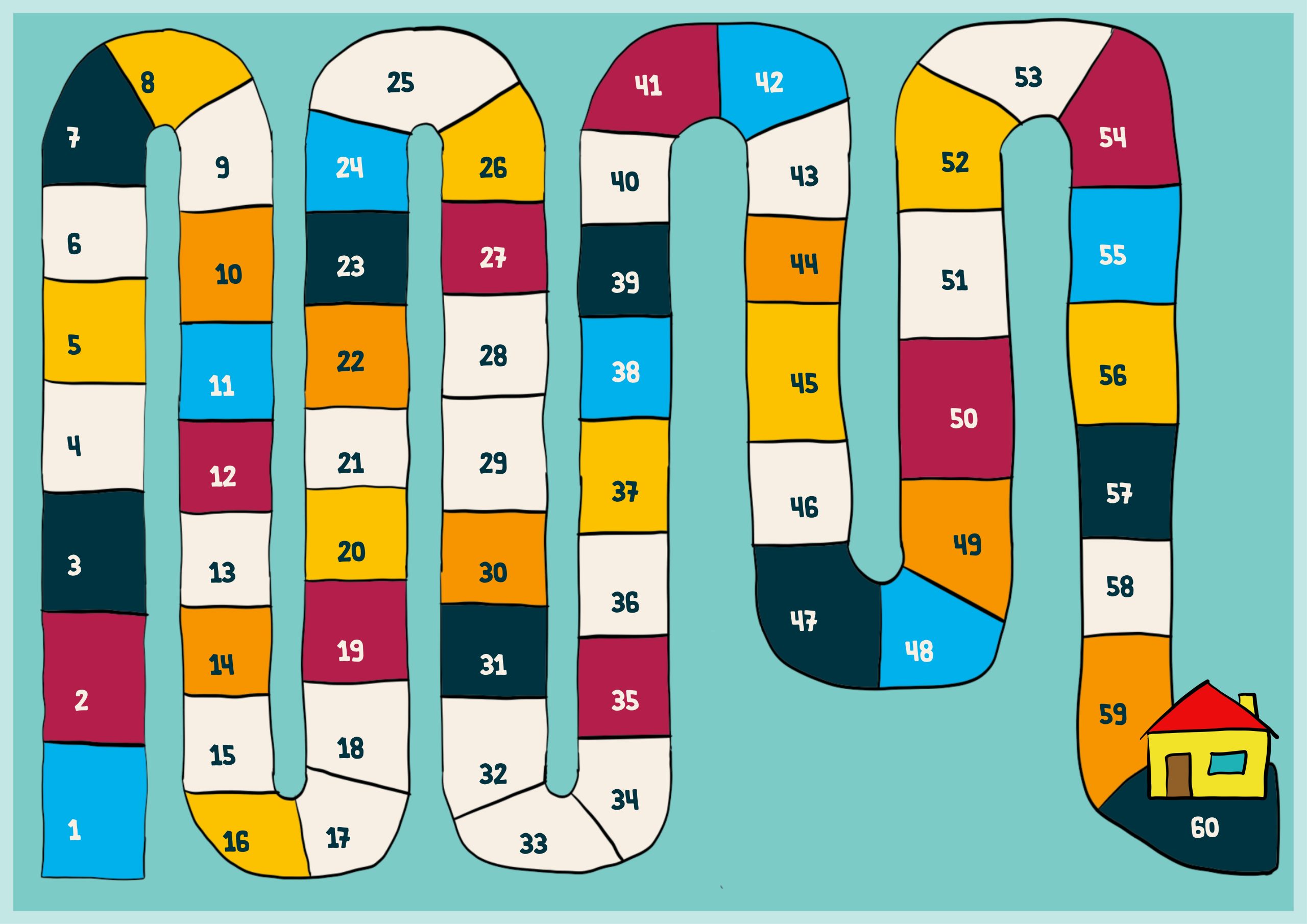
In an earlier design iteration, prior to the final redesign, the game board was significantly simplified as an exploratory move within the research-through-design process. Rather than embedding actions directly on the board, these actions were externalised and transferred to card-based interactions. This shift allowed the board to function primarily as a navigational structure, while decision-making and events were distributed across physical artefacts that could be handled, selected, and discussed during play.
Gameplay in this iteration was governed by two dice: one standard die to determine movement, and a second die to determine the type of card a player was required to draw. The different card types were organised into colour-coded stacks, with each colour signifying a specific category of action or event. This colour logic was intended to reduce textual dependency and to provide visual cues that structured decision-making without relying on written explanation.
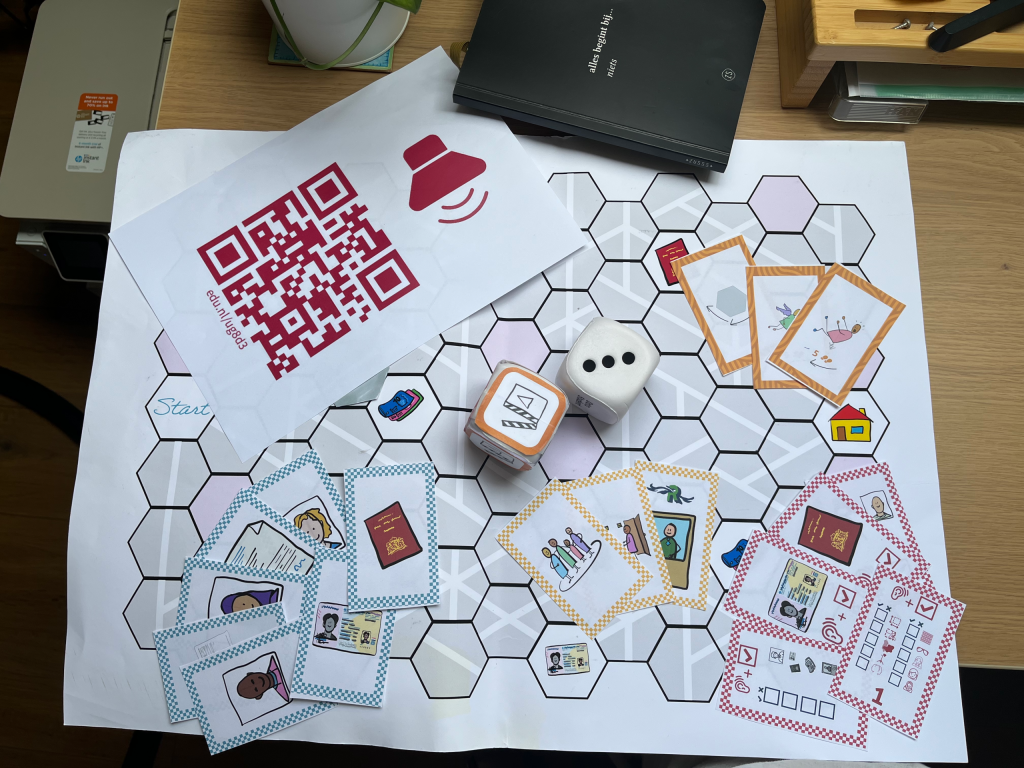
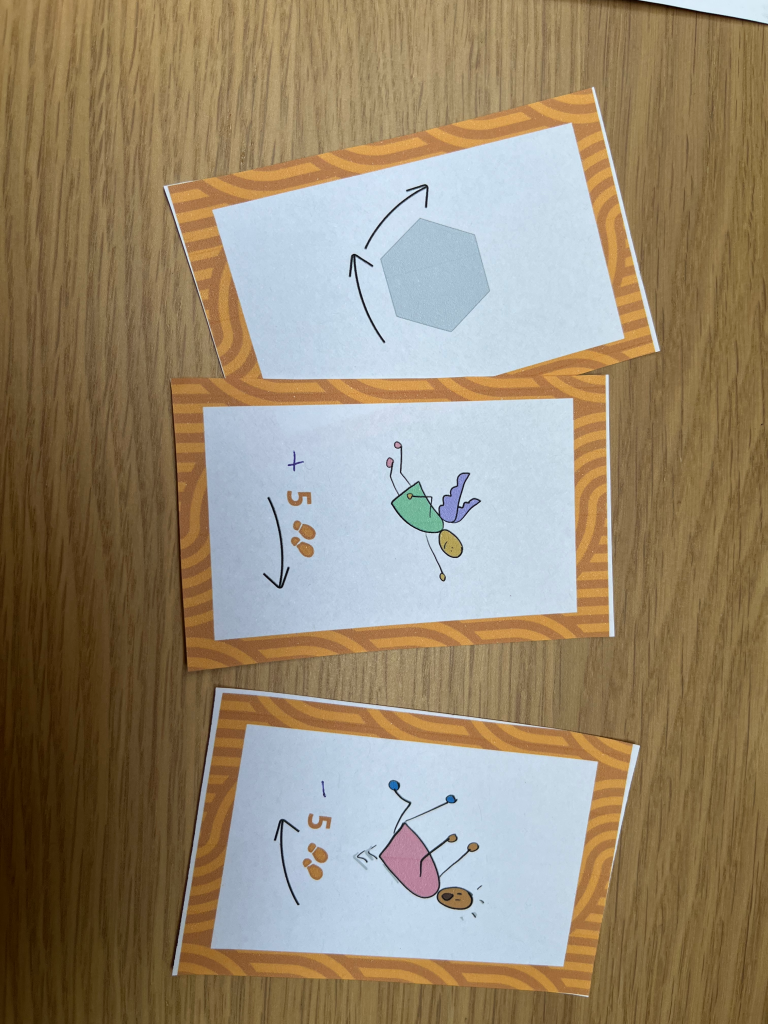

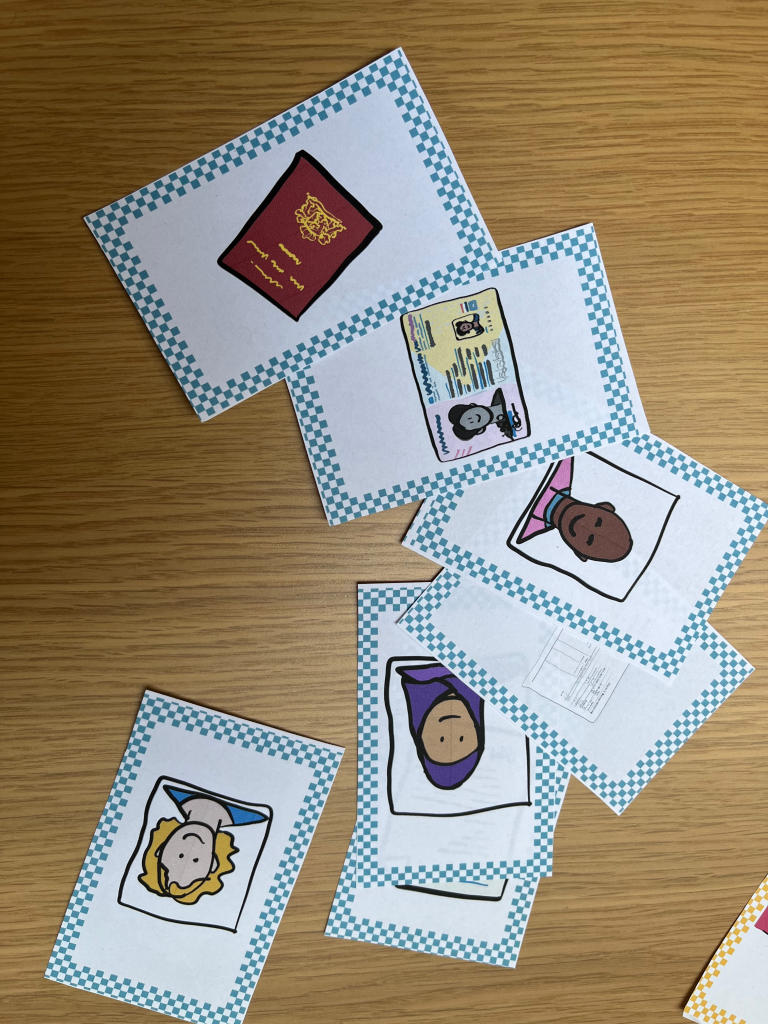





From a research-through-design perspective, this iteration functioned as a probe into how rule-based systems and abstraction are experienced when translated into tangible, non-textual mechanisms. By separating movement from action, the design explored whether complexity could be redistributed across artefacts rather than concentrated in a single surface. This approach resonates with European design research traditions that emphasise the role of artefacts as mediators of understanding and as sites of inquiry rather than neutral containers of rules (Frayling, 1993).
However, playtesting revealed limitations in this configuration. While the card-based system increased flexibility, the dual-dice mechanism introduced uncertainty that made it difficult for players to anticipate or influence their progression meaningfully. Although colour coding supported orientation, the lack of a shared resource to negotiate time, delay, or recovery limited the game’s ability to represent the uneven and cumulative effects of bureaucratic processes. These insights directly informed the subsequent iteration, in which control over progression and time became central design concerns.
Source
Frayling, C. (1993). Research in art and design. Royal College of Art Research Papers, 1(1), 1–5.
Leave a Reply