This page will be a collection of all my research actions.
Experiments with eliminating text
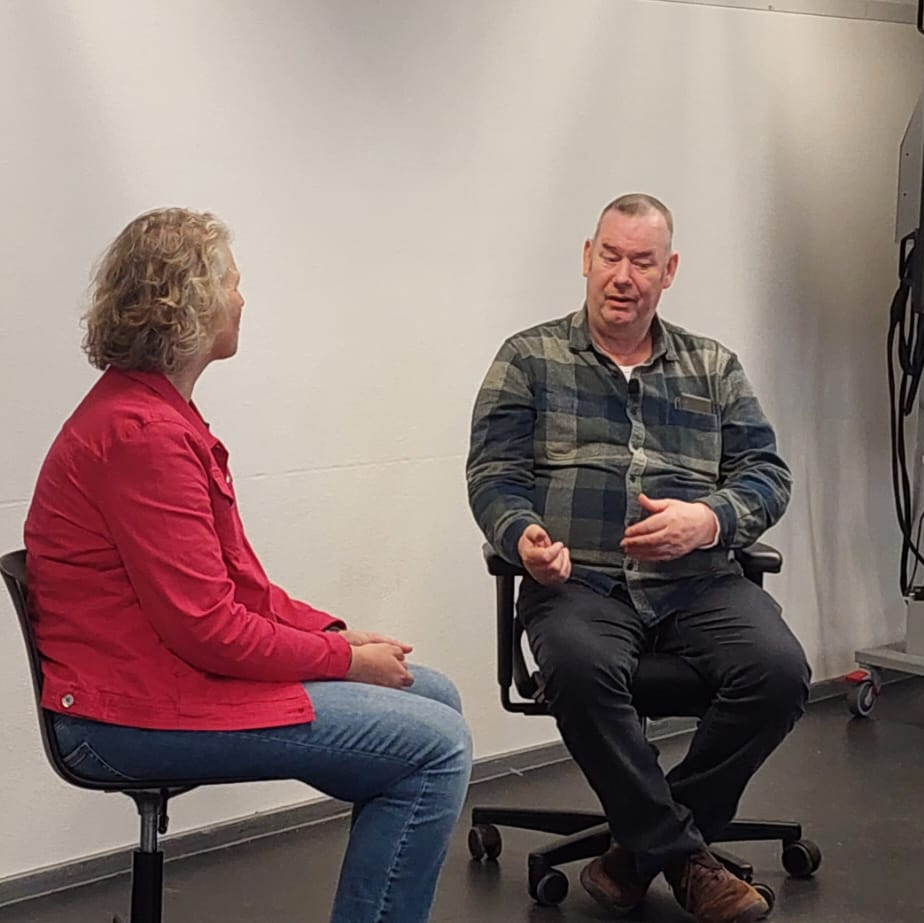
I began my journey by talking to experts with lived experience, such as the late Koos Vervoort, and other language ambassadors. In addition to the hard data I could find from the Stichting Lezen en Schrijven (Foundation for Reading and Writing), Statistics Netherlands (CBS), and other statistical sources, I also wanted to hear the stories of people with low literacy. I have lived experience with this myself; my father is low-literate. From a young age, I had to act as a translator for formal communication, starting at the end of primary school and continuing to this day.
From the outset it was clear that the design had to be approached in an iterative manner.
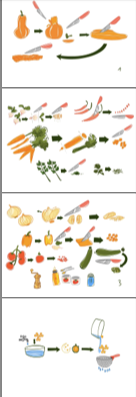
The first experiment, the wordless recipe, yielded many new insights. Removing reading skills as a factor has a leveling effect. Suddenly, all participants can participate. It all started with creating the recipe.
By not allowing the written word, participants had to work with alternative communication, provided images, arrows, videos, and of course: talking about it with each other.
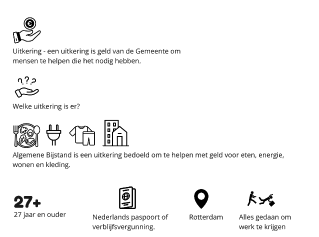
The subsequent experiment was less successful. In an attempt to translate formal text into images with the help of an illiterate volunteer, in collaboration with the SOL organization and language ambassadors from the Stichting Lezen en Schrijven (Reading and Writing Foundation), it quickly became clear that this is a time-consuming process, yielding a different visual for each situation and even for each volunteer. This led to the conclusion that it is not currently feasible to implement this on a large scale. A customized approach is needed. Because this was not the desired approach, I had to consider a different route.
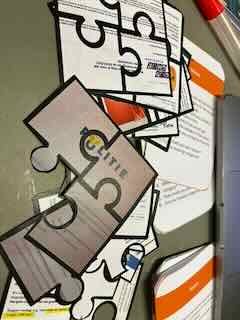
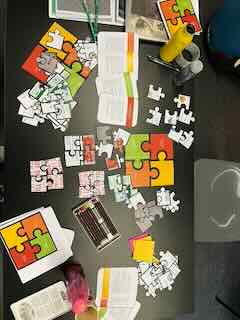
The shift in target group from illiterate to literate began with an experiment. I developed a puzzle in which a written document appears legible but ultimately proves unreadable. After completing the puzzle, participants discover that, although the symbols resemble familiar letters, the text remains illegible. Based on this material, they must decide whether the document is important.
This experiment revealed a key insight: when text comprehension is taken for granted, other cues are overlooked. Once text is removed as a reliable anchor, visual elements gain new significance, while interpretation becomes uncertain. This shift in perspective proved valuable for both the participant and the research process.
Gamification of experiences
After focusing on the literate target group, it was important to find a way to engage with this lack of inclusion without affecting the target group itself. The researcher’s previous experience with gamification made this a logical step.
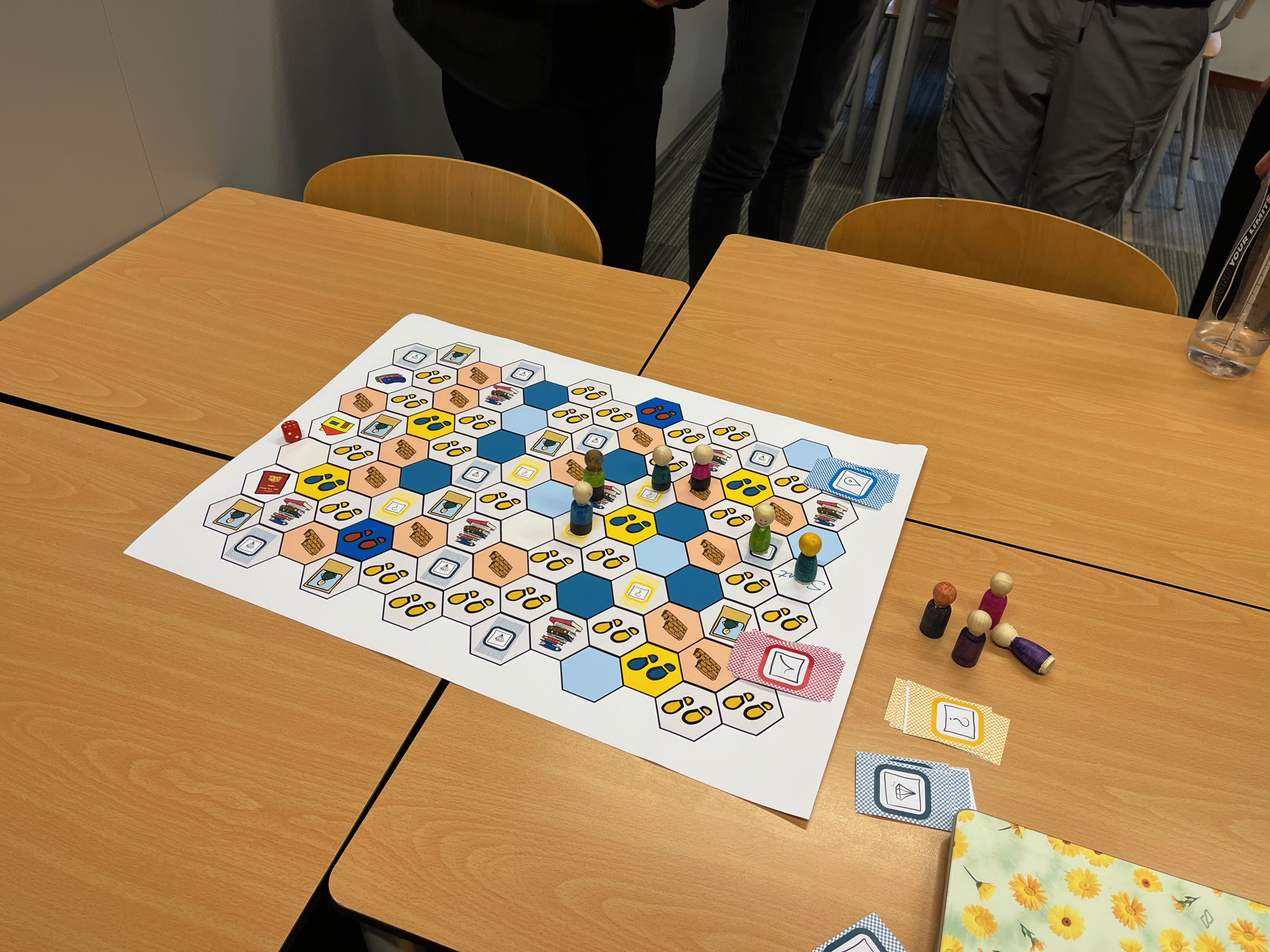
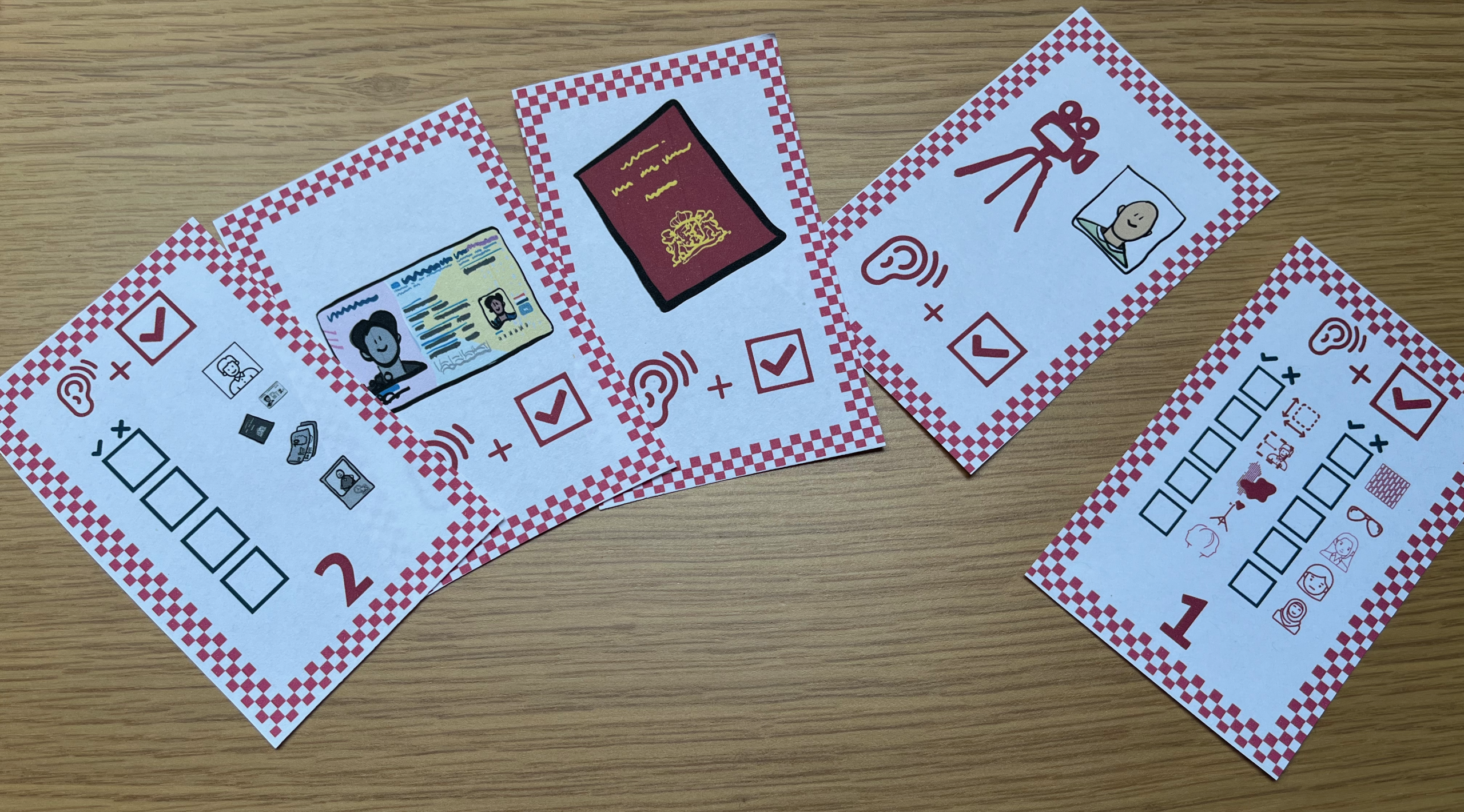
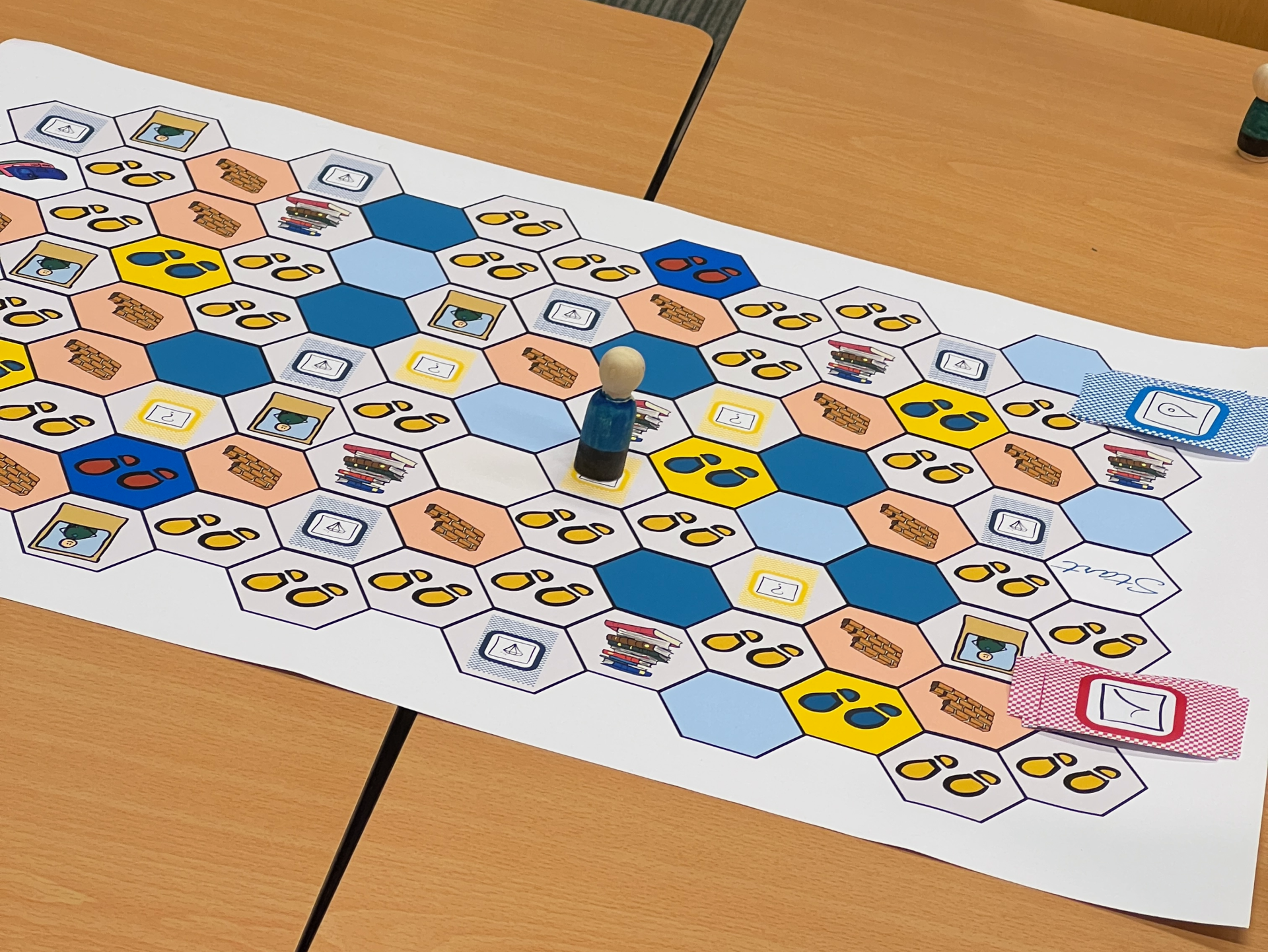
Creating a game from scratch is no easy feat. You want to achieve your goals and make it engaging to play.
Despite having worked with serious gaming before, the researchCreating a game from scratch is no easy feat. You want to achieve your goals and make it engaging to play.
Despite having worked with serious gaming before, the researcher still fell into many common pitfalls: trying to cram too much into the game, overcomplicating it, and missing the point.
But this first iteration also provided a lot of valuable insights, so it was certainly not a waste of time.
A summary of the insights found:
- The game’s complexity had to be limited; the premise is already complex enough,
- The game board was to busy to be understood,
- It must be engaging to play,
- The goal must be very clear so it doesn’t distract from the intention,
- The experience is even more valuable than initially estimated.
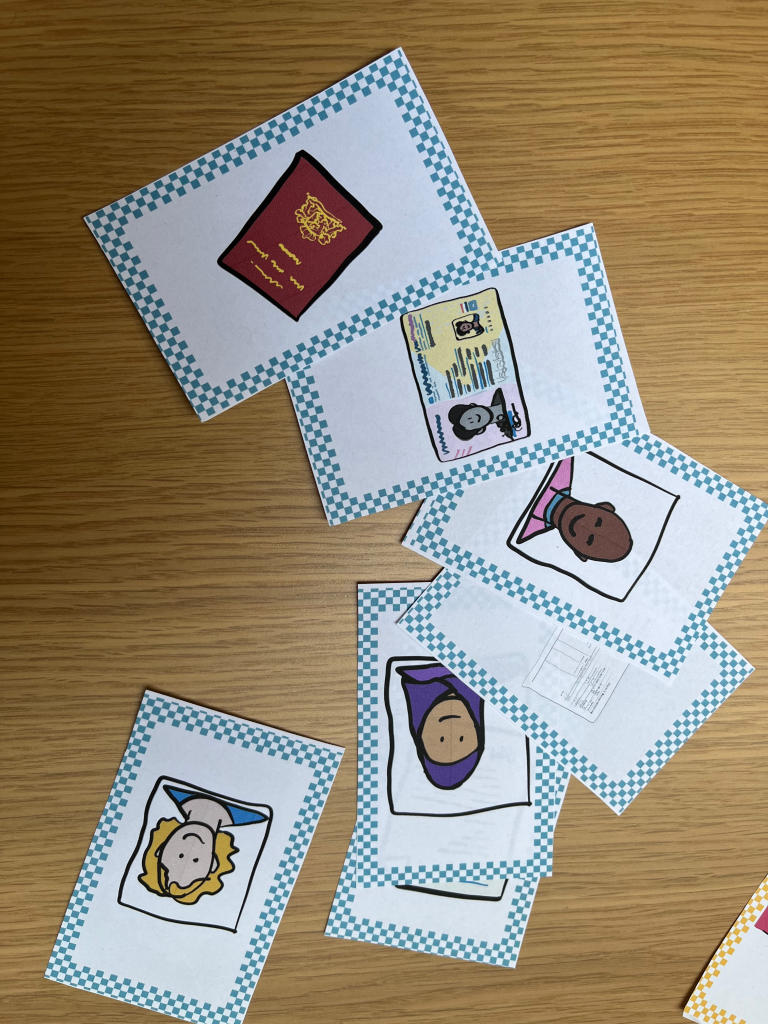
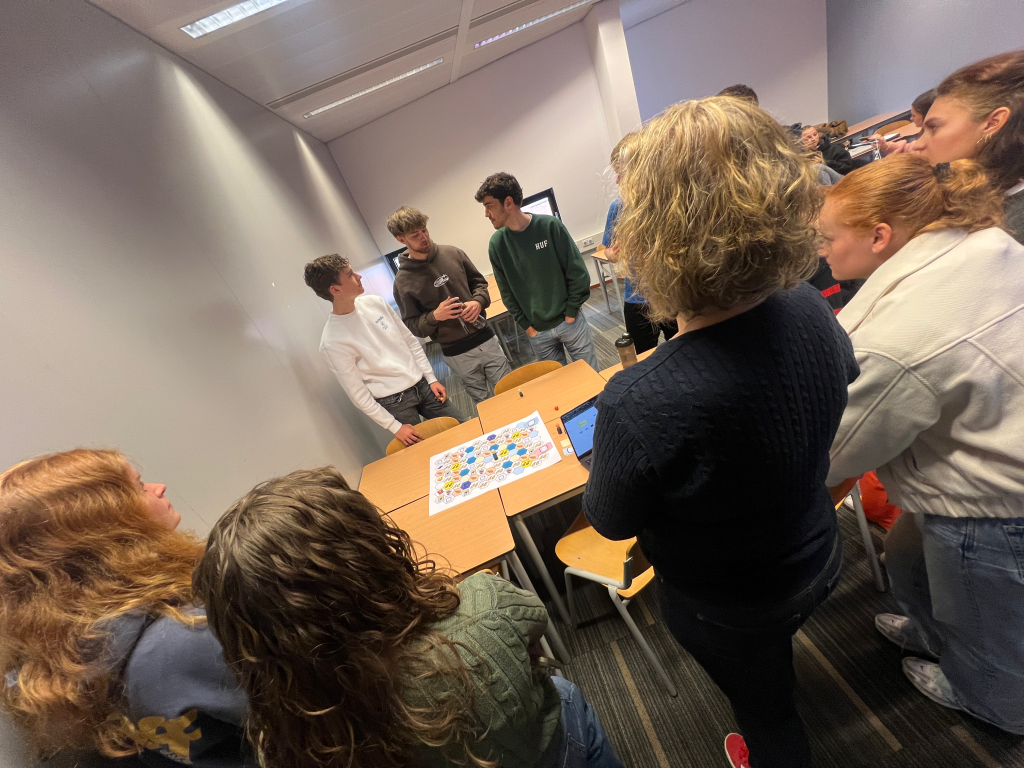
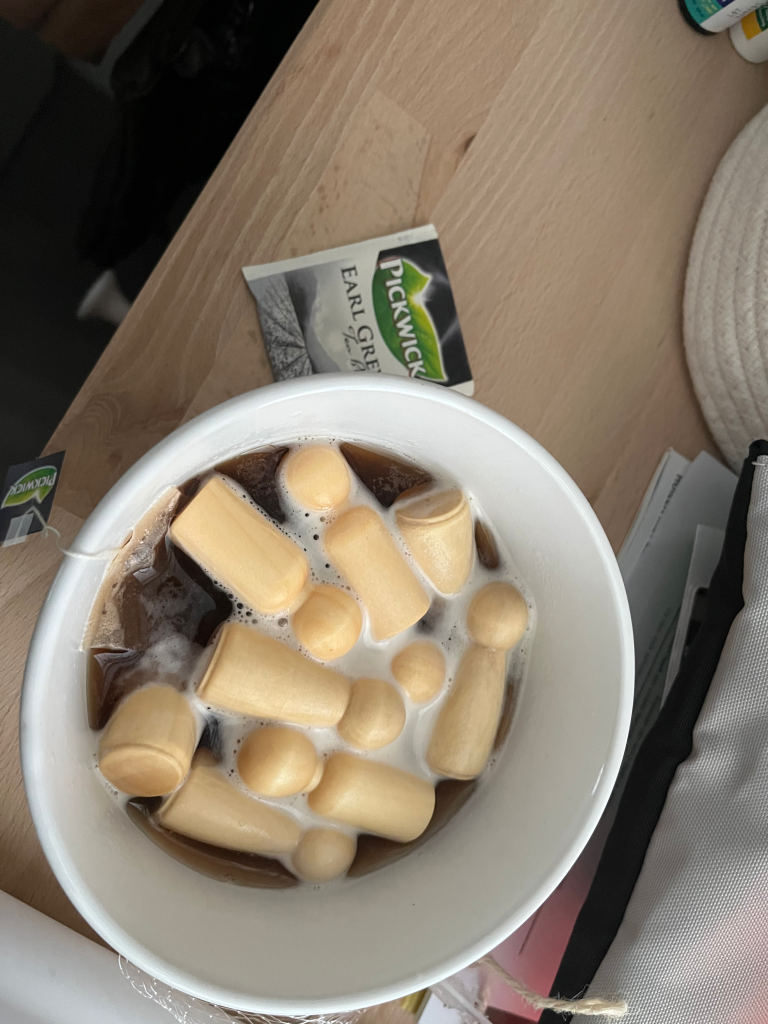
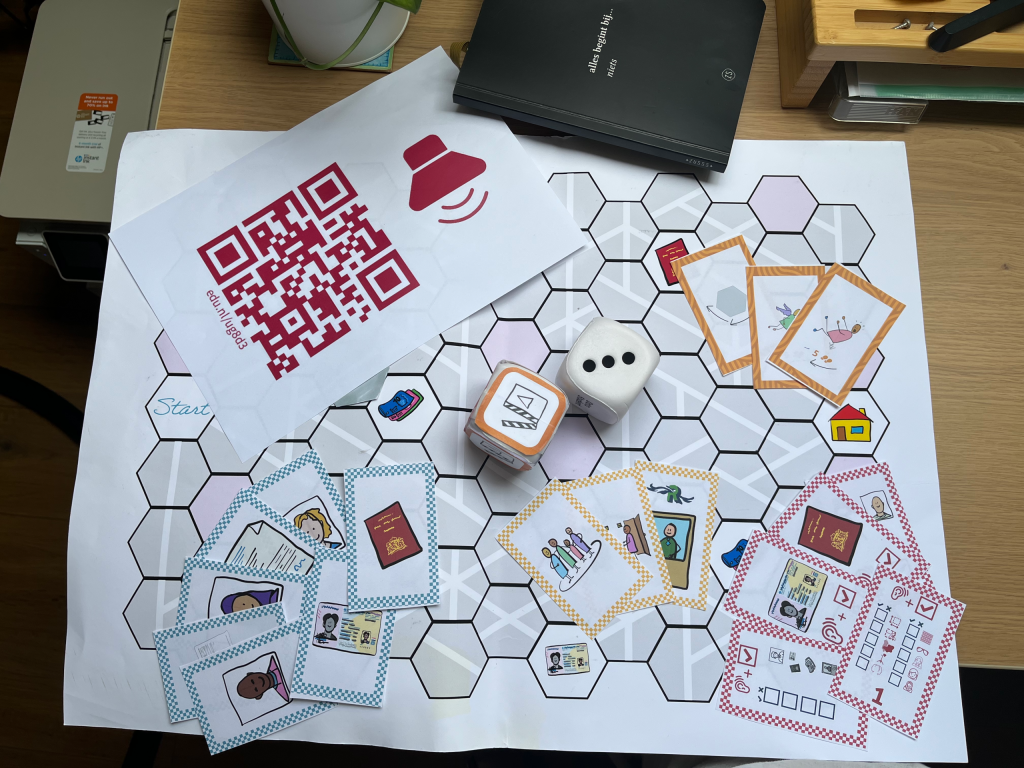
The second iteration of the game yielded different insights:
- the two-dice mechanic made game progression too complex, too slow, and gave the player too little control,
- collaborating with a worksheet with images worked well to eliminate literacy, but was still distracting,
- collaborating on mini-games added a new dimension to the experience of dependency
- the use of audio is powerful, but the audio quality still left much to be desired,
- the game concept works.
- The worksheet didn’t work well to capture the game experience. Instead, short audio recordings were used, which provided rich but unstructured information.
These lessons were incorporated into the third iteration.
The designer enlisted the help of experts in both digital and physical board games to learn about gameplay, mechanics, flow, and player experience.


The following design changes were made:
- Time tokens were introduced to give the player control over the game’s progression.
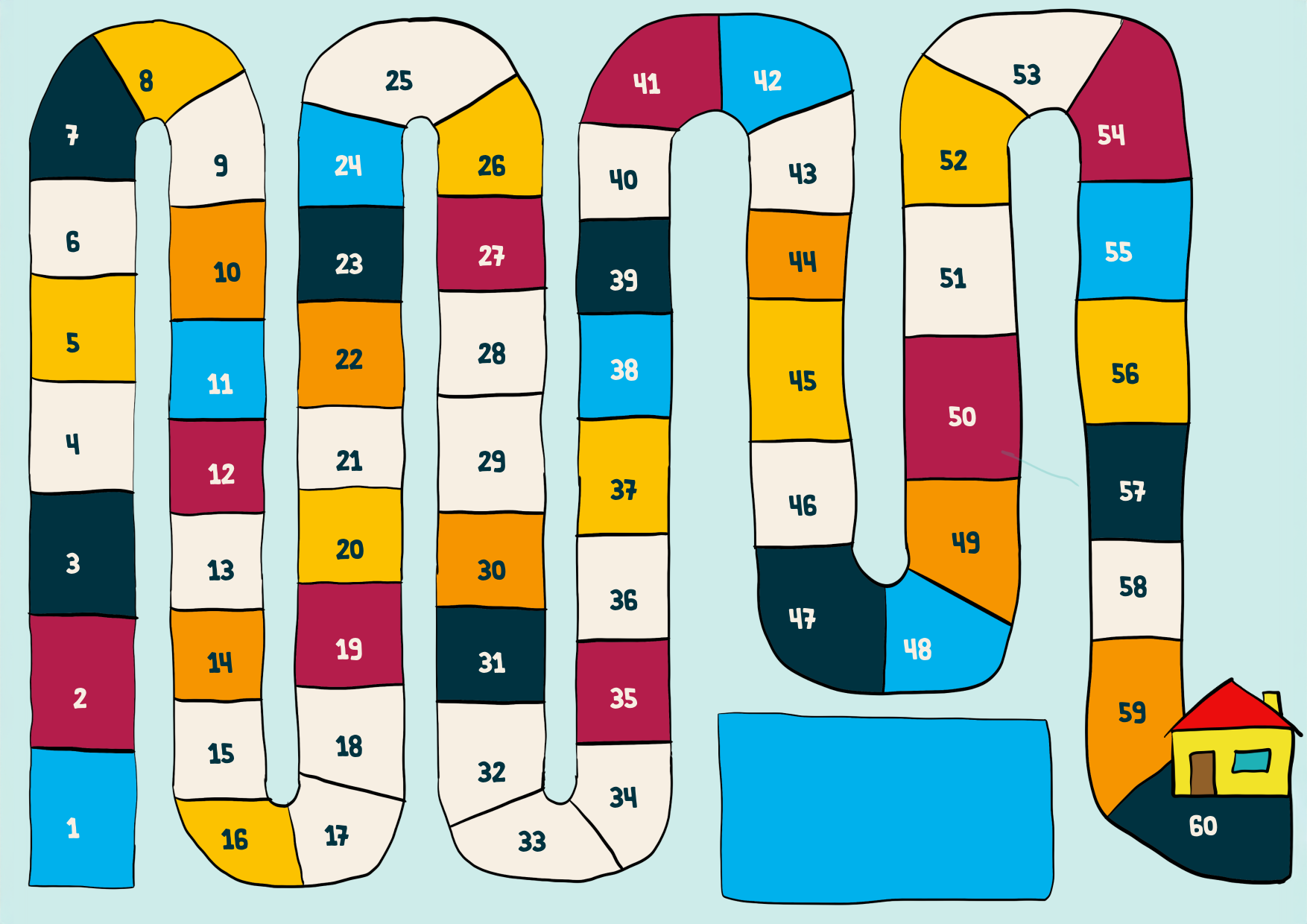
- The game board was simplified to a snake-like path, a reminder that the experience isn’t a straight line.
- The number of mini-games was significantly reduced, but made more meaningful. Each mini-game depicts a real-world experience, such as filling out a form you don’t understand, a letter you can’t read, or navigating a bureaucratic maze under time pressure.
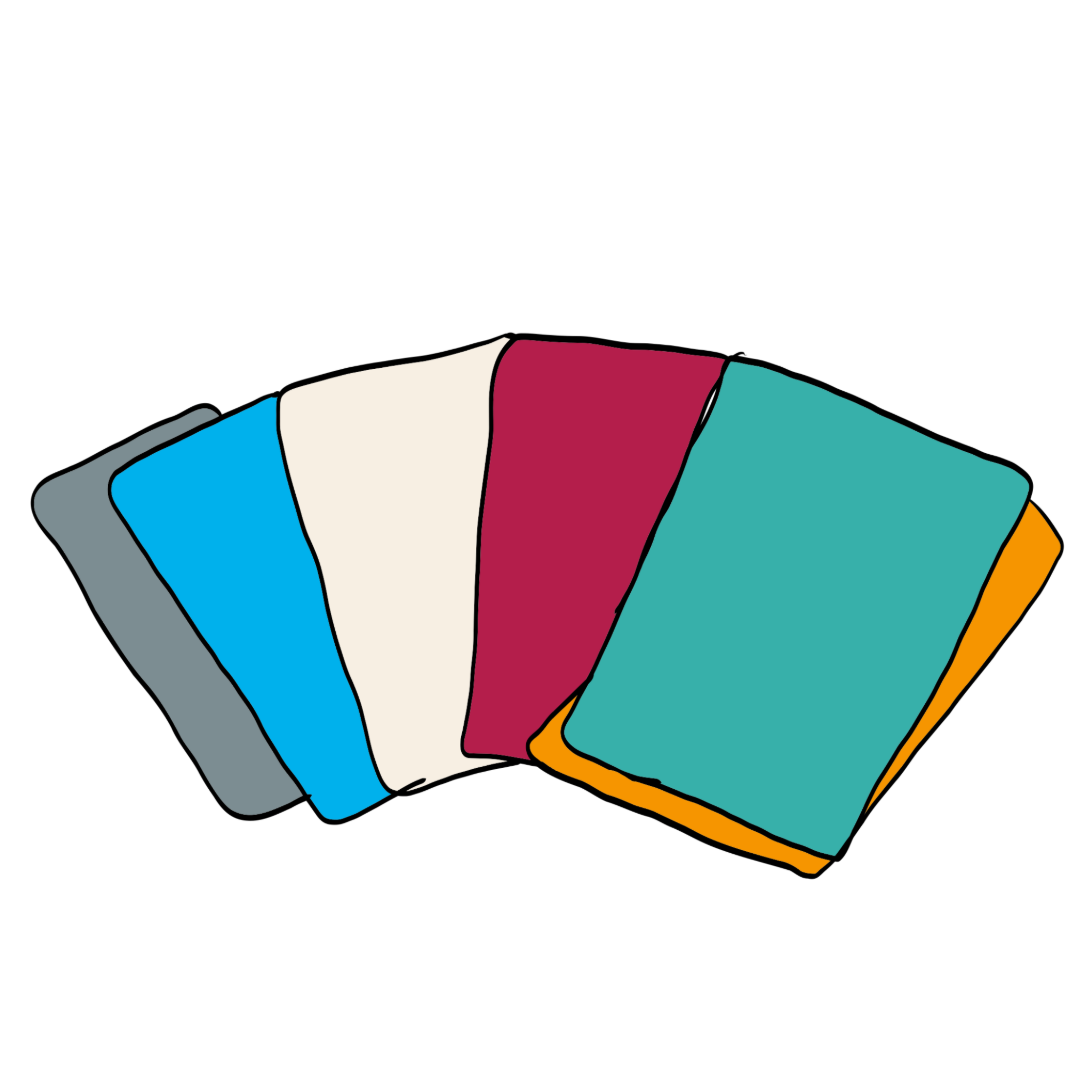
- The main experiences are guided by cards with images that link to audio fragments indicated by these images on the website the researcher created for this purpose.
How do you make experience visible?
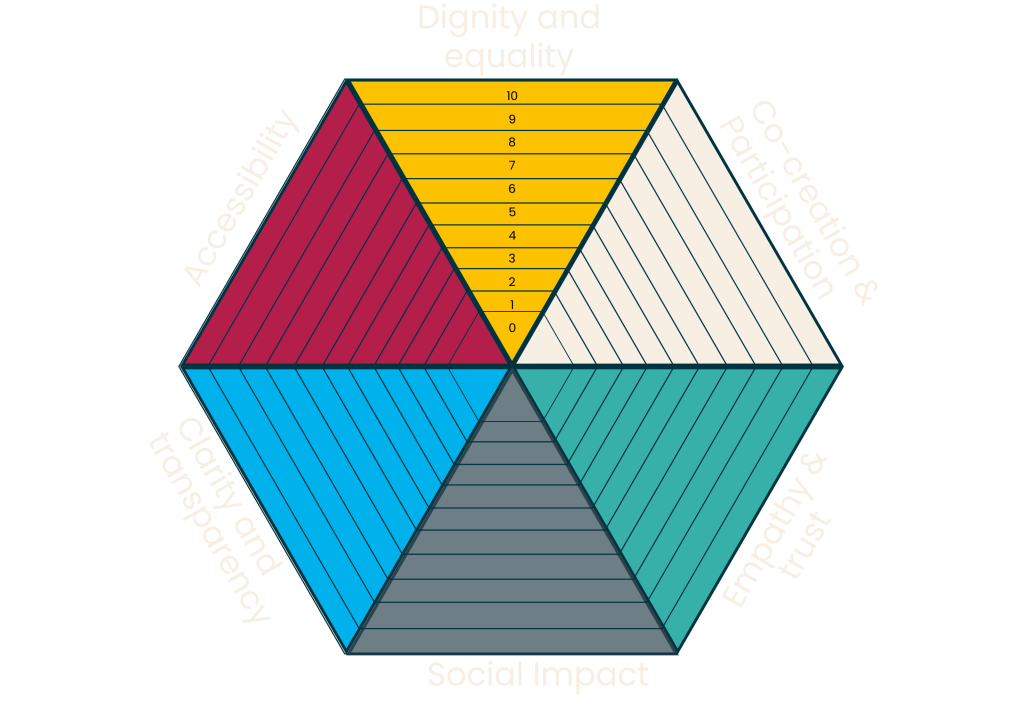
The designer has developed a hexagon with values to visualize the conversation about the experience.
The hexagon is intended to guide the discussion. It will soon be used for the first time with participants.