
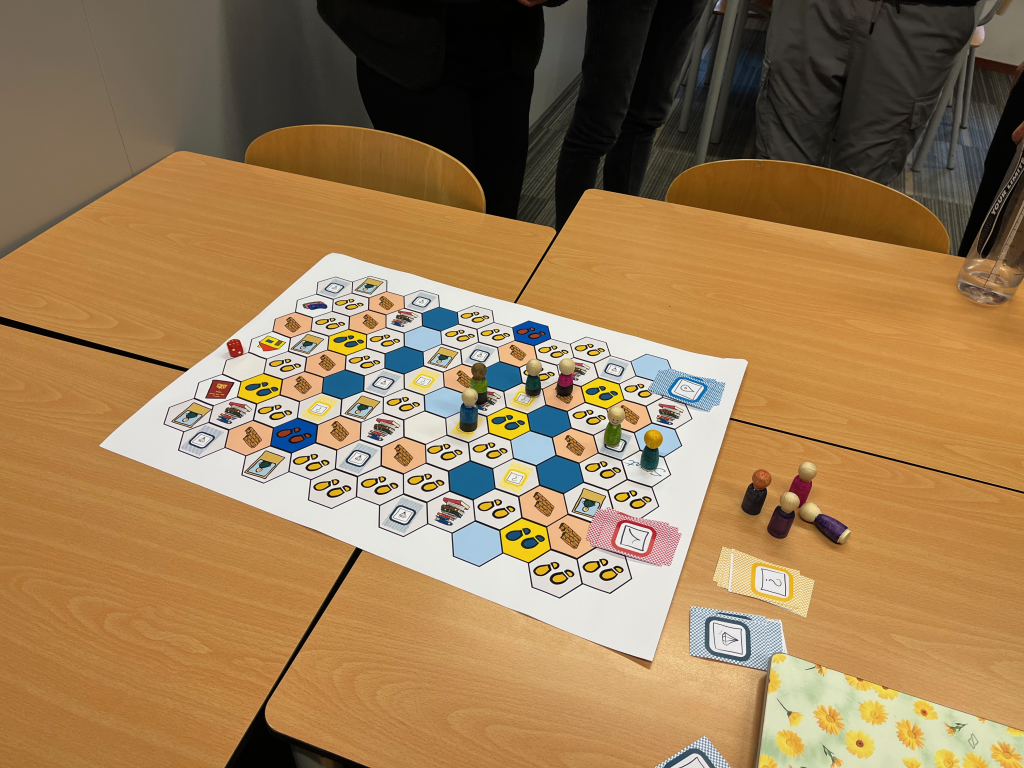

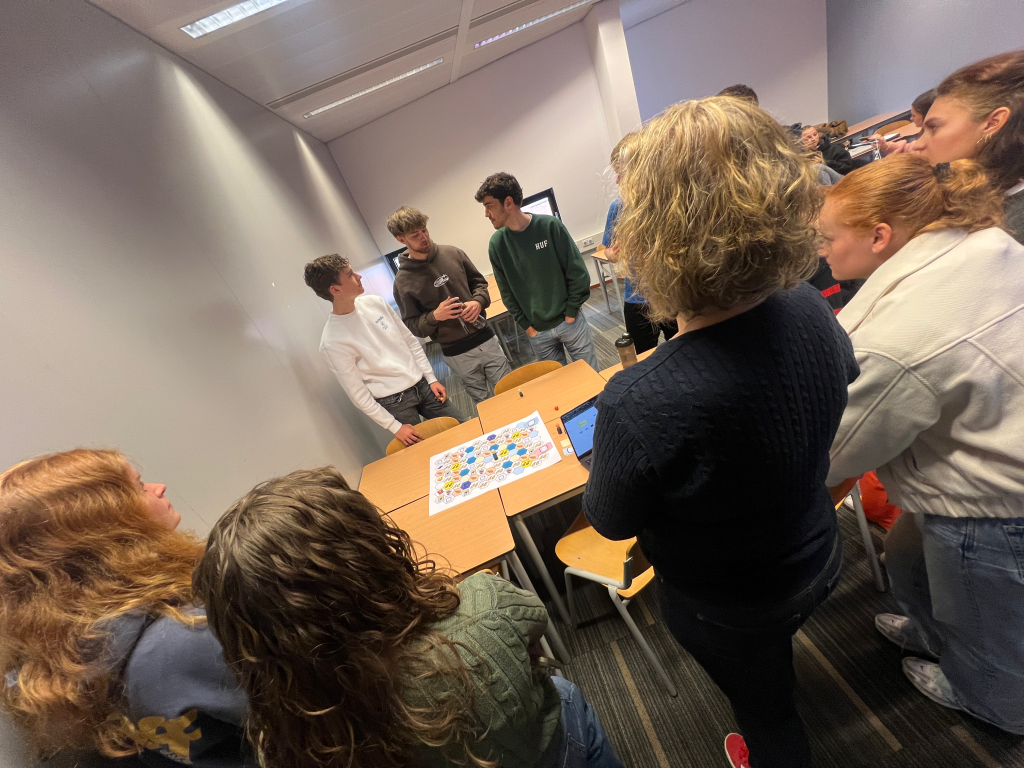
As a design researcher, I developed a serious board game aimed at helping literate individuals experience what it feels like to navigate everyday life without the ability to read or write. This experiment builds on the outcomes of earlier puzzle-based experiences and contributes to the broader goal of designing for empathy and inclusion (Harbers, 2021).
The idea stems from the recognition that many literate people underestimate the real-life limitations caused by illiteracy. By creating a playful yet immersive experience, the game aimed to generate deeper understanding and emotional engagement, which are often necessary precursors for attitudinal change (Mattelmäki, 2006).
Game Concept and Design Decisions
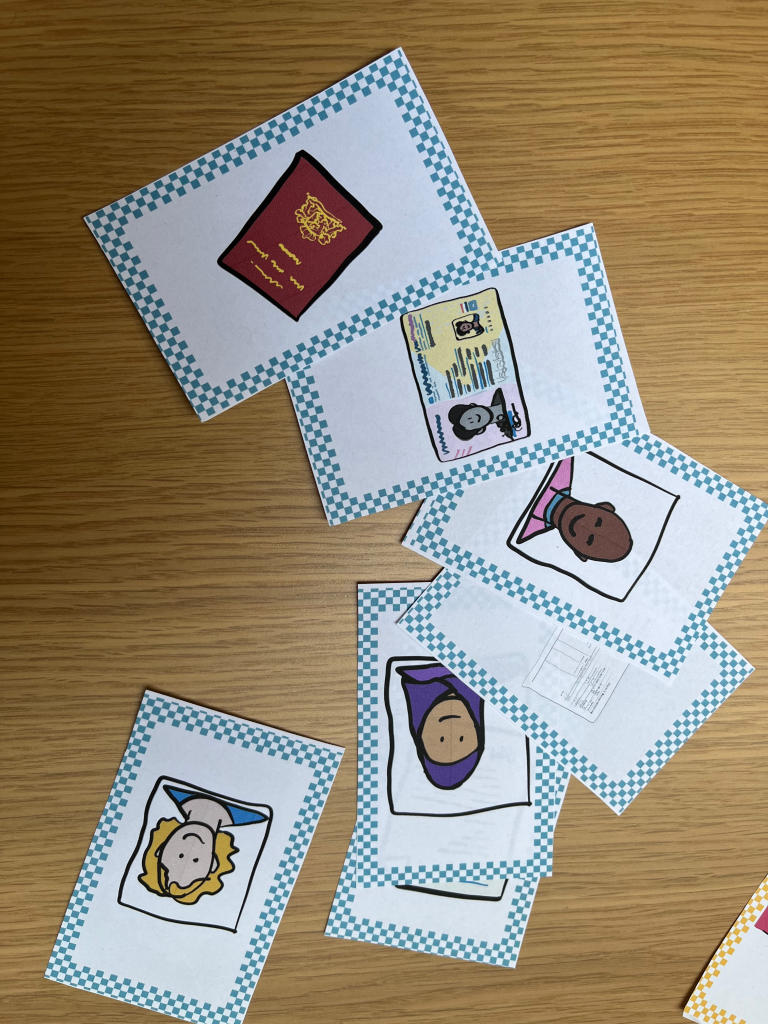
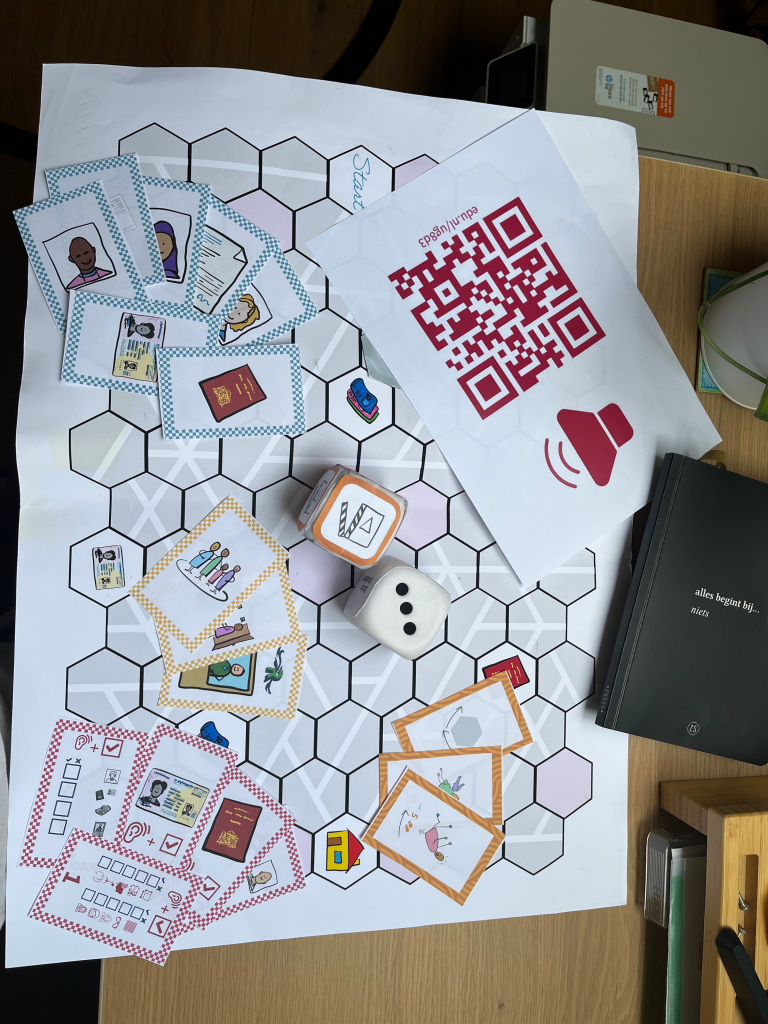
The game’s narrative follows a player attempting to obtain social housing, requiring them to collect documents such as a passport, a compliant passport photo, and a minimum amount of money—tasks that, in reality, involve complex literacy-based interactions.
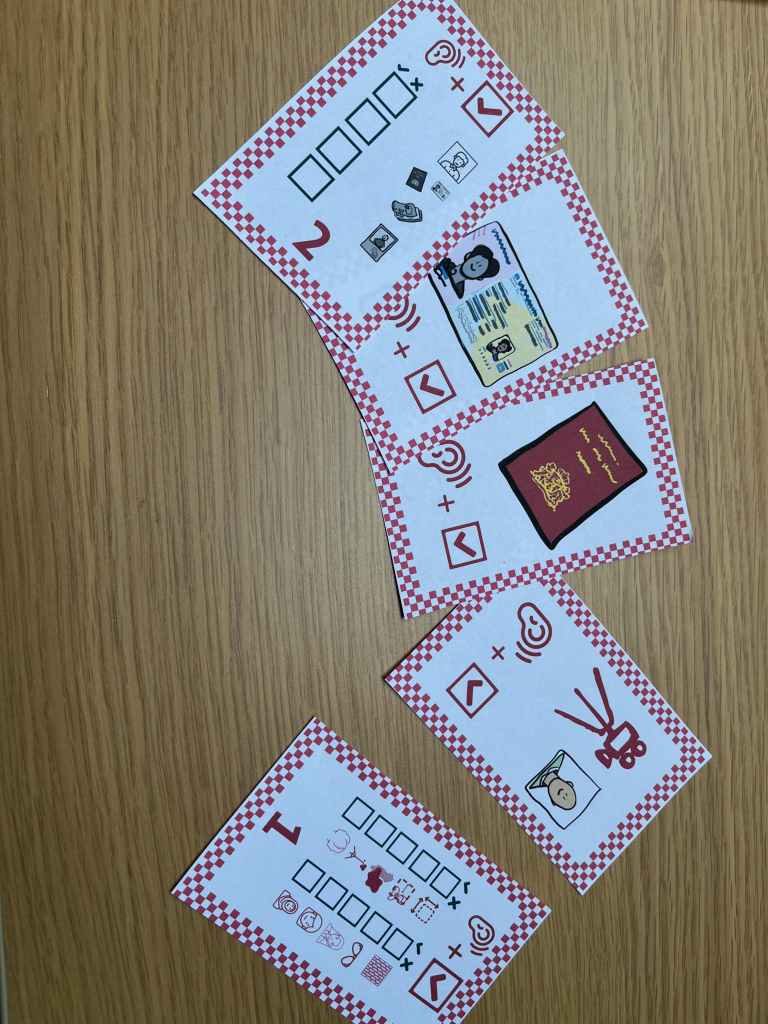
In order to simulate the disorientation experienced by those who cannot read, the game eliminates all text-based instructions. Instead, all rules and prompts are provided through audio clips, making the experience accessible to those with different reading abilities while giving literate players a direct encounter with information deprivation.
Inclusivity was a core design principle throughout the development process:
- The game pawns were hand-colored with tea and coffee, creating a natural and symbolic range of skin tones.
- All photographic elements showed people of various ethnic backgrounds, and most human figures were gender-neutral, avoiding binary visual stereotypes.
- The game board was redesigned in later iterations to be visually calm and intuitive, reducing visual noise to ensure that the experience was accessible to players with different cognitive and perceptual preferences.
Playtesting and Perspective Shifts
Two iterations of the game were tested with design students. The first used a live “game master” to guide participants in a style reminiscent of Dungeons & Dragons, but the visual complexity of the board disrupted the flow. In the second iteration, a simplified layout and a two-dice mechanic (one to draw a card, one to move) provided better clarity. Cards referred players to short audio prompts, which I did ‘live’ by reading a script during the test sessions.
Although the game was still in development, the effect on the participants was already significant. In post-play discussions, many reported a newfound understanding of how deeply illiteracy can impact autonomy and confidence in everyday bureaucratic situations. One student commented, “Even though I knew this was a game, it made me feel small and confused—like I had no control.”
These responses echo findings in empathic design research that embodied experiences can create more impactful understanding than traditional information sharing (Mattelmäki, 2006). The positive feedback from students indicates the potential of game-based tools to trigger reflection, awareness, and behavioral sensitivity around social issues.
Conclusion
This experiment demonstrates the value of using inclusive serious games as a design research method to foster empathy and social awareness. By removing written language and crafting a visually and culturally inclusive experience, the game allowed participants to embody an unfamiliar perspective, leading to meaningful cognitive and emotional shifts.
Such design approaches not only support more ethical and inclusive practices (Harbers, 2021), but also open up new avenues for socially engaged design education and policymaking.
References
Harbers, M., Ethisch Ontwerpen: Mensgerichte Keuzes in Digitale Ontwikkeling, Kenniscentrum Creating010, (2021).
Mattelmäki, T., Designing for Empathy: Tools for User-Centered Design, Aalto University School of Arts, Design and Architecture, (2006).
Leave a Reply