

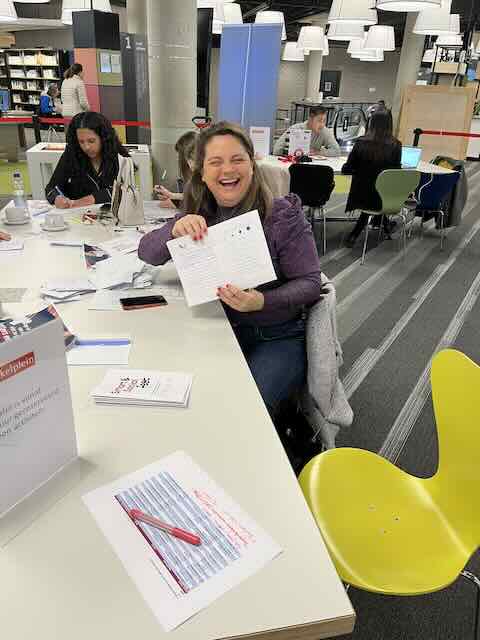
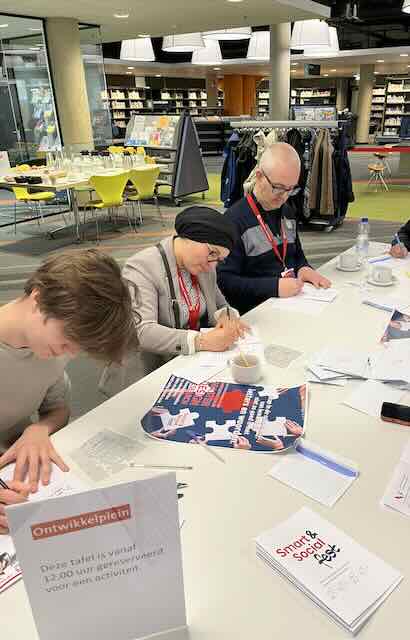
As part of my design research into social inclusion and accessibility, I created an experiment aimed at giving literate participants a first-hand experience of what it might feel like to be unable to read. The experiment was built around the concept of “designing for empathy” (Mattelmäki, 2006), with the goal of encouraging a deeper understanding of the everyday obstacles faced by individuals who are illiterate.
To simulate the experience of functional illiteracy, I designed a series of puzzles containing essential letters, spam, and bureaucratic-looking texts—all written in Esperanto. I chose Esperanto deliberately: it visually resembles familiar Latin-script languages, but is unfamiliar to nearly all participants. This design choice provided an authentic experience of “seeing text” but not being able to comprehend it, creating what Harbers (2021) might describe as an “ethically engaged design moment”—where the user’s frustration and confusion offer insight into a marginalised experience.
The experiment was tested through several iterations with classmates before being deployed at the Smart & Social Fest 2024, where around 30 participants engaged with it. Participants were asked to decipher whether a given message (in Esperanto) was important or not. After completing the task, they were instructed to describe their experience—first without using any text, then in a group discussion, and finally in writing.
Key Findings
The results were telling. Nearly all participants shared that their understanding of the challenges of illiteracy had shifted dramatically. Many had previously underestimated the emotional and cognitive burden of not being able to read everyday documents. Several participants from political and civic organisations were especially impacted—they requested to take the puzzle and the questionnaire back to their teams, noting that the topic of social inclusion was up for discussion in the coming week.
This aligns with findings by European researchers such as Mattelmäki (2006), who emphasized the value of participatory and experiential methods in fostering empathy and understanding within co-creation. The embodied, non-verbal aspect of the experiment—where participants could not initially use language—also resonated with Harbers’ (2021) notion of ethically responsible design: designing not just for users but with awareness of their lived realities.
Even though not all 30 participants completed the questionnaire, several student groups opted to discuss and reflect in smaller teams, further underlining the social value of this immersive exercise.
Conclusion
This experiment demonstrates that well-designed, experience-based simulations can shift perspectives, especially on issues like illiteracy that are often invisible to the literate majority. By using design methods to create controlled discomfort, we allow participants to step into the shoes of others—highlighting the power of design as a tool for inclusion, awareness, and ultimately, social change.
References
Harbers, M., Ethisch Ontwerpen: Mensgerichte Keuzes in Digitale Ontwikkeling, Kenniscentrum Creating010, (2021).
Mattelmäki, T., Designing for Empathy: Experiential Methods in Co-Design, Aalto University School of Arts, Design and Architecture, (2006).
Leave a Reply